


The Supremes must have started 1970 concerned about what the future would hold without Diana Ross. One of the last concerts with Diana Ross leading the group took place in January 1970 in Las Vegas, during which her replacement Jean Terrell was introduced to the fans. The concert was recorded and issued as a live double album later in the year.
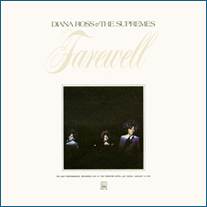
Then, it was back to the studio to continue work on the first album with the new line-up. Jean Terrell had already been working on the new songs with Mary Wilson and Cindy Birdsong prior to the January concert, to ensure a smooth transition, while Ross had also already begun recording songs for her first solo album.
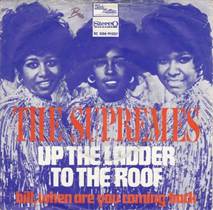
The first release by the new trio was the single “Up The Ladder To The Roof”, which was issued by Motown on 17th February. It was co-written by producer Frank Wilson and Vincent DiMirco. They must have been apprehensive, as they waited to see the public’s response, but all was well. The single peaked at number ten on the Billboard Hot 100 Singles Chart and number five on the Billboard R&B Singles Chart.
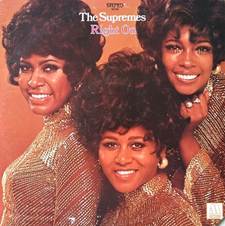
“Right On”, the Supremes’ nineteenth studio album, was released on 26th April, consolidating a new era for the group. Frank Wilson was responsible for most of the production, with the Andantes and the Blackberries adding backing vocals. Jean Terrell proved to be more than adequate as a replacement for Diana Ross, delivering some excellent lead vocals on tracks as different as the ballad “The Loving Country” (co-written by Ivy Jo Hunter and Smokey Robinson), the Bluesy dance track “Bill, When Are You Coming Back” (from Johnny Bristol and Pam Sawyer), and the complex melody “Baby Baby” (co-written by the Lewis sisters). Seven different arrangers were used on the album, which guaranteed a good level of variety. The album reached number twenty-five on the Billboard 200 Albums Chart and number four on the Billboard R&B Albums Chart.
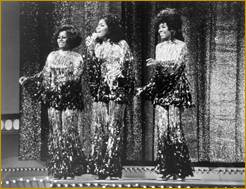
The Supremes on the Smokey Robinson TV Special in 1970
Photo: ABC Television Promotion (Wikimedia Commons)
One of the tracks from the album, “But I Love You More”, was chosen for single release, paired with “Everybody’s Got The Right To Love”, which was made the A-side. The single was released on 25th June and charted to numbers twenty-one and eleven on the Billboard Hot 100 and R&B Singles Charts. It shows off Terrell’s powerful lead vocal again, with some interesting harmonies from the other members of the group. Producer Frank Wilson and arranger David Van DePitte were certainly giving the new Supremes some good material to work with.
It is interesting to note how Motown were now operating. The main tracks for the A-side were recorded in Studio A in Detroit in January, while the vocals were overdubbed in New York in April. Rhythm tracks for the B-side were recorded in Los Angeles, with vocals added in Studio A, and other overdubs were then recorded in Studio B. The new multi-track technology meant that there was no need to bring everyone together. Various elements of a song could be recorded in different studios at different times, with final mixing usually taking place in the Donovan Building.
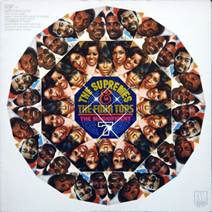
In September, the Supremes joined with the Four Tops to make an album entitled “The Magnificent 7” and then recorded their second Supremes album of the year, entitled “New Ways But Love Stays”, which was released in October. The overlap of the two albums meant that the second Supremes album of 1970 sold less well than the first, only reaching numbers sixty-eight and twelve on the Billboard 200 and the Billboard R&B Albums Charts.
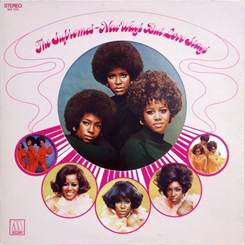
One of the tracks on the album was released as a single, the second song on side one, entitled “Stoned Love”. The song had been written by young Detroit musician Kenny Thomas, which he then worked on with Frank Wilson. Thomas had called the song “Stone Love”, but it somehow turned into “Stoned Love”, which conjured up references to drugs. Strangely, the songwriting credits are for Frank Wilson and Yennik Samoht, which is almost Kenny Thomas reversed. The song was recorded in Studio B, with the vocals added in New York.
Despite some controversy about the title, the single sold well, peaking at number seven on the Billboard Hot 100 Singles Chart, hitting number one on the Billboard R&B Singles Chart and number three on the Official UK Pop Singles Chart.
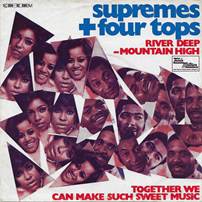
Finally, a single from the joint album with the Four Tops was released in November. “River Deep Mountain High” took the magnificent seven into the charts again, peaking at number fourteen on the Billboard Hot 100 Singles Chart, number seven on the Billboard R&B Singles Chart and number eleven on the Official UK Pop Singles Chart. A wonderful way to end the year! The fears about losing Diana Ross were allayed, for now at least.










First: “Right On” is not a Supremes’ album; instead, it is a combination of Jean Terrell solo tracts and recorded tracks with Mary Wilson and Cindy Birdsong. Even though, it remains their highest charting album and highest record sales, 255,000, none of the albums by the Post Ross Supremes sold more than 155,000 in the US. There only two singles to chart, in the Top 10 were, “Up The Ladder To The Roof” and “Stoned Love,” although Stoned Love was Number One of the R&R Chats for one week. They did infinitely better in Europe, particularly, in The UK where “Stoned Love” went to #3. Thus, when all the revisionalism is written, the General Record Buying Public, simply never had any real interest in the Post Ross Supremes!