
A dozen new acts joined Motown in 1969, most of whom didn’t make a breakthrough. The majority of the newcomers were actually added to the roster when Berry Gordy took over other labels. But there was one addition to the roster that came via a recommendation from Bobby Taylor, who recognised the potential of five boys from Gary, Indiana, just over the state border from Michigan, and brought them to Detroit.
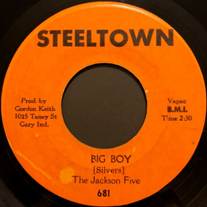
The Jackson 5 started performing in Gary in 1966, winning a talent contest at Theodore Roosevelt High School. Just a year later, they were entering competitions in theatres in bigger cities, including Chicago and New York, which, of course, they won. 1967 also marked the group’s first recording sessions, out of which came a single entitled “Big Boy”, which sold around ten thousand copies on its release by Steeltown Records in January 1968. Two months later, the group played professionally for the first time, opening for Etta James at the Apollo Theatre in Harlem. During the summer, just four months after that first show, Bobby Taylor and Gladys Knight watched the boys opening for them at the Regal Theatre in Chicago. Both the Motown stars wanted Berry Gordy to take a listen!
Bobby Taylor took the opportunity to invite the Jackson 5 to Detroit, where he had set up an audition for them on 23rd July at the Donovan Building. The audition was recorded and the video tape winged its way to California, where Berry Gordy had a look at it. Three days later, he was back in Detroit, offering the boys a contract.
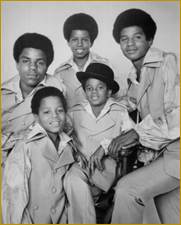
The Jackson 5 in 1969
Photo: Bernie Illson Inc. PR Photo (Wikimedia Commons)
There were, however, legal issues to resolve, as the group was still signed to the Steeltown label. Negotiations dragged on into 1969, but a solution was eventually found and the Jacksons each signed a deal with Motown on 11th March. Michael, Tito, Jackie, Jermaine and Marlon were on their way.
Bobby Taylor was put in charge of production. He quickly set about recording tracks that would feature on the Jackson 5’s first Motown album, selecting some well-known songs by various Motown artists. The list included the Four Tops’ “Standing In The Shadows Of Love”, “My Cherie Amour”, which Stevie Wonder had released in January 1969, Smokey Robinson’s “Who’s Lovin’ You”, and the Temptations’ “(I Know) I’m Losing You”.
When Berry Gordy heard the recordings, he wasn’t happy. There was something missing and he thought that the boys could find it in California. He also wanted new songs that would suit the group’s dynamic, so he set up a new songwriting and production team (which he named the Corporation) consisting of himself, Deke Richards, Alphonso Mizell and Freddie Perren to write some songs especially for the boys. In September, the Jackson 5 recorded the Corporation’s “I Want You Back” at the Sound Factory in Hollywood, with a session band that included Joe Sample, Freddie Perren and Alphonso Mizell (all on piano), Louis Shelton, Don Peake and David T. Walker (all on guitars), Wilton Felder (bass guitar), Gene Pello (drums), Sandra Crouch (tambourine) and Clarence McDonald (keyboards). Keith and Ludie Washington sang backing vocals.
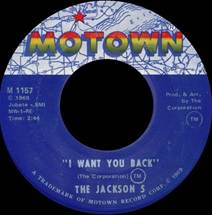
Motown released the song as a single in October (with “Who’s Lovin’ You” on the B-side) with some strong publicity, especially on television. The group sang “I Want You Back” on Diana Ross’ The Hollywood Palace in October and then in December on The Ed Sullivan Show. As usual, Berry Gordy’s hunch was proved right, when the single sailed to number one on the Billboard R&B Singles Chart and then climbed the Billboard Hot 100 Singles Chart to reach number one there too at the end of January 1970. It also charted in five other countries, reaching number two in Canada and the UK. The single went on to sell over six million copies, later earning platinum status from the RIAA in the USA and from the BPI in the UK; in 1999 it was inducted into the Grammy Hall of Fame. What a great start for the boys from Gary.
Work on the album continued with the addition of another Corporation composition (“Nobody”), another Temptations cover (“Born To Love You”), a Mavin Gaye cover (Frank Wilson’s “Chained”) and several non-Motown songs. The most surprising inclusion is the B-side of the band’s first ever release, Jesse Reese’s song “You’ve Changed”, from the Steeltown days. The album was released on 12th December, in time for Christmas, with a marketing boost from the Queen of Motown herself. Despite Gladys Knight and Bobby Taylor having pushed for the boys to join Motown, Diana Ross was chosen to launch the album, which was called “Diana Ross Presents The Jackson 5”. Given the eclectic mix of tracks, it perhaps isn’t surprising that the album couldn’t match the success of the first single. It peaked at number five on the Billboard 200 Albums Chart.
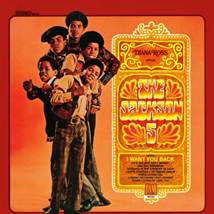
The Jackson 5 had made an encouraging start at Motown. Berry Gordy could see their potential and had decided to base them in California, where he felt that they could make most impact, and also where he could oversee their progress more easily. At the start of 1970, their first single for Motown, “I Want You Back” was at number one on both the Billboard Hot 100 and R&B Singles Charts, also reaching number two on the Official UK Pop Singles Chart. It achieved double platinum certification in both the USA and the UK.
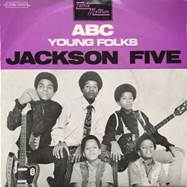
Plans were underway for two more singles. The follow-up single, “ABC”, had been recorded in December 1969 and promotional copies were sent out before Christmas. Motown released it on 24th February, whereupon it knocked the Beatles’ “Let It Be” from the number one position on the Billboard Hot 100 Singles Chart and also went to number one on the Billboard R&B Singles Chart. Sales in the UK were slightly down; it made it to number eight, eventually selling six hundred thousand units to achieve platinum certification! It was also nominated for a Grammy Award in 1971.
The single was included on the group’s second album, “ABC”, which was issued by Motown on 8th May. It is a collection of two non-Motown covers and ten Motown tracks, four written by the Corporation team and others by Leon Ware & Pam Sawyer, Holland, Dozier, Holland, Hunter/Riser/Stevie Wonder and his mother Lula Mae Hardaway, Cosby/Wonder/Moy, and George Gordy & Allen Story. The last Motown song is “True Love Can Be Beautiful”, co-written by Bobby Taylor, Jeanna Jackson, and Chicago songwriter Leonard Caston Jr, who had come to Motown from Chess Records in 1968. The non-Motown tracks are covers of Funkadelic’s “I’ll Bet You” (co-written by George Clinton, Sidney Barnes and Theresa Lindsey), and the Delfonics’ “La-La (Means I Love You)” (co-written by Thom Bell and William Hart).
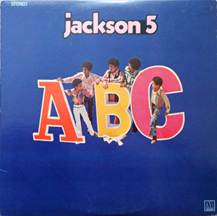
It is a strong selection, which took the album to number four on the Billboard 200 Albums Chart, number one on the Billboard R&B Albums Chart and number twenty-two on the Official UK Pop Albums Chart.
A second song from the album, “The Love You Save”, soon followed, released on 13th May. Could it repeat the double number one in the USA? Yes, of course it could. It also reached number seven on the Official UK Pop Singles Chart.
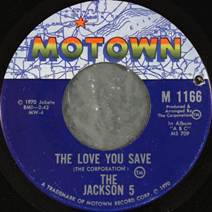
Four of the tracks on the boys’ three number one singles were written by the Corporation and five of them were produced by Hal Davis (along with the Corporation on three). The exceptions were “The Young Folks”, the B-side of “ABC”, which was written by Allen Story and George Gordy for the Supremes, and “Who’s Lovin’ You”, the B-side of “I Want You Back”, which is a Smokey Robinson song, arranged by David Van DePitte and produced by Bobby Taylor, who was now no longer supervising the Jackson 5’s recording sessions but did make some uncredited contributions.
The session band for “ABC” probably consisted of Freddie Perren (on piano), Louis Shelton, Don Peake and David T. Walker (all on guitars), Wilton Felder (bass guitar), Gene Pello (drums), Sandra Crouch (tambourine) and Joe Clayton on Bongos. For “The Love You Save”, it was the first six again. There was a good degree of continuity, which is, of course, exactly what Motown had achieved back in Detroit with the Funk Brothers. It was an important factor in creating the sound that would take the brothers to superstardom.
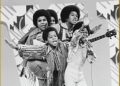
One of the big advantages of locating the boys in Los Angeles was that media exposure was easier to organise. The group made several television appearances during 1970, including American Bandstand and the Ed Sullivan Show, which gave them the chance to promote their singles more effectively than they could from Detroit.
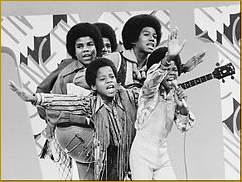
The Jackson 5 on the Jim Nabors Show 1970
Photo: CBS Television Promotional material (Wikimedia Commons)
And the next single was on its way!
On 28th August, one day before Michael Jackson’s twelfth birthday, Motown released “I’ll Be There”, which was the work of songwriters Berry Gordy, Bob West, Hal Davis and Willie Hutch, with Hal Davis producing. It was to become the most successful single of all their Motown releases, selling over four million copies in the USA and around six million globally. It set a new Motown record for single sales in the USA, overtaking Marvin Gaye’s “I Heard It Through the Grapevine”, which still held the international record, however, with seven million copies sold.
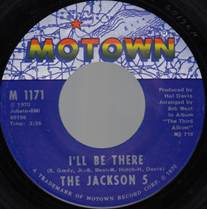
“I’ll Be There” was at number one on the Billboard Hot 100 Singles Chart from 17th October until 14th November and at number one on the Billboard R&B Singles Chart for six weeks. In the UK it went to number four on the Official UK Pop Singles Chart. It was, of course, their fourth number one single of 1970. They were the first group ever to achieve four number ones with their first four releases on a new label. Sadly, there was not to be a fifth.
The session band consisted of Arthur Wright, Louis Shelton and David Walker (guitars), Joe Sample (keyboards), Gene Pello (drums), and Bob West (bass guitar). Bob West also wrote the arrangement, with Hal Davis producing, as usual. Michael and Jermaine Jackson shared the lead vocals.
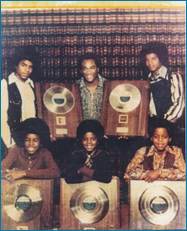
The Jackson 5 with Hal Davis
Photo: Brownpatricks (Wikimedia Commons)
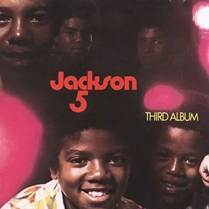
The song is the opening track of the Jackson 5’s third album, which was given the factually accurate but rather unimaginative name “Third Album”. It was released on 8th September and follows the common pattern of combining Motown and non-Motown songs. There are only two songs from the Corporation this time, with other Motown songwriting teams responsible for six more. That leaves three non-Motown songs, which include one from Thom Bell and William Hart (as on the previous album), one from Simon & Garfunkel, and one from brothers Richard and Willie Hutch with L. Carr. Willie Hutch was actually signed to Motown as a songwriter during the recording sessions, after Hal Davis asked him to develop lyrics for “I’ll Be There”. He delivered them the next day, and his lyrics were duly recorded, with a contract soon to follow!
The range of songs shows the group developing their repertoire from the “Bubblegum Soul” of the early material. The sensitivity of “I’ll Be There” is complemented by Deke Richard’s funky ballad “Can I See You In The Morning” and the Corporation’s Rock’n’Roll “Goin’ Back To Indiana”. The album reached number four on the Billboard 200 Albums Chart but failed to register in the UK.
The Motown production line was still in full flow, as attention turned to Christmas. The group was soon back in the studio recording a new album, “The Jackson 5 Christmas Album”, which was released in October, featuring nine classic Christmas songs, plus two new compositions by the Corporation. It only reached number thirty-six on the Billboard 200 Albums Chart. Two singles were drawn from the album, “Santa Claus Is Coming To Town” and “I Saw Mommy Kissing Santa Claus”, both of which made top fifty chart entries. They were popular in the UK, where sales brought a platinum disc for the first and a silver disc for the second. A little bonus at the end of an extraordinary year!
The popularity of the Jackson 5 grew fast, with an echo of Beatlemania, as they sold out theatres in the USA and around the world, eclipsing the Supremes as Motown’s highest earners for the company. An extraordinary year indeed!