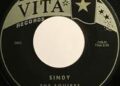

Mambo Records was set up by Larry Mead and Mike Gradney in 1955 in Pasadena, California. Mead owned a record pressing plant called Perfection Plastic Products situated at 1486, North Fair Oaks Avenue, and that is where the label was based. They probably chose the name Mambo to conjure up images of the popular dance craze that was taking off in dance halls during the mid-fifties. Both the co-owners were keen to record R&B music; they quickly attracted some talented performers and started recording. Gradney took on the A&R role for the label.
The roster included Willie Egan (who is credited on the recordings as Willie Eggins or Egans), saxophonists Lorenzo Holden and Jackie Kelso, and two Doo-Wop vocal groups, the Squires and the Colts. Around ten singles were issued in 1955, a mixture of 10” 78s and 7” 45s, with some singles issued in both formats.
Tenor saxophonist Lorenzo Holden’s instrumental dance track “Whipped Cream” is typical of the R&B development by 1955, with a rocking saxophone leading the way and an excellent piano line adding a flavour of Boogie-Woogie. His second Mambo single, “Top Hat” is more Jazz-flavoured. Holden played with the Johnny Otis Band, as well as leading his own orchestra.
John Joseph Kelson played saxophone, clarinet and flute. He was born in Los Angeles and played with many well-known Jazz combos and larger bands during the forties. Like Holden, he joined Johnny Otis’ Band in the fifties. He cut one single at Mambo, credited as Jackie Kelso. His version of “Blue Moon” is Jazz based but with an R&B backing.
Willie Egan takes us into proper R&B territory with the up-tempo “Come On” backed by “Oh Baby”, which is an interesting combination of a Blues vocal with an R&B backing, underpinned by some Boogie-Woogie piano. His second single for the label follows a similar pattern, with a driving saxophone added to “Wow Wow”. Egan takes Los Angeles R&B/Blues into a higher gear!
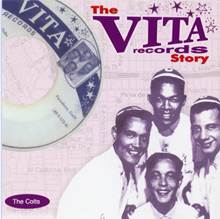
The Colts came from Bakersfield, California. They began to perform publicly while students at L.A. City College in East Hollywood and were signed up by promoter Samuel “Buck” Ram in 1955. He secured them a recording deal with Mambo during that year, that resulted in the issue of their first single “Adorable”, which Ram had written.
Very soon after its release, the decision was taken by Mead and Gradney to switch the label’s name to Vita. It had quickly became apparent after Mambo’s launch that the label’s name was problematic. For some record buyers and DJs too, Mambo meant Latin dance music, and that wasn’t a good fit with the company’s R&B output. As a result, the Colts’ single was re-issued on the Vita label. It made a strong impression in Los Angeles, with the group appearing on two local television shows and topping the Cash Box R&B Chart for Los Angeles. As distribution increased, the single reached number eleven on the Billboard R&B Singles Chart. Sadly for the boys and for Vita Records, the Drifters had decided to cover “Adorable” for Atlantic Records. They took it to number one on the Billboard R&B Singles Chart!
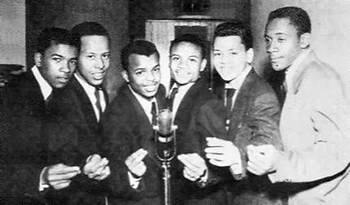
The Squires were formed in 1954, when five students at John Muir High School started to sing together. The original members were Lee Goudeau (tenor lead), Chester Pipkin (tenor), Dewey Terry (falsetto), Henry Johnson (bass), and Freeman Stevens (tenor). Pipkin also played guitar. Stevens soon left, to be replaced by Bobby Armstrong, and Don Bowman joined as second tenor and pianist.
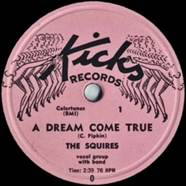
The boys were soon given the opportunity to record by Ned Herzstam and Gordon Wolf, who invited them to cut a single for their new Kicks label in 1954. The group recorded two songs written by group-member Chester Pipkin, “A Dream Come True” (a Doo-Wop romantic ballad) and “Lucy Lou” (a mid-tempo foot-tapper).
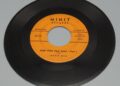
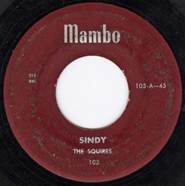
The following year, the boys joined Mambo and recorded “Sindy”/ “Do-Be-Do-Be-Wop-Wop” (see Mambo single above). Their second single followed the same pattern as the first Kicks release, with a romantic Doo-Wop ballad backed by an up-tempo dance track. Following the change of name from Mambo to Vita, the single was re-issued on the Vita label.
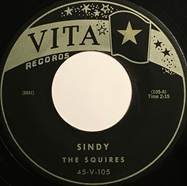
The Vita label name wasn’t new. Mead had founded a label with the Vita name in 1950 to record John Roland Redd, better known as Korla Pandit. Mead also owned another label, Dig This Record.

The output was easy-listening classics. This first phase of Vita’s existence lasted until 1952. The name was then resurrected in 1955 for Mead and Gradney’s R&B label.
Vita issued over fifty singles between 1955 and 1959, mostly 7” 45s with a few also released in the old 10” 78rpm format. The roster included some of the Mambo personnel and some new faces that cemented the label’s R&B credentials: the Squires, the Colts, Lawrence Stone & the Ernie Freeman Orchestra, Ervin (Big Boy) Groves, the Ike Turner Band, Willie Egans, Jackie Kelso, the Chavelles, Smiley Monroe And The Sandovals, Anna Valentino, the Don Ralke Quintet, Patti Casey, Sonny Knight, Harmonica Slim, the Cheerettes, Ray Merrill, the Titans, Jimmy Maddin, Nora & Barney Brooks, Buddy Williams, Effie Smith, the Arist-O-Kats, Al Barkle with the Tri-Tones, Buel Moore & the Garnets, Rena Wright, Dan Terry 7 His Orchestra, the Whippoorwills, “Big Jim” Buchanan, and Dick Braun.
The Colts made two singles in 1956, continuing to take Doo-Wop into Pop territory, before moving to Antler Records in 1957.
The Squires made four more Vita singles, also evolving towards R&B Rock & Roll. “Sweet Girl” is a good example of their style. The group also backed Effie Smith on several up-tempo dance tracks, including “You Ought To Be Ashamed Of Yourself”.
The Chavelles added one more classic Doo-Wop track to the Vita discography before switching to Keen Records.
The Titans were a new group who came to Vita in 1957 to record two Doo-Wop singles. Neither was well received and they soon moved to Specialty.
Vita issued the Ike Turner composition “Peg Leg Woman” by the Ike Turner Band with vocalist Willie King in 1956. It has an excellent arrangement with strong guitar and saxophone input.
Harmonica Slim adds some Blues, in the West Coast style with swinging orchestral backing. “Drop Anchor” from 1957 is the best of his four Vita tracks; it gives a good flavour of how R&B was developing. Harmonica Slim was the stage name of Travis Leonard Blaylock.
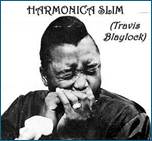
He was born in Douglassville, just south of Texarkana in Texas, in 1934. As a young boy, he was inspired by the playing of Sonny Boy Williamson 1 to take up the harmonica. He also wrote songs and joined a Gospel group during the forties. In 1949, he came to Los Angeles and played in several bands, including Lowell Fulson’s backing group, where he met Lloyd Glenn. These connections brought him further work as a session musician during the early fifties. He can be heard on recordings on the Aladdin and Solid Soul labels, as well as on Vita and Mike Gradney’s other labels Cenco and Spry. During this period he was able to record six or seven singles with his own band, two of which sold pretty well.
Towards the end of the fifties, Blaylock joined the touring bands of several well-known Blues singers, including Percy Mayfield, B.B. King, T-Bone Walker, Pee Wee Crayton and Ray Charles.
When Blues went out of favour in the sixties, Blaylock took on factory work, until a chance came in 1969 to record an album with producer Bob Thiele. The album duly appeared, but it has been reported that Thiele had hired George “Harmonica” Smith to replace Harmonica Slim’s original recordings.
In the seventies, Blaylock gave up playing professionally and became a Baptist minister. He died in Texarkana in 1984, having made an important contribution to West Coast Blues and R&B.
Sonny Knight, backed by the Jack Collier Orchestra, delivered another hit for the label with his slow R&B ballad “Confidential” in 1956, which entered the top twenty of the Billboard R&B Singles Chart. It has been described as the perfect slow dance song! Knight had started his recording career at Aladdin in 1953 and Specialty in 1955. His Vita single was leased to Dot Records (which helped its sales!), where Knight went to cut two more singles in 1957.
The Cheerettes were an all-girl vocal group, whose single “I Told The Sunshine”/ “Lullaby My Love” features two slow romantic ballads. Both are beautifully sung with sweet harmonies with not a hint of Doo-Wop. It was probably aimed at the White Pop market rather than the Black R&B record-buyers.
Willie Egan (credited as Egans) delivers another two tracks of Blues, confirming his reliability.
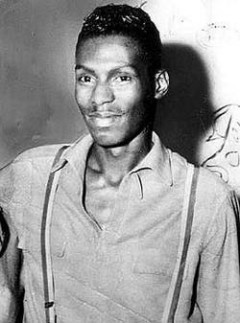
Willie Egan
Slowly, Vita moved away from the pure R&B that was the label’s initial strength towards more a more popular style, aimed increasingly at the White market. The final release came in 1959 with an instrumental “Bitter Winds” by the Christy Sextet, which reportedly featured Ruth Christy, Plas Johnson, Ernie Freeman, and Earl Palmer. It is a low-key ending to an interesting label.
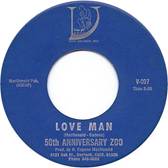
Later, the name Vita turned up on a completely different label, based in San Pedro, then Burbank, then Hollywood, owned by H. Eugene MacDonald.
1959 marked the end of Vita in Pasadena, but not the end of Mike Gradney’s involvement in the recording industry on the West Coast. He had set up the Spry label in 1954 and that ran until 1960. From 1961 to 1968, Gradney operated a Spry subsidiary, Cenco Records.
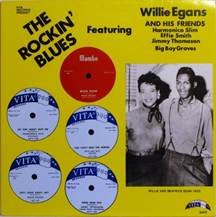
In 1982, Vita released an eighteen track compilation of R&B tracks from Mambo and Vita artists.
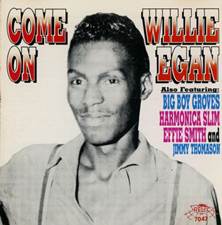
In 1993, Relic Records issued a twenty-five track expanded compilation of the label’s up-tempo output. It is entitled “Come On”, with Willie Egan on the cover.
Finally, in 2000, Preserved Recordings issued a twenty-five track compilation of the best of the Vita recordings. It covers all the genres issued by the company.