
The Session Musicians at Motown are now famous as the Funk Brothers, but this was, in fact, a name that was only used later. Berry Gordy didn’t like the name and referred to the band as the Soul Brothers. When Gordy authorized two single releases by the Motown session men on the subsidiary Soul label later in the sixties, they were called Earl Van Dyke & The Soul Brothers in 1965 and then Earl Van Dyke & The Motown Brass in 1966. There has never been an established band that was formally called the Funk Brothers. Musicians came and went at Motown right through the thirteen years of Studio A’s success.
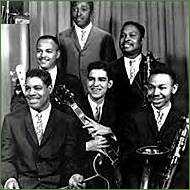
The Joe Hunter Band
In 1958/9, Berry Gordy started working with a Jazz Band that he had heard in some of Detroit’s clubs, known as the Joe Hunter Band. Gordy hired the band to play on the early Tamla recordings. The members of the band were Joe Hunter (keyboards), Larry Veeder (guitar), James Jamerson (bass), Benny Benjamin (drums), Hank Cosby (saxophone) and Mike Terry (baritone sax). These six men were the nucleus of the early Motown session band, responsible for launching the Sound of Young America. They could be considered as the original Funk Brothers.
A&R man Mickey Stevenson, with help from members of the Joe Hunter Band, then set about recruiting additional musicians, forming a core group of more than a dozen musicians by the end of 1959. Between 1959 and 1962, the pool of musicians who made up the session bands for Tamla, Motown and Gordy recordings slowly grew in number, with the following making the biggest contributions:
Keyboards: Joe Hunter, Richard “Popcorn” Wylie, Johnnie Griffiths (from 1961), Earl Van Dyke (joined 1962)
Guitars: Larry Veeder, Robert White, Eddie Willis, Joe Messina, Marv Tarplin
Bass: James Jamerson, Clarence Isabell, Joe Williams
Drums: Benny Benjamin, Richard “Pistol” Allen
Vibes: James Gittens, Dave Hamilton
1963 saw some significant changes to the group of session musicians playing in Studio A, although the core of the Funk Brothers remained intact.
There were two keyboard players, Earl Van Dyke and Johnny Griffiths. The four guitarists were unchanged from 1962: Robert White, Eddie Willis, Joe Messina and Marv Tarplin. James Jamerson was the bass player. On drums, duties were shared by Richard “Pistol” Allen, Benny Benjamin and Uriel Jones. Eddie “Bongo” Brown, Bobbye Hall, and Jack Ashford played percussion, with Ashford also playing vibes, along with James Gittens and later Jack Brokensha.
The horn section featured a larger number of musicians (26 up from 17), as producers wanted horns more often and the arrangements being written grew more complex.
Trumpets: Johnny Trudell, Herbie Williams, Floyd Jones, Maurice Davis, Billy Horner, John “Little John” Wilson, Marcus Belgrave, Russell Conway and Don Slaughter.
Trombones: George Bohanon, Bob Cousar, Jimmy Wilkins, Paul Riser, Don White, Carl Raetz, Patrick Lanier and Bill Johnson.
Saxophones: Hank Cosby, Andrew “Mike” Terry, Kasuka Mafia, Thomas “Beans” Bowles, Teddy Buckner, Ernie Rodgers, Dan Turner, Bernie Peacock and Larry Nozero.
In addition, Dayna Hartwick played flute and piccolo. Finally, strings were provided by members of the Detroit Symphony Orchestra, usually led by violinist Gordon Staples.
Six musicians from the initial rhythm section group had left Motown by 1963: Joe Hunter, Richard “Popcorn” Wylie, Larry Veeder, Clarence Isabell, Joe Williams and Dave Hamilton. They were replaced by three new arrivals: Uriel Jones, Jack Ashford and Jack Brokensha.
The original horn players were nearly all still active at Motown from 1963 onwards. Just three saxophonists had left, viz. Ronnie Wakefield, Lefty Edwards and Eli Fontaine. To meet increased demand as the number of recordings increased, twelve new names were added to the list of session horn players: Floyd Jones, Maurice Davis, Billy Horner and Don Slaughter (all trumpet players), Jimmy Wilkins, Don White, Carl Raetz, Patrick Lanier and Bill Johnson (all trombone players), and Dan Turner, Bernie Peacock and Larry Nozero (all saxophone players).
All the new musicians who joined the rhythm section went on to make an outstanding contribution to Motown’s success in future years. Two of them were granted Funk Brothers membership: Jack Ashford and Uriel Jones.
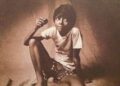
For several of the lesser-known session musicians, 1967 was their last year of contribution to Motown recordings in Studios A or B (Golden World). Keyboard players Johnny Gittens and Ted Sheeley, guitarist Huey Davis (who played with the Contours), bongo player Corey Jahns and drummer Freddie Waits were amongst those who departed. One further departure is much more significant. Benny Benjamin died following a stroke on April 20th 1969. He was just forty-three years old. He had been struggling with drug and alcohol addictions and, like his rhythm section “brother” James Jamerson, had become increasingly unreliable. Nevertheless, his death meant that the heartbeat of Motown was not the same any more, despite Berry Gordy’s efforts to reduce the impact of his absence. Richard “Pistol” Allen and Uriel Jones were already well established in the studio and they picked up the reins. Two more drummers were soon to be added to studio roster.
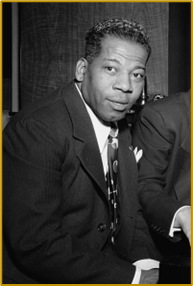
Benny Benjamin
Photo: William P. Gottlieb collection (Library of Congress) (cropped)
Significant newcomers included guitarists Dennis Coffey, Melvin Ragin (a.k.a. “Wah Wah Watson”), Ray Parker Jr. and Ray Monette, plus drummers Spider Webb and Andrew Smith, and bass player Bob Babbitt. Several of these musicians had occasionally come to Motown prior to 1968, but they established themselves during the later years.
The group of musicians who could be called upon to join the horn section was also significantly expanded. Trumpeters Gordon Stump and Eddie Jones, trombonists McKinley Jackson and Ed Gooch, and saxophonists Norris Patterson, Walter Campbell, Frank Harvey Jackson, Ronnie Wakefield, “Lefty” Edwards, Eli Fountaine (who returned after some time away), Eugene Moore, William Moore, Angelo Carlisi, and Lanny Austin all added their names to the list of Motown credits.
During the fifties and sixties at Motown, it was not common practice to list all those who contributed to a particular recording. The songwriters did usually receive a credit on the record label, as did the producers, but not the musicians. As a result, the work of the session band went unacknowledged.
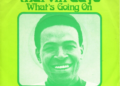
The first formal credit given to the band came in 1971, when a list of musicians appeared on the album sleeve of Marvin Gaye’s album “What’s Going On”. The list of names alerted fans, but no-one outside Motown knew much about the band members, until 1989, when Allen Slutsky’s book Standing in the Shadows of Motown told James Jamerson’s story.
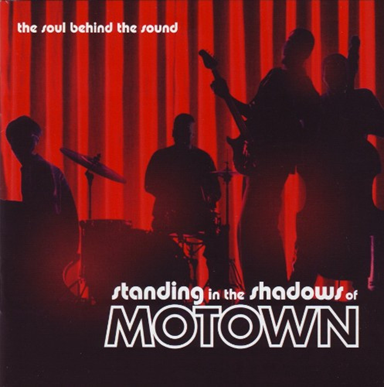
Thirteen years later, Paul Justman made a film inspired by Slutsky’s book bearing the same name, which told much more of the story, identifying the thirteen musicians who had made the biggest contributions to the studio recordings at Motown. He called them the Funk Brothers:
Earl Van Dyke, Robert White, Joe Hunter, Johnny Griffith, Eddie Willis, Joe Messina, Benny Benjamin, Richard “Pistol” Allen, Uriel Jones, James Jamerson, Bob Babbit, Jack Ashford, and Eddie “Bongo” Brown.
Some of the musicians included in this list arrived at Motown after 1962, whilst other musicians, who had played on many recordings from 1959 to 1962 and continued to play at Motown through the sixties, are not included. Unsurprisingly, it is a list that has not received universal agreement. Some people find it strange that Mike Terry, Beans Bowles and Hank Cosby, amongst others, are not included. The horn section is somehow overlooked or considered outside the core rhythm section.
Perhaps the fairest way to consider the Funk Brothers is to include all those that contributed to the recordings in Motown Studios A and B. It is a long list, but no-one should surely be excluded on that account.
There are interesting articles about many of the Funk Brothers on the Signature Sounds site. Please enjoy them!