
Diana Ross made her debut as a solo artist in 1970 with the release of the single “Reach Out and Touch (Somebody’s Hand)” in April, an Ashford & Simpson composition. In an attempt to establish Diana Ross as a world star as quickly as possible, the first single was followed by two albums and two more singles. Berry Gordy was intent on getting a first number one for Ross in 1970, and General Manager Barney Ales came up with an unusual marketing ploy. He cut his first and only single, a recording of him telling distributors and DJs to push Diana Ross’ single, because it was so good, with the song playing in the background. He then sent copies of his single-sided recording to everyone who could influence sales.
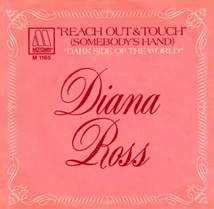
The track starts with a bass guitar riff, and then a soft piano intro is played by Valerie Simpson. The Funk Brothers gradually build the song to a crescendo for the chorus, which has a strong Gospel feel. The backing vocals from Ashford and Simpson add to that feeling, complementing Diana Ross’ lead vocal, which is smooth and rich, full of tenderness. Paul Riser’s arrangement incorporates lush strings that add to the mood that Ross creates vocally.
The Supremes had recorded a couple of songs that reflected the introduction of more socially-aware lyrics to the Motown output, but the group had generally stuck with up-tempo love songs. Now, for her first solo single, Ross sang about making the world a better place by looking out for each other:
“Take a little time out of your busy day
To give encouragement to someone who’s lost the way”
The first single showed real promise, a hint of what was to come from her first album. Cash Box Magazine was certainly impressed: “Into the soloist spotlight, Diana Ross takes hold of a slow blues-waltz message ballad and turns it into something all her own. Spectacular vocal handling and a particularly fine Motown production blends the label’s impact with material tinted light Bacharach blue.” (18th April 1970).
The single charted, but probably not as well as everyone at Motown had hoped. Number twenty on the Billboard Hot 100 Singles Chart, number seven on the Billboard R&B Singles Chart and number eighteen on the Billboard Adult Contemporary Singles Chart were good but only good. Barney Ales’ single didn’t work its magic after all.
Notwithstanding that response from fans, the song has become one of the most popular in her concerts, with Ross often inviting members of the audience to link hands as a symbol of togetherness. The high point came in 2008, when she sang the song at the end of the Nobel Peace Prize concert in Oslo.
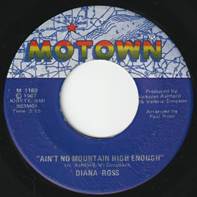
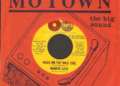
Still, she wanted to do better. The follow-up single came out on July 16th and surprisingly it was a cover of a song written by Ashford & Simpson that had already been recorded by Marvin Gaye and Tammi Terrell in 1967 and then also by the Supremes and the Temptations for their first joint album. When “Ain’t No Mountain High Enough” was suggested to her, Ross was not at all sure about it, given that Tammi Terrell had recently died. She was only persuaded when it was decided to reconfigure the original completely, with a new arrangement from Paul Riser.
The single lasted three minutes, but the song was also included on Ross’ first solo album, which was released on 19th July, and that version lasts six minutes twenty seconds! The album track starts gently with soft, classical strings, a masterpiece of an arrangement conducted by Paul Riser, using some of the most brilliant and talented classically- trained musicians in New York City. After an introduction that lasts over a minute, Diana Ross begins to speak. Her voice has a warm, silky tone, which captivates the listener, as the tune is played quietly in the background. Two minutes in, Ross bursts into song, accompanied by a strong group of backing vocalists that included the Andantes, Ashford & Simpson, Jo Armstead, Jimmy Beavers, and Brenda Evans & Billie Calvin from the Undisputed Truth. The whole recording sounds like a theatrical drama with an exciting musical climax at the end. Miss Ross is a powerful and dynamic story-teller, an excellent interpreter when she immerses herself in a song.
When Berry Gordy first heard the album track, he was unimpressed. He thought the spoken word sections would put fans off, but Ashford and Simpson managed to persuade him to put out a shorter version.
The single would eventually reach the top of many chart listings, earning Diana Ross her first solo Grammy nomination, for “Best Contemporary Vocal Performance, Female” (she lost the award to Dionne Warwick). “Ain’t No Mountain High Enough” became a best-seller in the UK, going to number six on the Official UK Pop Singles Chart, earning a silver disc for over 200,000 copies sold on 17th March 2023. But it went to number one on the Billboard R&B Singles Chart week-ending 3rd October 1970 (1 week) and number one too on the Billboard Hot 100 Singles Chart week-ending 19th September 1970 (3 weeks). The single completed the full set by hitting number one on both the Cash Box Top 100 Singles Chart week-ending 26th September 1970 (1 week) and the Cash Box R&B Singles Chart week-ending 26th September.
Journalist Michael Thomas rated the song very highly: “That record, ‘Ain’t No Mountain High Enough’, is one of the ten best singles ever made. Diana Ross, when she talks on a record in that petulant dirty whisper, could sell me anything. Diana’s solo records, under the direction of her new handlers Nick Ashford and Valerie Simpson, are some of the most gloriously melodramatic virtuoso pop since Phil Spector did the Righteous Brothers.” (Rolling Stone magazine,1st February 1973)
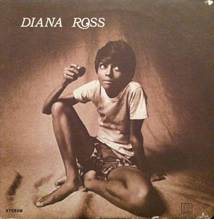
The parent album, simply entitled “Diana Ross”, features ten songs by Ashford & Simpson, including the two singles already released. The other song on the album is a composition from Harvy Fuqua and Johnny Bristol. It was a strong collection, which sold well, reaching number nineteen on the Billboard 200 Albums Chart and number one on the Billboard R&B Albums Chart.
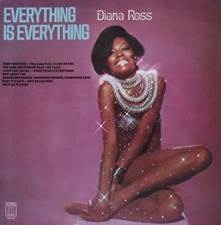
A second album followed in November, aiming at a slightly different market. “Everything Is Everything” was produced by Deke Richards and Hal Davis with a view to attracting sales from the Pop contingent of the record-buying public. The songs chosen for inclusion reflect this, with two Lennon/McCartney compositions and a Bacharach & David song mixed in with contributions from Davis and Richards themselves. The arrangements are simpler, the songs are bouncier and catchier, but the response was mixed. The album reached number forty-two on the Billboard 200 Albums Chart, but did better on the Billboard R&B Albums Chart, peaking at number five. One of the tracks is a cover of Aretha Franklin’s song “Call Me” from her 1970 album “This Girl’s In Love With You”, which earned Diana Ross a 1971 nomination for a Grammy in the Best Female R&B Vocal Performance category.
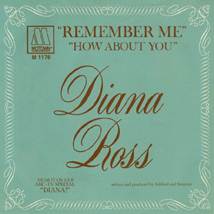
Despite this, the next single, released in December, was not drawn from this album but from the sessions for the next studio album, due for release in 1971. “Remember Me” is another Ashford & Simpson song, which is simply a woman’s request to an ex-partner to remember her for making his life better in many ways. The single did well, reaching number sixteen on the Billboard Hot 100 Singles Chart, number ten on the Billboard R&B Singles Chart and number twenty on the Billboard Adult Contemporary Singles Chart. Its best ranking came in the UK, where it peaked at number seven on the Official UK Pop Singles Chart.
The first nine months of Diana Ross’ solo career produced three successful singles, a single that had topped the charts and a number one R&B album. On balance, that was a pretty good start. There were even better things ahead.