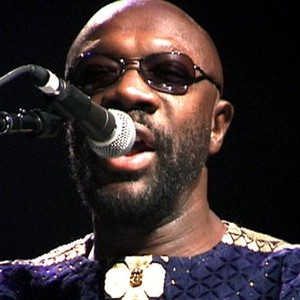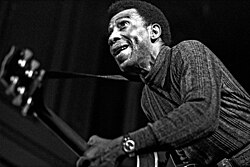

When we look at Stax artists of significance, Isaac Hayes stands out because of his abilities as songwriter, producer, and performer/musician. Hayes is the first and only artist at Stax to have achieved gold and platinum with nearly every album he produced during his time at the studio. Several albums went to R&B number one, starting with “Hot Buttered Soul”, (Enterprise 1001), continuing through “The Isaac Hayes Movement”, (Enterprise 1010), “To Be Continued” (Enterprise1014), “Shaft” (Enterprise 5002) and “Black Moses” (Enterprise 5003).
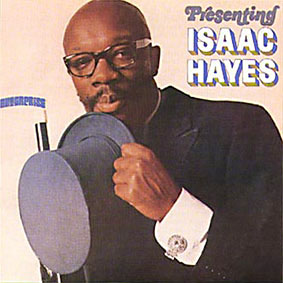
Hayes began at Stax as a songwriter, collaborating with David Porter on hits for Johnnie Taylor, Sam and Dave and Carla Thomas. His debut album of 1967, “Presenting Isaac Hayes”, (later retitled “Blue Hayes”), offered little to foreshadow the innovative character of “Hot Buttered Soul”, the album that brought him national renown in 1969.
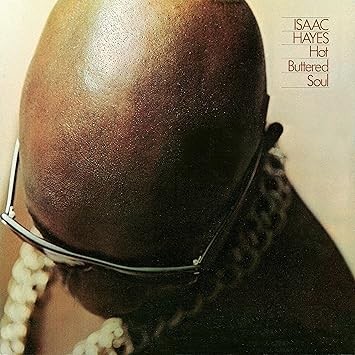
Spoken introductions, an eighteen-minute version of “By the Time I Get to Phoenix” and an almost symphonic use of a large, string-dominated orchestra on this album stand out. The album introduced Isaac’s baritone and orchestral soul style innovations.
The sound is driven by the funky rhythms of Willie Hall, a drummer who was a band member of the Bar-Kays, whilst Harvey Henderson played sax, clarinet, and flute. The Bar-Kays were the session band, with the addition of Marvell Thomas, Rufus’ son, on piano. Thomas also co-produced the album with Al Bell. Hayes played Hammond organ, whilst at the same time conducting the backing musicians and singing live. The string and horn arrangements were the work of Johnny Allen, with the recordings taking place at United Sound Studios. Much of the engineering was done by Terry Manning at Ardent Studios, although the final mix was the work of Russ Terrana at Tera Schirma.
The album was finally released in June 1969, going to number one on the Billboard R&B chart and number eight on the Billboard 200.
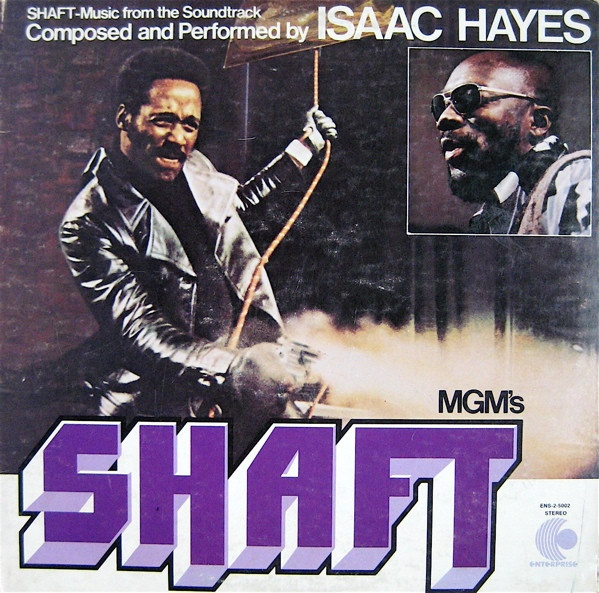
In 1971 Isaac cemented his international fame with the soundtrack album “Shaft”, moving him to god-like status. He was now an important figure in the black community internationally. The album became Pop album number one, the first for Stax Records. The title track exhibited the lead and rhythm guitar wah-wah style of Charles Pitts, who continued to play with Isaac into the 1990s. Also supporting Isaac on this innovative and dynamic project were Lester Snell (electric piano), James Alexander (bass guitar), Michael Toles, Gary Jones (bongos and congas) and Willie Hall (drums and tambourine). Take note of Willie Hall’s drum style, especially on the Shaft soundtrack, an extremely brilliant performance. Finally, for the rhythm section on “Shaft’s Cab Ride” Ronald Hudson (bass guitar) and Sidney Kirk (piano) were added. Strings and horns were in the capable hands of the Memphis Strings and Horns. The engineers on the project were William Brown, Henry Bush, Bobby Manuel, and Dave Purple, with editing by Daryl Williams and remixing by Ron Capone and Dave Purple.
The soundtrack received several music-industry awards: Grammy Awards for Isaac Hayes for “Best Instrumental Composition Written Specifically For A Motion Picture or for Television”, for Dave Purple, Henry Bush and Ron Capone for “Theme from Shaft” for “Best Engineered Recording, Non-Classical” and finally for “Best Instrumental Arrangement” (Isaac Hayes, Johnny Allen). During 1971, Isaac Hayes also received an Academy Award. Hayes then became the first African American to win an Oscar for a non-acting category when “Theme from Shaft” won the award for Best Original Song.
After Isaac Hayes departed from the Stax organisation, he started a career in acting and was a part of the successful television series The Rockford Files, which originally ran from 13th September 1974 to 10th January 1980. He played the character Gandolf “Gandy” Fitch.
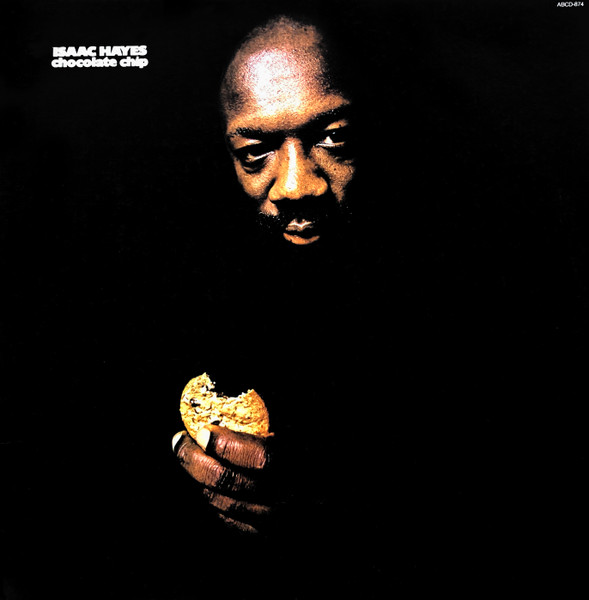
During the 1970s, Hayes established his own record label called Hot Buttered Soul/ABC Records. He released his first and only album on the label, “Chocolate Chip”, his first since leaving Stax Records, that was certified gold by the RIAA and also peaked at number one on the Billboard Soul and R&B Albums Chart week-ending August 9th, 1975 (2 weeks).
In 1992, Hayes was crowned honorary king of the Ada region of Ghana, in recognition of his humanitarian work there.
In 2002 Isaac Hayes played at the Glastonbury Festival in the UK. Also in 2002, a documentary was made, highlighting Isaac’s career and his impact on many Memphis artists from the 1960s onwards. It is called “Only The Strong Survive”.
Throughout his influential song-writing career, Hayes has also received five BMI R&B Awards, two BMI Pop Awards, two BMI Urban Awards and six Million-Air citations. As of 2008, his songs had generated more than 12 million performances. Isaac Hayes was the main reason that Stax was able to survive the crisis that occurred when the distribution deal with Atlantic broke down. With Otis Redding and Sam & Dave no longer leading the way, Isaac Hayes showed that being bold and experimental was no bar to success. In addition, he demonstrated that Black artists could sell concept albums and soundtracks, no doubt inspiring others, such as Curtis Mayfield in Chicago and Norman Whitfield in Detroit