
Era Records was founded in Los Angeles in March 1955 by two cousins, Herbert Newman and Lew Bedell, with the support of their uncle Max Newman. Herbert Newman was a lyricist who had studied at UCLA before working as a salesman for Mercury and Decca Records. Bedell was born in El Paso, Texas, but came to California with his mother to live with his uncle Max Newman when his parents divorced. His mother’s maiden name was Sara Newman, but she legally changed her married name Bedinsky to Bedell. Lewis Bedinsky thus became Lewis Bedell. He worked as a comedy entertainer in clubs and on TV, until switching to a job with a music publishing company, and then joining his cousin to jointly found Era.
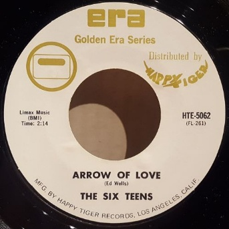
The label’s output was aimed largely at the White Pop market, but there were a few R&B singles issued. Two of these were leased from other local independent companies, the Olympics’ “Western Movies” from Demon and the Six Teens’ “Arrow Of Love” from Flip.
There were two Black solo artists on Era’s roster who are worthy of a mention, Jewel Akens and Ketty Lester.
Jewel Akens was born in Houston, Texas, in 1933. His family relocated to Los Angeles when he was nine years old.
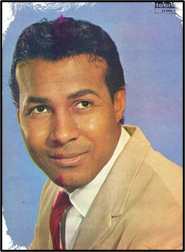
He sang in his church and joined the Four Dots vocal group in the early fifties. The group recorded two Doo-Wop singles for Freedom Records in 1958.
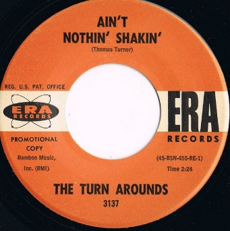
Akens signed for Era in 1964 as a member of the Turn Arounds and then recorded a series of solo singles for the label between 1964 and 1969. “The Birds And The Bees” from 1965 was a hit, reaching number three on the Billboard Hot 100 Singles Chart. The single sold over a million copies and was awarded a gold disc.
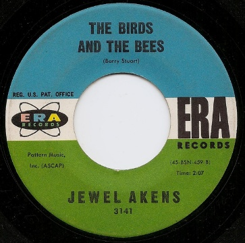
Akens was a great admirer of Sam Cooke, whose influence can be heard in Akens’ 1966 ballad “My First Lonely Night”.
Ketty Lester (real name Revoyda Frierson) was born in Hope, Arkansas, in 1934. She studied music at San Francisco State College, thanks to the award of a scholarship, and began performing as Ketty Lester in the early fifties.

Her first single was “Queen For A Day” on New York’s Everest label, but she quickly moved to Era, where she recorded “Love Letters” in late 1961. The song was composed by Victor Young and Ed Heyman, with an arrangement by Lincoln Mayorga, who played piano on the recording alongside Earl Palmer on drums.
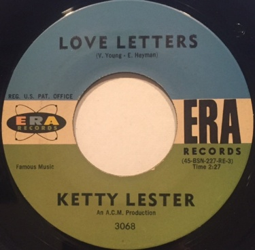
The single sold over a million copies, reaching number two on the Billboard R&B Singles Chart and number five on the Billboard Hot 100 Singles chart in early 1962. It also sold well in the UK, peaking at number four on the Official UK Pop Singles Chart.
Four more Era singles followed, the best of which is the R&B track “You Can’t Lie To A Liar”, but none matched the first. Lester moved to RCA in 1964.
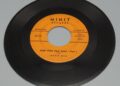
There were also a small number of Doo-Wop groups on the label, including the Passions, whose 1957 release “Jackie Brown” is typical.
In 1958, the cousins had set up a second label, Doré Records, with support from record distributor George Jay. The following year, after four years working together, the two cousins decided to split in 1959. Each sold their share of one company to the other, so that Newman became head of Era and Bedell took sole charge of Doré.
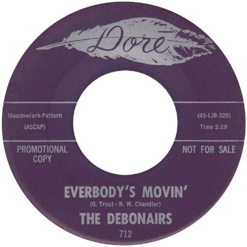
The second label concentrated on Pop and novelty recordings. Doré’s first hit came quickly, when the Teddy Bears took “To Know Him Is to Love Him” into the charts in 1958. The R&B flag was waved by a number of Doo-Wop groups, including the Passions (“Tango Of Love” 1958), the Raindrops (“Love Is Like A Mountain” 1960), and the Debonaires, whose fourth Doré release “Everbody’s Movin’” (sic) is a good up-tempo dance track despite the mis-spelt title. This 1964 single clearly shows how Doo-Wop was evolving.
1964 was also the year when five young men from Los Angeles got together to form the Whispers. They were twins Wallace and Walter Scott, Gordy Harmon, Marcus Hutson, and Nicholas Caldwell, who made their first recording in 1964 for Doré Records, taking the label into Soul music. Over the next three years, Doré issued nine singles by the group.
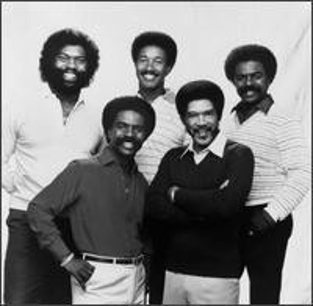
Around half of the tracks were arranged by Gene Page, including a few of the instrumental dance tracks that were used as the B-sides of the Whispers’ songs. The groups sound develops over this period, moving from Doo-Wop to Soul, with a rich vocal sound. Surprisingly, none of the singles entered the charts. The group’s first chart success came in 1969 with “The Time Will Come” on the Soul Clock label.
Bedell continued to run Doré Records until shortly before his death in 2001. Ace Records UK subsequently acquired the rights to the Doré recordings. Their compilation below was released in 2011.