
Wilson Pickett was born in Prattville, Alabama, in 1941, where he grew up with his mother. After a difficult childhood, he moved to Detroit in 1955 to live with his father. It was in the Motor City that he began to sing, first in church, then in a Gospel Harmony group called the Violinaires. Like many others before him, he was attracted to the secular music that he heard on the radio, especially to the sound of Little Richard. In 1959, he joined the Falcons, a Detroit group that had been set up by Eddie Floyd, Mack Rice and Joe Stubbs (brother of Levi Stubbs of Four Tops fame).
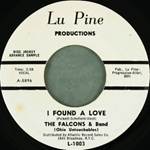
It was Pickett who sang lead vocal on the Falcons’ single “I Found a Love”, which he had co-written. It was based on a Pentecostal hymn and certainly pointed the way to a style of R&B with real “soul”. The song became a minor hit.
Pickett also started to record some solo tracks, including “I’m Gonna Cry” (with Don Covay) and a demo of another song that he had co-written entitled “If You Need Me”. He was hoping to sign with a national label, so sent the demo to Jerry Wexler at Atlantic Records. “If You Need Me” has a strong Gospel feel, with a spoken sermon section. It is slow and full of emotion, an early indication of why Pickett and Stax were such a good fit.
Wexler liked the song but, instead of giving attention to Pickett, he gave the song to Solomon Burke, who was a well-established star at Atlantic. Burke’s version of the song went to number two on the Billboard R&B Singles Chart and number thirty-seven on the Billboard Hot 100 Singles Chart. Meanwhile, Pickett released his version on the Double L Records label, reaching number thirty on the R&B chart and number sixty-four on the Pop chart.
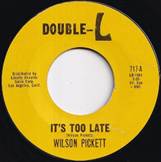
Despite his disappointment, Pickett persevered and was rewarded, when his next Double L release, “It’s Too Late”, reached number seven on the R&B chart and number forty-nine on the Pop chart. An album with the same name followed, which finally convinced Wexler to buy out Pickett’s Double L contract in 1964.
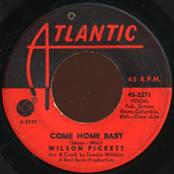
Pickett was teamed up with producer Bert Berns and songwriters Cynthia Weil and Barry Mann for his first Atlantic single, a duet with Tami Lynn, a singer from New Orleans. Sadly, “Come Home Baby” failed to make any impression.
Wexler’s next set of decisions were some of the most important ever taken in the development of Soul music. He booked a series of sessions at Stax Records in Memphis and took Pickett down to Tennessee to play with the session men at Stax, because he realised that Pickett needed a bit of Southern feeling in his songs. In May 1965, at the first session, Wexler described the rhythm that he was looking for by dancing the beat for musicians Steve Cropper, Al Jackson and bassist Donald “Duck”. Pickett then joined Eddie Floyd and Steve Cropper as a song-writing team.
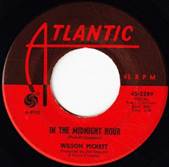
One of the first songs they came up with was “In the Midnight Hour”, which became Pickett’s first big hit, peaking in the USA at number one on the R&B Chart and number twenty-one on the Pop chart, and reaching number twelve in the UK. The single sold over one million copies and was awarded a gold disc. The song went on to give Pickett his first Grammy nomination for Best Rhythm & Blues Recording at the 8th Annual Grammy Awards. The key to the song’s success was the emphasis of the beat, which Steve Cropper has explained in an interview. Wexler told them that “this was the way the kids were dancing; they were putting the accent on two. Basically, we’d been one-beat-accenters with an afterbeat; it was like ‘boom dah,’ but here was a thing that went ‘um-chaw,’ just the reverse as far as the accent goes.”
Tony Fletcher’s analysis of the song picks up the importance of what Al Jackson and Steve Cropper were doing. In his biography of Wilson Pickett, “In the Midnight Hour: The Life & Soul of Wilson Pickett” he describes how they created the rhythm that took the song to the top of the R&B chart and established the Memphis Soul sound: “The rhythm is driven by Jackson and Cropper, who hammer home the second and fourth beats in tandem with an almost imperceptible delay, the former with a snare sound so bright it defies the mono recording, the latter with a sharp, consistent downstroke.”
At the second session in October, Isaac Hayes joined the MGs and tracks recorded included “Don’t Fight It”, produced by Jim Stewart, which charted at number four R&B and number fifty-three Pop.
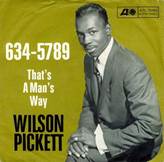
Another session took place towards the end of that year. Eddie Floyd and Steve Cropper had written a new song for Pickett called “634-5789”. Unfortunately, when he started to sing it, he hated it. He tore up the lyric sheet and refused to sing any more. Eddie Floyd was singularly unimpressed and grabbed Pickett in retaliation. Fortunately, they managed to sort out their differences by the evening and put together a new song “Ninety-Nine and a Half (Won’t Do)”. They ended up recording both songs and both were hits! The Floyd/Cropper song went to number one R&B and number thirteen Pop. The second song, written after the fight, reached number thirteen R&B and number fifty-three Pop.
However, the Stax co-owner, Jim Stewart, decided in December 1965 to end all outside record company productions, including those of Atlantic Records, to maximise studio opportunities for his own artists. It must have come as a nasty shock to Pickett and Wexler. Being as shrewd a businessman as he was, it didn’t take Wexler long to come up with a solution.
Wexler knew he had a winning formula, so he just needed to find a studio where he could replicate the ambience created at Stax. Not far away, in northern Alabama, was a small country studio by the Tennessee River in the Muscle Shoals area, owned and run by Rick Hall. It was Rick Hall who had been involved in sending the master recording of “When a Man Loves a Woman”, Percy Sledge’s first song, to Wexler in New York, wondering if Atlantic were interested. Wexler was indeed interested. He signed Percy Sledge and released the song in March 1966. It reached number one in the USA and went on to become an international hit. “When a Man Loves a Woman” was a hit twice in the UK, reaching number four in 1966 and, on reissue, peaked at number two in 1987. The song was the first gold record released by Atlantic Records. This is the kind of place that Wexler was looking for.
Wexler took Pickett to FAME Studios in Muscle Shoals to work with Rick Hall and the FAME session band. They were able to recreate the magic that Pickett had found at Stax, with a series of iconic Soul singles, including two R&B number one singles, “Land of 1000 Dances” (the Chris Kenner song form New Orleans) and “Funky Broadway”. You have to wonder what Jim Stewart thought about it!
After a pretty turbulent career, Pickett died in 2006. Little Richard spoke at his funeral. Steve Cropper also spoke in 2006 about some of Pickett’s difficulties in an interview with Geoff Boucher in the Los Angeles Times: “He could be difficult, and he didn’t really reach out to people. It wasn’t like Otis — if you met Otis, he was your best friend on the spot. He engaged people. Wilson was more distant and sometimes he had that angry-at-the-world attitude. But if you got in a studio, he was amazing. Just amazing.”
Wexler has also commented on the way that Pickett worked: “There was something about those records and Wilson’s voice — those were some of the funkiest, deepest-grooving, in-the-pocket recordings I ever heard. The thing about Wilson was he was just a great screamer, but he did it with control. James Brown would scream and it was a scream, but Wilson could scream notes. His voice was powerful, like a buzz saw, but it wasn’t ever out of his control, it was always melodic.”
Looking back, it is clear to see why the Stax sessions were so productive. Pickett was given freedom to explore his ideas along with talented musicians and songwriters that he knew and trusted. The atmosphere was relaxed but purposeful. Pickett really enjoyed what he was being asked to do by Wexler. The collaboration with Stax bore immediate success and paved the way for Pickett’s hits with FAME.