
Overton Vertis Wright was born in Lenow, Tennessee, in 1939. He started singing in church and joined various Gospel groups, including the Sunset Travelers and the Harmony Echoes, where he sung with James Carr. That group was managed by Roosevelt Jamison, who also starting writing songs with Wright, as they planned a move from Gospel to secular music.
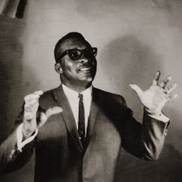
Jamison made a demo tape of songs with James Carr and Wright, which he took to Jim Stewart at Stax. Unfortunately, Stewart thought the Gospel style was too dominant and turned down the chance to sign both singers.
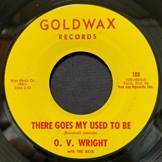
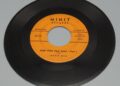
Jamison then took the tape to Quinton Claunch at Goldwax, who loved the songs and the singers. He signed both. Wright’s first release was “That’s How Strong My Love Is”/ “There Goes My Used To Be” in 1964. It was possibly recorded at FAME Studios, as Claunch was a friend of Rick Hall, FAME’s owner. Goldwax’s first release (“Darling” by the Lyrics), also in 1964, was recorded there. If that is the case, then perhaps The Keys, who are listed on the single as the backing group, are the FAME rhythm section. “That’s How Strong My Love Is” was soon covered by Otis Redding and later by the Rolling Stones and many other artists. It is a classic of Deep Soul, an encouraging start for O.V. Wright. Sadly, that first single on Goldwax was the only one for Wright. He became caught up in a contract dispute that resulted in him leaving the label.
When O. V. Wright agreed to leave Goldwax Records after just one release, he began recording again on Back Beat Records, a record label belonging to his old manager from Sunset Travelers days, who had challenged his Goldwax contract. Most of the singles that were released between 1965 and 1973 on Back Beat were produced by Willie Mitchell at Royal Studios.
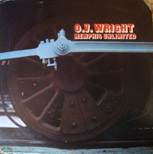
The Back Beat label also issued five albums during this period, including “Memphis Unlimited” in 1973. His best songs on Back Beat are “That’s How Strong My Love Is” (1964), “You’re Gonna Make Me Cry” (1965, number six R&B, number eighty-six Pop), “Eight Men, Four Women” (1967, number four R&B, number eighty Pop), “Ace of Spades” (1970, number eleven R&B) and “A Nickel and a Nail” (1971, number nineteen R&B).
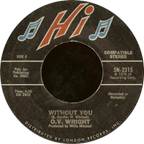
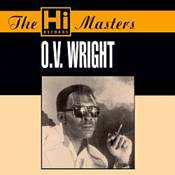
In 1976 Wright saw his first single release on Hi Records. He went on to record five more singles and five albums over the next three years, before moving on again. Standout tracks from the Hi sessions are “Without You” (1976), “You Gotta Have Love” (1977), “No Easy Way To Say Goodbye” (1978), and “I Don’t Know Why” (1979), all produced by Willie Mitchell.
Altogether, between 1964 and 1979, O.V. Wright made seventeen singles that entered the top 100 of the R&B chart.
During the mid-seventies, Wright spent some time in jail. On his release, he signed again for Hi Records, but the earlier successes did not repeat themselves. He died in 1980, following a heart attack. His legacy is a wonderful collection of Southern Soul recordings.
There are many good compilations of Wright’s best tracks, from Back Beat, Hi, and other labels.