
The Supremes saw the release of their twenty-third studio album in 1971, entitled “Touch”.
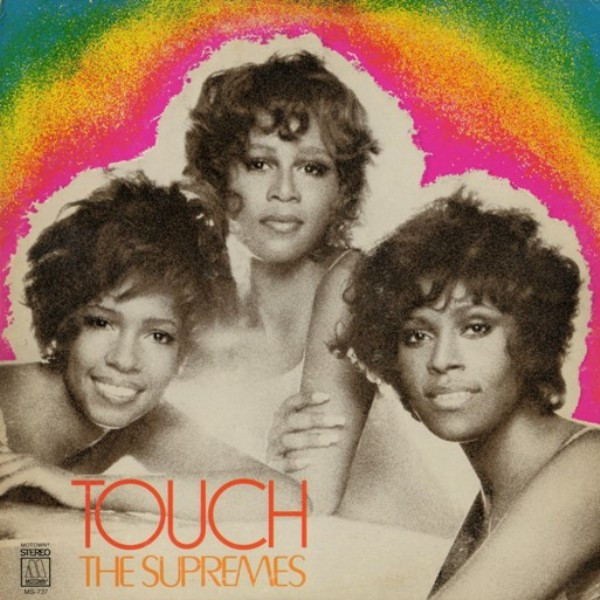
It was issued by Motown in June, with liner notes by Elton John. Four songs from the album were combined into two singles, the first pairing “Nathan Jones” with “Happy (Is A Bumpy Road)” (issued in April) and the second pairing “Touch” with “It’s So Hard for Me to Say Goodbye” (issued in September). All made chart entries, under the supervision of producer Frank Wilson.
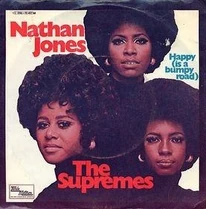
“Nathan Jones” was co-written by Kathy Wakefield and Leonard Caston, who had recently joined Motown. It was their first song for the Detroit company. Producer Frank Wilson asked the three Supremes to sing the lead in unison and added Clydie King’s voice too, then asked sound engineer Cal Harris to overdub the vocals to build up a layering effect. The arrangements by Jerry Long and David Van DePitte give the song a rhythmic swing, that helped the song to number sixteen on the Billboard Hot 100 Singles Chart, number eight on the Billboard R&B Singles Chart, and, best of all, number five on the Official UK Pop Singles Chart.
The album “Touch” has four songs co-written by Frank Wilson & Pam Sawyer, two by Kathy Wakefield & Leonard Caston, and one each by Pam Sawyer & LaVerne Ware (a.k.a. Gloria Jones), Laura Nyro, Billy Page (brother of arranger Gene Page) and Clifton Davis. Davis’ best-known composition is “Never Can Say Goodbye”, which he wrote for the Jackson 5 in 1971. His contribution to this album is an up-tempo ballad “Here Comes the Sunrise”. Overall, it is not as strong a collection as Frank Wilson’s first two albums with the new Supremes, only reaching number eighty-five on the Billboard 200 Albums Chart and number forty on the Official UK Pop Albums Chart. It did, however, register better on the Billboard R&B Albums Chart, peaking at number six.
The second single drawn from the album was the title song “Touch”, a soft, romantic ballad co-written by Wilson & Sawyer, which reached a disappointing number seventy-one on the Billboard Hot 100 Singles Chart. Fortunately, the Supremes had another string to their bow, teaming up with the Four Tops!
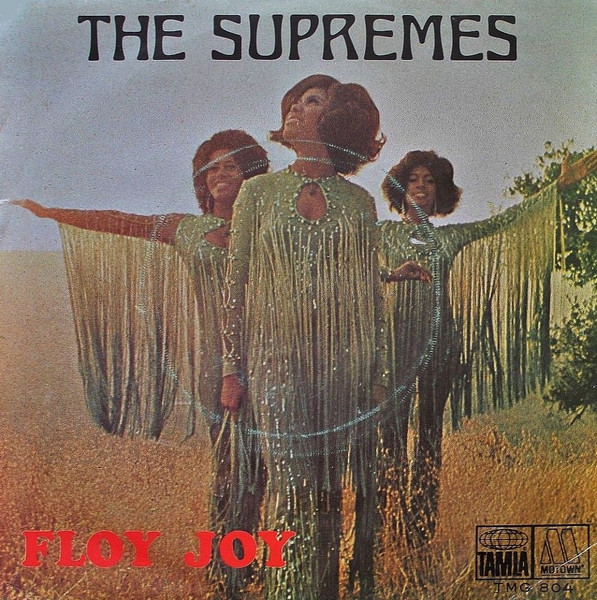
Before the end of the year, Motown decided to switch the Supremes from producer Frank Wilson’s stable of artists to working with Smokey Robinson. Recording began for their next studio album, which was scheduled for release in 1972, and one of the songs from the sessions was chosen for single release just before Christmas. Entitled “Floy Joy”, the track became the title song for the new album.
The Four Tops & the Supremes obviously enjoyed working together in 1970, because they got together again in 1971.
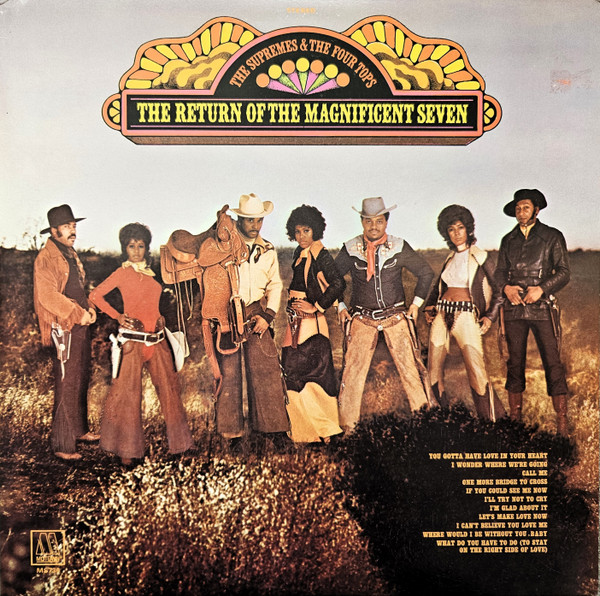
In July, Motown released a follow-up album to 1970’s “The Magnificent 7”, with the obvious title of “The Return Of The Magnificent Seven”. Although the tracks were recorded in 1970, the album has a different feel from their first collaboration, featuring only two covers this time round. There are new songs from Dino Fekaris and Nick Zesses, Ashford & Simpson, and Clay McMurray & Martin Coleman. Arrangements are shared between David Van DePitte, Paul Riser, Hank Cosby and Tom Baird. Frank Wilson produced the album, with Clay McMurray, Tom Baird Johnny Bristol, Bobby Taylor and Ashford & Simpson working on individual tracks. That’s a lot of talent! Not surprisingly, the outcome was a very polished album, that deserved its number eighteen position on the Billboard R&B Albums Chart.
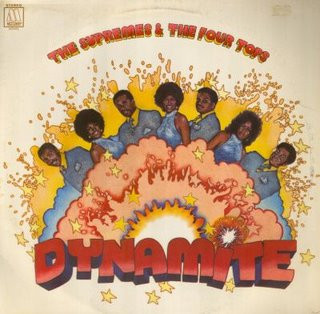
Late in the year, a second collaboration between the two groups was released with the title “Dynamite”. It is a return to the style of the first one, offering mainly covers and mixing Motown and non-Motown songs. Despite the efforts of Frank Wilson, the album didn’t reach the top echelons of the charts, peaking at number twenty-one on the Billboard R&B Albums Chart.
The Four Tops devoted most of 1971 to working with the Supremes, with only two singles and a greatest hits compilation being issued by Motown. They did, however, start the year climbing the charts with “Just Seven Numbers (Can Straighten Out My Life)”, which had been released on 28th December 1970 and peaked at number nine on the Billboard R&B Singles Chart and number forty on the Billboard Hot 100 Singles Chart.
The follow-up single, “In These Changing Times”, was released in May. It reached number twenty-eight on the Billboard R&B Singles Chart and number seventy on the Billboard Hot 100 Singles Chart.
That was followed by a single drawn from their 1969 album “Four Tops Now”, a cover of Jimmy Webb’s song “MacArthur Park”, split into two parts, one on each side of the disc. Wade Marcus wrote the arrangements and Frank Wilson led the production. Unsurprisingly, the Four Tops’ version of the song smooths out all the drama of Richard Harris’ original, but the single charted pretty well, reaching number twenty-seven on the Billboard R&B Singles Chart and number thirty-eight on the Billboard Hot 100 Singles Chart.
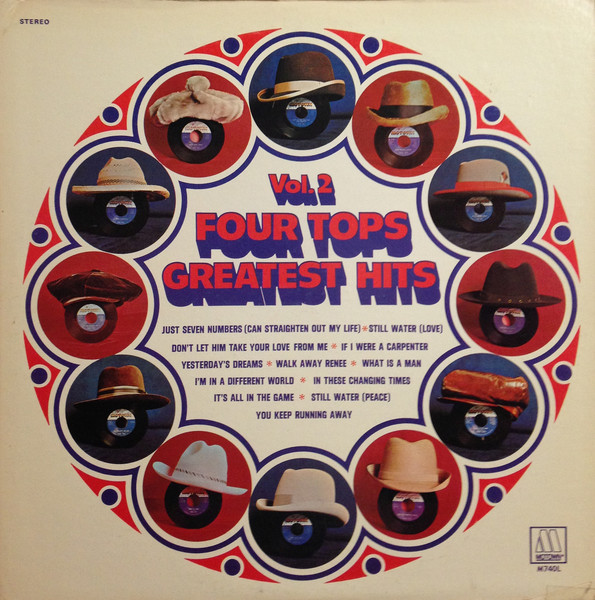
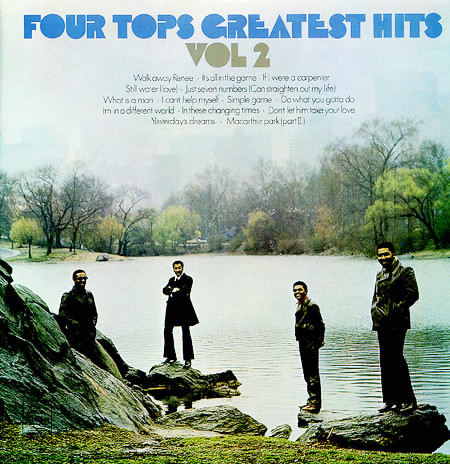
“Four Tops Greatest Hits Volume 2” was issued in August, offering twelve of their best songs from the previous few years. It didn’t shine in the charts, failing to break into the top one hundred on the Billboard 200 Albums Chart. For the group’s best results in 1971, it is necessary to look at releases in the UK, starting with the single “Simple Game”.
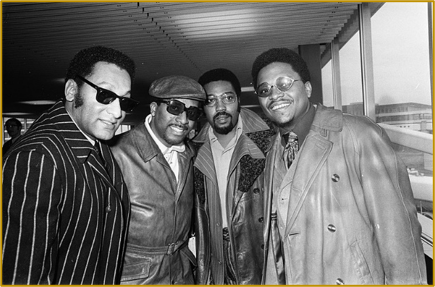
The Four Tops in Holland
Photo: Rob Mieremet / Anefo (Wikimedia Commons)
While on a visit to the UK in 1971, the Four Tops were contacted by Mike Pinder, who was the keyboard player in the UK band The Moody Blues. Pinder had written a song for the Moody Blues, which they had recorded at the Decca Studios in London and released on the Deram label in 1968, as the B-side to “Ride My See-Saw”. He thought that the song, “A Simple Game”, would suit the Four Tops and suggested that they record it in London, with the Moody Blues singing backing vocals and the original arranger (Arthur Greenslade) and producer (Tony Clarke) involved again. The result was a single that was approved by Motown for release in the UK. It is a beautiful version of a good song (too good for a B-side!), which British fans sent to number three on the Official UK Pop Singles Chart, week-ending 25th September 1971, spending eleven weeks on the chart.
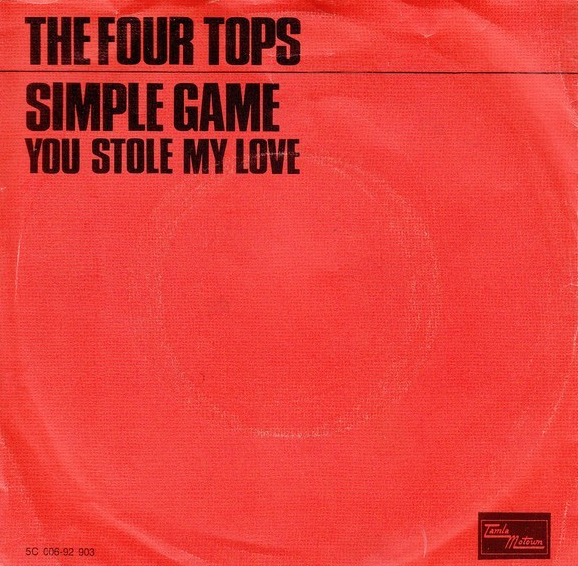
The success of the single was then reflected in some changes being made to the greatest hits album. The UK version has fourteen tracks, including “Simple Game”, which wasn’t issued in America until 1972. There are ten songs in common on the two versions of the compilation album, with some significant differences between the UK and the USA track listings. The UK variant peaked at number twenty-five on the Official UK Pop Albums Chart.