
Music City Records was founded in 1954 by Ray Dobard in Berkeley, California, on the North side of Oakland on San Francisco Bay. The company’s address was first 1815 and then 1866 Alcatraz. Its aim was to record local musicians, covering Blues, R&B, and Pop music. There were a few singles by White artists, plus a little Jazz and Gospel. The majority of Music City’s roster were from the Black community.
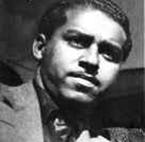
Ray Dobard was born in New Orleans in 1921. His father had taught him building skills, which Dobard used to good effect when he relocated to Berkeley, California, during World War 2. He set up a contracting firm which did well, but he wanted to get involved in the music industry. In 1953, he set up Delcro, a music publishing company, and then added Delcro Records, based at 3362 Adeline Street in Berkeley.
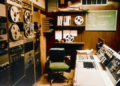
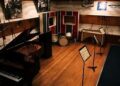
He met Bob Geddins, who was based in Oakland, not far away, and probably drew inspiration from him. Dobard went on to add another publishing company, Gation, another record label, Music City, and a recording service. He later added a studio and a record store (which later became two) that carried the Music City name. His wife ran the store, while he worked in the studio. It is likely that Dobard did most of the work involved in setting up the shop and the studio. Unlike Leroy Hurte and Bob Geddins, however, he didn’t build a pressing plant. At the start, he probably asked Bob Geddins to press his discs. After that, he must have used professional plants such as the Monarch Record Manufacturing Company or Allied in Los Angeles.
In the 1960s he also ran a Music City Radio Show on KSOL Radio with co-host DJ Dr. Soul. Given his energy and his determination, it is not surprising that Music City operated for over twenty years.
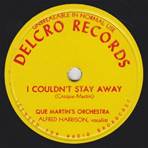
The Delcro label was used for a small number of releases including “I Couldn’t Stay Away”/ “Your Money Ain’t Long Enough” by the Que Martin Orchestra in 1953.
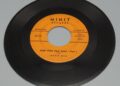
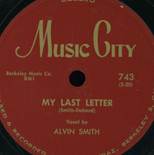
The Music City label’s first release was in 1954. “My Last Letter”/ “On My Way” was by Alvin Smith, who wrote both the songs with Ray Dobard. It was Smith’s first recording, made at Dobard’s studio, and was issued as a 10” shellac 78rpm disc and as a 7” 45rpm vinyl disc. Its serial number is 743, an odd place to start?
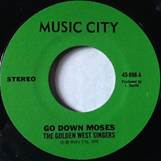
The end of the sequence came in 1976 with the Golden West Singers’ recording of “Go Down Moses”, with the serial number 898.
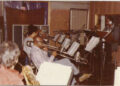
The studio band was led by Johnny Heartsman (guitar), with Alfred Berry (baritone saxophone), James Johnson (alto saxophone), and Ray Cotton (drums). Several pianists were called upon. When a group called the Gaylarks came to record at the studio, they were also hired to provide backing vocals for other singers.
It was soon clear to Dobard, from a study of the national charts and also from what he learned from the kids who came into the Music City store, that he should concentrate of vocal harmony groups. There were in the local area large numbers of young people dreaming of becoming Pop stars, forming vocal harmony groups often whilst still at school. When it became known that Dobard was on the lookout for groups to record, many came knocking at his door. A lot were auditioned, no doubt, and around twenty were invited to record over the twenty years plus of Music City’s operation.
The 5 Campbells, the 5 Swans (from Berkeley), the Lyrics, the Fidels, the Holidays (from Oakland), the Five Crystels (sic), and the Modernistics all made one single for Music City. For some of them, it was their first and last attempt to strike gold.
Other groups made more of an impression on Ray Dobard. The Midnights (from Oakland), the Gaylarks, the Four Deuces (from Salinas), the 5 Rovers (from Sacramento), the Crescendos (from Berkeley), the Pagans (from Oakland), and the Klixs (from Richmond) made around twenty singles between them, with disc sharing quite common.
The inexperience of most of these performers was off-set by their enthusiasm. Their songs reflected what was being created in the Bay Area, in schools, in bars, at rent parties, in people’s homes. Many of the Music City releases were popular locally, and Ray Dobson could live with that.
Only two of his recordings made a significant wider impact, the Four Deuces’ “W-P-L-J” and Johnny Heartsman’s “Johnny’s House Party”. The former gained a lot of local airplays in 1956 and was later covered by both Frank Zappa and Hall & Oates. The latter climbed to number thirteen on the Billboard R&B Singles Chart in 1957. Not much reward for twenty plus years of work in the studio, some may think, but rewards come in many ways!
Selected Artists at Music City
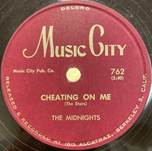
The Midnights made two singles at Music City in 1954 and then no more anywhere. Both singles have a mid-tempo R&B dance track backed by a slow R&B ballad. The two B-sides, “Hear My Plea” and “Cheating On Me”, are the best of the four tracks.
The Gaylarks arrived at Music City in 1955. Members were Ben Richards, James Moore Jr., Bobby Davis, Billy Vance, who were friends at school in San Francisco, plus Carl Lovejoy from Oakland. They shared their first single with the Rovers, contributing “Tell Me Darling”, a song written by Ray Dobard. It is a slow Doo-Wop ballad with an interesting arrangement, but the recording is not the best.
Three more singles followed between 1955 and 1958, the best of which is “My Greatest Sin”/ “Teenage Mambo”, from 1956. Both tracks are Doo-Wop ballads written by the group’s lead singer Ben Richards.The Gaylarks are also credited on three singles and one EP with the John Heartsman Band and on two singles where they provided a B-side for re-issues of the Four Deuces “W-P-L-J”.
The Four Deuces were Jim Dunbar, Luther McDaniels, Orvis Lee Teamer, and Henry Shufford, four army friends from Fort Ord. McDaniels had written a song which the group wanted to record, which brought them to Music City in 1955. “W-P-L-J” is shorthand for White Port & Lemon Juice, a popular drink at that time. The song is a swinging R&B dance track that has a catchy arrangement and a good saxophone solo. It went on to sell well. According to Marv Goldberg, it took all day to record the song, with a total of forty-four takes! The boys had never recorded before.
Strangely, Ray Dobard decided to use the song as the B-side of a shared single. On the A-side was a macabre Blues ballad entitled “Here Lies My Love” sung by the Undertaker. The man in black was Roy Hawkins, who had started his recording career at Cava-Tone in 1948, not far from Berkeley. He had gone on to Modern, but his last release on that label had been in 1953. Perhaps a song about his dead sweetheart was an attempt to resurrect his career, but it was a strange fit with the Four Deuces up-beat composition.
It certainly didn’t bring them any luck. After one more single, the group broke up. Their only other contribution to Music City was six re-issues of “W-P-L-J”, each with a different B-side contributed by other Music City artists.
The 5 Rovers were Oliver Stevenson, Jay Payton, Hank Swarn, Billy Ray Williams, and Ralph Helms. They came to Music City as the Rovers in 1954 to record “Ichi-Bon Tami Dachi”/ “Why-Ohh”, which the group had written. Both tracks are strong, following the common pattern of up-tempo A-side and slow B-side, with Doo-Wop harmonies.
After two shared singles for which they provided the A-side ballads, the group recorded their last Music City single “Down To The Sea”/ “Change Your Mind”, two Hank Swarn songs, in 1956. It is their best.
The Crescendos were a quintet, two female and three male voices. George Banks and Odell Alford had met at Willard Junior High. At Berkeley High School, they were joined by Cynthia Badie, Wanda Burt, and a young man called Ernie. Wanda Burt had a weekend job at Ray Dobard’s record store. In 1960, she gave Mr. Dobard a demo disc that the group had made and he was impressed enough to record them.
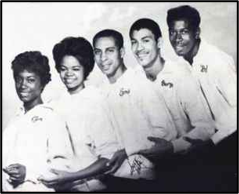
“My Heart’s Desire”/ “Take My Heart” features two songs written by group member George Banks. They are both slow, romantic ballads, with Wanda Burt on lead vocal. The backing from the other group members is punchy. The result is a good R&B Pop single that should have sold well. It was leased by Gone Records for release on the East Coast, but even so, the response was not as good as expected.
Ray Dobard must have been disappointed, as Wanda Burt had a strong voice and the songs were well arranged and recorded. He decided to put out a follow-up, “Teenage Prayer”/ “I Don’t Mind”. The B-side is a Wanda Burt composition that she sings beautifully. Dobard’s production is spot on again for the teen market.
When results were once more below expectations, Dobard gave the group one last chance in 1962 but took their name off the credit. The single is simply credited to Wanda Burt, although the other members are indeed singing on “Scheming”, the B-side. Burt is probably backed on the A-side “Your True Love Is Standing By” by another group, but there was still no hit.
The Pagans were Lee Williams, James Neal, Nate Robertson, and Lonnie Johnson. They made just one single as a quartet in 1960 and then backed Lynn Dee on another, a short career indeed. The best of the four tracks is the ballad “Lover’s Plea”.
The Klixs were also a male vocal quartet. Members were Elvin Bridges, Richard Scott, Harold Andrews, and Jim Moore. They made their first single at Music City in 1958, pairing “This Is The End Of Love” with “Elaine”. Both tracks are very slow Doo-Wop ballads. The single was later re-issued, with the two sides reversed.
The group’s only other contribution was “It’s All Over”, which was used as the B-side of one of the six re-issues of the 4 Deuces’ “W-P-L-J”. It is their best song.
Alongside this plethora of vocal harmony groups, Ray Dobard also recorded a male Blues singer, a Blues band, an R&B duo, an R&B singer, and Music City’s house band.
Jimmy Nelson had started out at Olliet in 1948, before moving to RPM in 1951, where he recorded six singles by 1953.
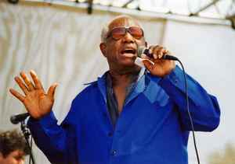
His only single for Music City dates from 1956, featuring two of his own compositions, “The Wheel” and “She Moves Me”. They are solid West Coast Blues, with orchestral backing and no rough edges.
Gene Lee & the Blues Rockers’ single is in a similar style. “You’re The One”, written by Bob Geddins, and “Gonna Blow Out The Lamp” are both slow Blues, sung with feeling. The band made just one other single for the Choctaw label in 1958.
Pee Wee Kingsley (real name Alvin Parham) and Sugar Pie DeSanto (real name Umpeylia Marsema Balinton) made just three singles together, one at Jody in 1958 (credited as Paliya and Alvin), one at Music City in 1958 and one at Veltone with Bob Geddins in 1960.
Sugar Pie DeSanto had made two singles partnering Hank Houston at Federal in 1955. Kingsley had started out at Rhythm Records earlier in 1958. By the time they got together at Music City, they were probably married. The two tracks issued by Music City are “Nickel And A Dime” and “Flippin And A Floppin”, both written by Mr. or Mrs. Parham. They are up-tempo R&B rockers, amongst the best of the label’s output.
Lord Luther wasLuther McDaniels from the Four Deuces. When that group broke up after recording just three tracks at Music City, McDaniels began a solo career. He went back to Ray Dobard’s label to record “Just One More Chance” in 1958. The song has a New Orleans vibe. For the B-side, Dobard chose a Doo-Wop ballad sung by the Gaylarks. Later that year, Luther got a band together to cut two singles at Frantic Records, the second of which was picked up by Imperial. In 1960, Dobard issued another Lord Luther composition, the R&B up-tempo “Can’t Get You Out Of My Mind”. This time, it is the Modernistics on the B-side. He also recorded a single on Bob Geddins’ Gedisons label that year.
Eight years later, Luther made his next single, an excellent Soul ballad entitled “My Mistake”, on the Schireck label.
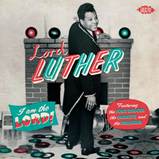
The Ace Records (UK) compilation of Lord Luther’s early songs.
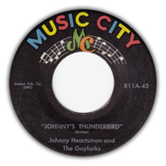
The Johnny Heartsman Band played on many of the Music City singles as the Music City studio band. They also recorded a couple of singles as Johnny Heartsman and the Rhythm Rockers. The first of these was “Johnny’s House Party” parts 1 and 2, two R&B instrumental tracks with the Gaylarks providing party noises that gave Music City its only national hit, as noted above. The follow-up, “Johnny’s Thunderbird”, is just as good, but didn’t make the charts.
The UK company Ace Records signed a licensing agreement with Ray Dobard before his death in 2004. They then negotiated the acquisition of the rights to one thousand, five hundred reels of recorded music that Ray Dobard had collected during the years of Music City’s operation. Alec Palao at Ace has put together several compilations of the Music City material, starting with a triple CD collection, the Music City Story, featuring seventy-eight tracks, many of them previously unissued. It was released in 2011.
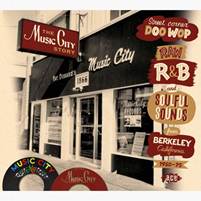
In 2011, 2014, and 2018, that was followed by compilations of Music City’s best Street Sounds from the 70s, best Vocal Group tracks, and best Blues & Rhythm tracks.
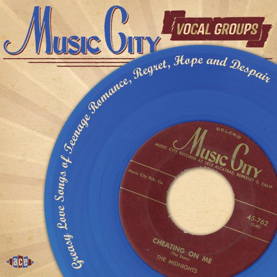
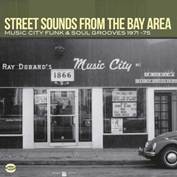
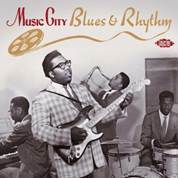
Many of the tracks were previously unknown. The collection is a treasure trove of Bay Area music of Black origin.