
Marvin Gaye began 1972 enjoying a new contract. His reward for the hard work put into “What’s Going On” was a deal that offered him one million dollars a year! (Around eight million dollars in 2024 values). He decided that his next album would be more overtly political and would challenge those seeking power to spell out how they would improve the lives of all American communities. No doubt his inspiration came from the fact that 1972 was an election year for America’s next president, a race between Richard Nixon and George McGovern, to be concluded in November.
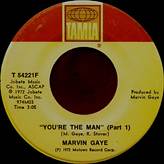
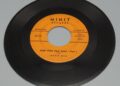
A single from the 1972 sessions was released by Tamla, probably in May. “You’re the Man” was co-written by Gaye and Kenneth Stover, a cousin of Harvey Fuqua, who had written songs for Fuqua’s Tri-Phi artists, and had sung backing vocals on “Inner City Blues (Make Me Wanna Holler)”. Musically, the song is similar to “Inner City Blues”, recorded using Gaye’s multi-tracked vocals, all sung in different registers. The percussion and wah-wah guitar lead the backing, with a Jazzy horn solo interposed. The recording was undertaken in the Spring of 1972 at the Hitsville West Studio in Hollywood, with musicians from Hamilton Bohannon’s band.
The lyrics are direct and unequivocal in their challenge to politicians, particularly Nixon as the incumbent president.
People marching on Washington
Why not hear what they have to say?
Because the tables just might turn against you, brother
Set around Election Day
Politics and hypocrites
Is turning us all into lunatics
Can you take the guns from our sons?
Right all the wrong this administration’s done?
The single reached number seven on the Billboard R&B Singles Chart and a disappointing number fifty on the Billboard Hot 100 Singles Chart. The general feeling among Motown’s Quality Control Team was that it was a risk to push the single. Berry Gordy had been wrong over “What’s Going On”, but he too wasn’t comfortable with challenging the government.
Gaye spoke later of Motown’s lack of support for the song, which caused him to drop the whole project. There were another sixteen songs recorded, but he shelved them and turned to a film score instead. Several different versions of “You’re the Man” have appeared over the years on various compilations, but the album was never really completed so couldn’t be issued.
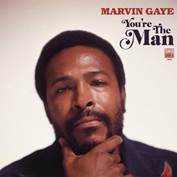
Finally, in 2019, around the date of Marvin Gaye’s birthday (he would have been eighty), all the shelved songs were released on an album entitled “You’re the Man”. The album contains seventeen tracks, produced by Gaye, Hal Davis, Gloria Jones and Pamela Sawyer, Freddie Perren, Fonce Mizell, and Willie Hutch. Later, an expanded edition was issued, with three additional tracks.
Highlights include “The World Is Rated X” and “Where Are We Going”. The first is beautifully arranged, showcasing Gaye’s upper register vocals. The second is a funky ballad, sung in a lower register with falsetto passages. Backing singers and percussion drive the song along.
The album has strong echoes of “What’s Going On”, but Gaye seems more at ease. Musically, the songs have no sharp edges. Lyrically, there are challenges, which are usually presented as questions, just as they had been on “What’s Going On”. There are also observations that reflect problems in America and in the rest of the world too, but they are not phrased aggressively but rather as an invitation to reflect.
Day in, day out
Sidewalk sleepers turn about
Day by day the work gets done
Day by day another war goes on
It is hard to understand why the project was abandoned!
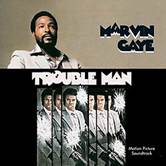
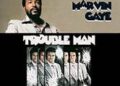
Instead, Marvin Gaye embarked on one of the most ambitious projects of his career with “Trouble Man”, a soundtrack album written and produced almost entirely by Gaye himself. Released by Motown’s Tamla subsidiary on 8th December 1972, the album marked Marvin’s first full venture into film scoring and represented a continuation of the artistic autonomy he had established the previous year.
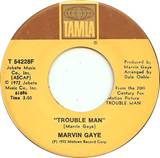
The title song, “Trouble Man”, released as a single on 21st November 1972, serves as the centrepiece of the soundtrack. Much like “What’s Going On”, the track blends social awareness with deeply personal expression, though here confidence and resilience are conveyed through restraint, mood and atmosphere rather than overt commentary. The lyric, most memorably expressed in the line “I come up hard, but now I’m cool”, resonated strongly with Marvin’s own life at the time and functions simultaneously as a character portrait for the film’s protagonist and a veiled self-reflection by the artist.
Gaye delivers a calm yet commanding vocal performance, singing with self-assurance and quiet confidence. His phrasing is controlled and unhurried, allowing nuance and tonal shading to carry the emotional weight. The arrangement combines strings, muted brass and a supple rhythm section, resulting in one of the most sophisticated vocal recordings of his career, blending autobiography and cinematic storytelling.
The introduction to the vocal version of “Trouble Man” is a masterclass in atmosphere and restraint. Rather than announcing itself with a bold melodic statement, the track opens quietly and deliberately, drawing the listener into a mood of calm authority and underlying tension. A smooth, rolling bass line establishes a steady, grounded pulse, functioning almost like a heartbeat and suggesting inner resolve rather than outward aggression. The drums enter softly, with light hi-hat patterns and minimal snare accents, reinforcing the track’s relaxed yet purposeful momentum.
Subtle electric piano chords and synthesiser textures soon follow, adding harmonic colour without crowding the rhythm. The harmony remains slightly ambiguous, avoiding obvious resolution and sustaining a sense of quiet suspense. Muted brass lines drift into the soundscape with great restraint, enhancing the cinematic feel while hinting at complexity beneath the surface calm. Notably, the introduction withholds an immediate vocal entrance. There is no dramatic build-up or instant hook. This measured delay builds anticipation and mirrors the protagonist’s character: self-contained, observant and unflustered, projecting an air of quiet confidence. When Marvin Gaye finally enters, his voice feels like a natural extension of the instrumental landscape rather than a sudden focal point.
Musically, the track is rooted in a refined blend of jazz, soul and blues. The groove is spacious and unhurried, built on rhythmic restraint rather than drive. The bass moves smoothly and deliberately, while the drums maintain a soft, steady pulse, reinforcing composure and control. Marvin’s voice, refined and dynamic, becomes a powerful means of musical expression; by sublimating intensity and redirecting emotional energy, he transforms it into a new form of musical transcendence.
Marvin Gaye performed multiple roles on the recording. In addition to singing lead and background vocals, he played electric piano and contributed ARP synthesiser textures, which are central to the track’s modern, urban soundscape. The bass line is widely attributed to Wilton Felder, a key figure in Motown’s Los Angeles rhythm section, whose melodic restraint aligns perfectly with the track’s mood. The drum part is generally credited to Ed Greene, whose precise, understated playing reinforces the song’s unflustered atmosphere. Guitar contributions are most commonly associated with David T. Walker, whose subtle rhythm work supports the groove without distracting from the vocal.
At the core of the track is Marvin’s electric piano, most likely a Fender Rhodes. Its soft, rounded voicings sit low in the mix, providing warmth while leaving space for the vocal. Gaye favours sparse, carefully placed chords rather than continuous comping, allowing silence to become part of the musical language. His harmonic approach draws on jazz-influenced voicings with extended chords and subtle colour tones, sustaining the track’s emotional tension. The ARP synthesiser, still a relatively new instrument in soul music at the time, is used not for novelty but for atmospheric shading, functioning as a textural bridge between rhythm section, brass and strings.
The B-side of the single, “Don’t Mess with Mister T”, provides a contrasting energy. It is a swaggering, confident instrumental that serves as both a thematic statement and character motif. Bold horns, crisp rhythm and Marvin’s electric piano and synthesiser work give the track a modern edge. It became a recurring motif throughout the film and later inspired celebrated jazz interpretations, most notably by Stanley Turrentine.
The Trouble Man soundtrack was recorded entirely on the West Coast at Motown Recording Studios, Hitsville West, in Los Angeles. Unlike many Motown projects of the era, which relied on teams of producers and writers, the album was largely conceived, written, arranged and produced by Marvin Gaye himself. Arrangers Jerry Long and Dale Oehler contributed exceptional string and horn orchestrations, bringing cinematic depth to Marvin’s compositions. This was the first album of Marvin’s career on which he wrote and produced every track.
Commercially, the single “Trouble Man” performed strongly, peaking at number seven on the Billboard Hot 100 Singles Chart for the week ending 18th October 1973, and at number four on the Billboard R&B/Soul Singles Chart for the week ending 20th January 1973. The album reached number three on the Billboard R&B Albums Chart for the week ending 10th February 1973 and peaked at number fourteen on the Billboard 200 Albums Chart for the week ending 3rd March 1973. Cash Box magazine, in its issue dated 9th December 1972, described “Trouble Man” as a fine blend of smooth vocals and intriguing musical ventures.
In summary, “Trouble Man” is best understood as a composer-led ensemble performance, with Marvin Gaye firmly at its centre. Supported by elite Los Angeles session musicians and shaped by skilled arrangers, the track achieves its power through balance, atmosphere and emotional control rather than instrumental showmanship. It remains one of the most sophisticated and artistically confident recordings of Marvin Gaye’s career.