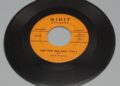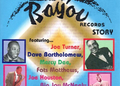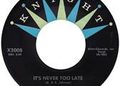

Bay’ou Records was established in Hollywood, probably in 1951, and was no longer operational by 1954. The owner was record producer Franklin Kort, who had worked at Swing Time Records. Around a dozen names feature on the roster, some very well known on the West Coast, who between them created around twenty singles. The earliest releases were issued on 10” 78rpm shellac discs, the last two Joe Houston singles were on 7” 45rpm vinyl. Some singles were issued in both formats.
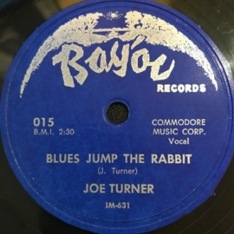
The biggest name on Bay’ou is probably Joe Turner, whose single “Blues Jump The Rabbit” from 1951 is an up-tempo Jump Blues dance track, complete with boogie piano and honking saxophone. The B-side, “The Sun Is Shining”, is slower but Turner delivers an even more powerful vocal.
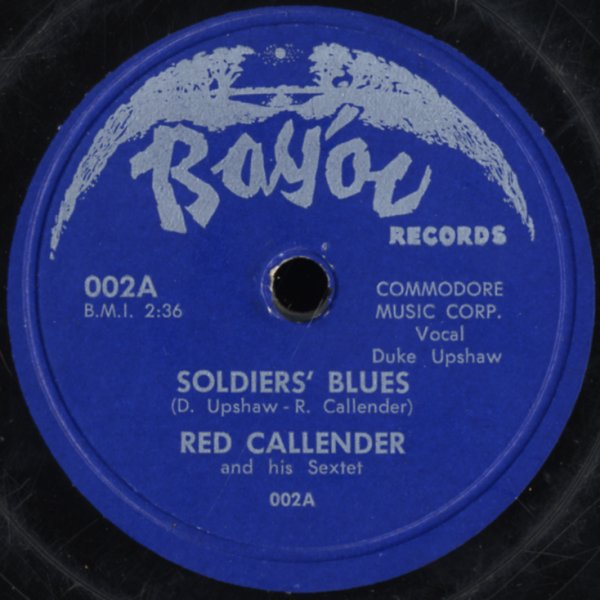
Red Callender has two singles on the label. His sextet creates a more sophisticated sound than Turner, with piano and horns demonstrating the Jazz roots of fifties R&B. “Soldiers’ Blues” is an excellent example of the genre.
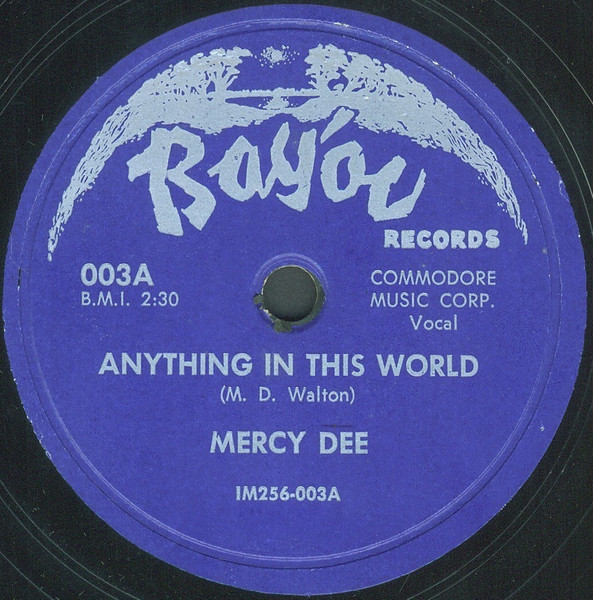
Mercy Dee Walton also has two singles on Bay’ou. He was from Waco, Texas, but moved to the West Coast in 1939. He recordings also appear on Imperial, Specialty, Rhythm, Flair, and Spire. Walton played piano and was a powerful Blues singer. “Crepe On Your Door” and “Anything In This World” both highlight his vocal and piano skills, augmented by some dynamic guitar backing. He wrote his own songs, including “One Room Country Shack”, that was covered by Mose Allison, Lowell Fulson, and later Buddy Guy.
Joe Houston also started out in Texas, before moving to the West Coast to record for the Bihari brothers at Modern in 1951. His three Bay’ou singles were issued in 1953. Houston played saxophone and led a small orchestra, specialising in Jump Blues instrumentals.
Dave Bartholomew and his Orchestra, Jimmy Gil, and Fats Matthews brought the flavour of New Orleans to Bay’ou, with three singles recorded in the Crescent City but released by Bay’ou in 1953. Bartholomew’s single “Country Gal” is another Jump Blues with saxophone much in evidence. Gil’s “North Wind” and Fats Matthews’ “I’m Thankful” both have a typical New Orleans piano setting the slow Blues rhythm, augmented by some powerful horns.
Jesse Allen also had just one release on Bay’ou in 1953, again with a New Orleans connection. “Take It Easy”/ “Dragnet” pairs two Dave Bartholomew R&B orchestral dance songs.
Big Jay McNeely brings things closer to home with his two Bay’ou singles, released in 1953. “Hometown Jamboree” and “Catastrophe” are just what his fans liked, two powerhouse saxophone instrumentals to dance to.
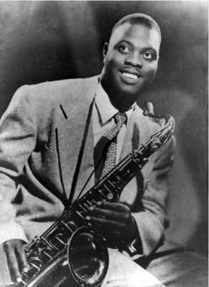
Big Jay McNeely
L. C. Williams added a little Texas Blues to Bay’ou’s output. His single “Mean and Evil” had been issued by the Freedom Recording Company in Houston, Texas, in 1949. In the fifties, Bay’ou re-issued it with “I Want My Baby Back” or “My Darkest Hours” on the B-side, which were also Freedom Recording releases from 1950. They were probably licensed.
Sammy Harris, Clarence Samuels, and Goree Carter, three more Blues musicians from Texas on the Freedom Recording roster, provided four tracks for two Bay’ou singles.
Link Davies added a touch of Cajun Country music, Jimmy Key provided one Country single, and finally Sister Elizabeth Eustis offered two Gospel tracks.
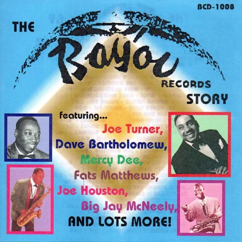
The 32-track compilation of Bay’ou’s output