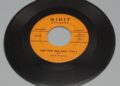

Knight Records was established in 1958, based at 6425, Hollywood Boulevard, in Los Angeles. It was a subsidiary label of Imperial Records. Twelve singles were issued between September 1958 and April 1959, with serial numbers running from X2001 to X 2012.
The roster of artists included the Robins, the Popsicles, Grady Chapman, Irving Ashby, the Turks, Jimmie & the Nighthoppers, Smiley Lewis, Allen Roberts, the Lovettes, and Jesse Belvin. Lew Chudd’s plan was to produce all the Knight tracks using Imperial’s existing staff.
Selected Artists at Knight
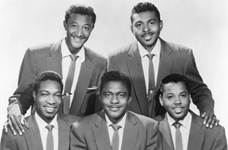
The Robins had two singles released by Knight in 1958, the first of which launched the label. The group was well-known on the West coast, having recorded at a significant number of independent labels in Los Angeles since the release of their debut single by Aladdin in 1949. More recently, the Robins had been signed to Spark and Whippet.
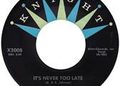
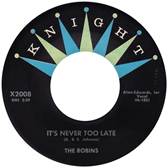
Knight X2001 pairs “A Quarter To Twelve” with “Pretty Little Dolly”. Both tracks are foot-tapping Doo-Wop songs, co-written by brothers Alvin and Edwin Johnson. The two songwriters also contributed “It’s Never Too Late”, the A-side of the Robins’ second Knight single. It is a wonderful Doo-Wop ballad, full of flamboyant harmonies.
The Popsicles (a new group) delivered the label’s second release, “This Is The End”/ “Thumb Print”. The B-side was co-written by Evelyn Freeman and T. S. Robinson. Ms Freeman was the sister of session band leader Ernie Freeman and was, like him, a bandleader, composer, and arranger, as well as being a well-known Gospel singer. Both tracks chug along, without making a strong impression.
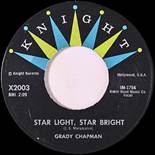
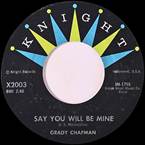
Grady Chapman’s “Star Light, Star Bright”/ “Say You Will Be Mine” was X2003. Chapman had joined the Robins in 1952, recording at RCA and Spark, and was then a member of the new Robins who recorded at Whippet. In 1957, he had made his first solo recording at Zephyr. This Knight single from 1958 was his second. Both tracks were written by John Marascalco; the A-side has a very simple structure that is easy to sing along to, while the B-side is richer musically, offering a romantic ballad. Chapman sings both with equal power and confidence.
Guitarist Irving Ashby added a relaxing instrumental “Rock-A-Cha”.
The Turks had been recording since 1955, first at Money and Cash with John Dolphin and then at Keen in 1958. Their Knight single, also from 1958, features two songs written by group member Gaynel Hodge: “I’m A Fool” and “It Can’t Be True”. Both had been recorded with John Dolphin, although the first was on a 1956 Money single and the second on a 1956 Cash single. Now Knight paired them. Both are well-sung and well-recorded.
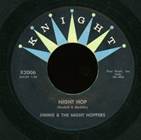
Jimmie & The Nighthoppers made just one single. Jimmie Haskell (real name Sheridan Pearlman) was born in Brooklyn, New York, in 1926. He was a composer and arranger who made his name as musical director of a large number of films made for cinema and TV, for which he won several Grammys and an Emmy. His first steps in the world of entertainment were taken at Imperial, where he recorded a couple of tracks, including the 1931 UK song “Good Night Sweetheart”. His Knight single is rather better! “Cruising”/ “Night Hop” (also from 1958) delivers a couple of Rock & Roll instrumentals with Jimmie Maddin on saxophone. Haskell and Maddin co-wrote the tracks.
Smiley Lewis brought a touch of New Orleans magic to the West Coast. He made his first recording at DeLuxe in New York in 1947, before signing with the Imperial subsidiary Colony in 1951 and switching to the main Imperial label in 1952. Twenty-four singles later, he switched to Knight, to release two more in 1959.
Three of Lewis’ four Knight songs were co-written by Dave Bartholomew and his wife Pearl King. The final track is Bartholomew’s alone. The style is immediately recognisable, with a rolling vocal, the insistent beat of the piano triplets, and a growly saxophone. Fats Domino had taken the New Orleans sound to the top of the charts in 1949, eclipsing Smiley Lewis, but ten years later, Smiley Lewis was still making records and sounding good. Like many of the New Orleans singers signed to West Coast labels, Lewis probably recorded these tracks in New Orleans with Cosimo Matassa.
Knight’s X2009 release is an odd single indeed, pairing two tracks previously released on Imperial. The A-side is “Angel In My Life”, sung by the Jewels, and the B-side is “Give Me Your Hand”, sung by Rudy Jackson, a member of the Jewels. Both tracks were written by Rudy Jackson. Strangely, it was decided to credit both to Allen Roberts, presumably an invented name!
The final single at Knight is probably the best! Jesse Belvin had begun his recording career at Recorded in Hollywood in 1950. He had moved around from Money to Specialty, from Modern to Cash, from RCA Victor to Aladdin, and from Kent to Tender. In 1959, Knight issued “Deacon Dan Tucker”/ “Little Darling”. The B-side is an average Pop ballad, but the A-side is a perfect R&B dance track. Listen and tap your feet!