
Following the highly successful year of 1972, The Temptations entered 1973 with considerable artistic and commercial momentum. “Papa Was a Rollin’ Stone” had become one of the defining recordings in the history of the group and a landmark achievement within Motown’s psychedelic soul era. Serving as the musical centrepiece of their 1972 studio album “All Directions”, the recording illustrates the creative excellence of producer Norman Whitfield, songwriter Barrett Strong, arranger Paul Riser, The Temptations and Motown’s outstanding Detroit-based studio musicians.
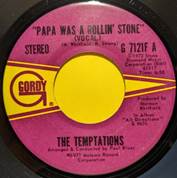
Commercially, “Papa Was a Rollin’ Stone” reached number one on the Billboard Hot 100 Singles Chart and number five on the Billboard R&B Singles Chart, spending eight weeks on the charts during January and February 1973, becoming The Temptations’ final number-one American Pop single.
Its creative brilliance was recognised at the 1973 Grammy Awards, where the recording achieved three major honours. The Temptations won Best R&B Vocal Performance by a Group, whilst the instrumental version received Best R&B Instrumental Performance. Norman Whitfield and Barrett Strong also won Best R&B Song as the composition’s songwriters.
These achievements demonstrate the recording’s exceptional combination of songwriting, production, orchestration, musicianship and vocal artistry, establishing “Papa Was a Rollin’ Stone” as an enduring masterpiece of American Soul and R&B music.
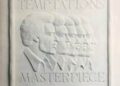
Gordy Records released another ambitious Norman Whitfield composition, “Masterpiece”, as a single in the United States on 15th February 1973. It was subsequently released in the United Kingdom on Tamla Motown a few months later. It later became the signature recording of the forthcoming “Masterpiece” album.
Running for almost fourteen minutes in its full album version, it showcased Whitfield’s ability to combine orchestral soul, funk rhythms, dramatic arrangements and social commentary within a single composition. One of the defining characteristics of “Masterpiece” is the way Whitfield treated the group’s vocals as part of a much larger sonic landscape. Instrumental introductions and interludes occupied significant portions of the recording, with the extended instrumental opening establishing the atmosphere several minutes before the vocals entered.
The edited single version became a major commercial success and demonstrated that ambitious and experimental Soul music could still achieve mainstream recognition. “Masterpiece” reached number one on Billboard’s R&B/Soul Singles Chart week-ending 14th April 1973 (2 weeks), whilst also reaching number one on the Cash Box R&B Chart week-ending 28th April 1973 (1 week) and number seven on the Billboard Hot 100 Singles Chart. In the United Kingdom, however, the single failed to chart. Several decades later, “Masterpiece” received Gold certification from the RIAA on 12th October 1999. It also became The Temptations’ final Top Ten hit on the Billboard Hot 100 during their Motown years.
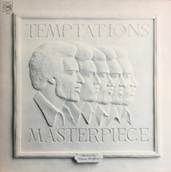
The studio album, “Masterpiece”, was released on 21st February 1973, six days after the release of its title track as a single.
The project retained much of the instrumental infrastructure associated with “All Directions”, but there were important changes within the documented personnel. Bob Babbitt and Leroy Taylor remain amongst the bassists, with the addition of Eddie Watkins Jr. in the “Masterpiece” credits. James Jamerson, by contrast, was credited on “All Directions” but does not appear in the “Masterpiece” listings. The album also credits Maurice Davis on trumpet and Ted Lucas on harmonica, with additional musicians including Robert Ward and Paul Warren on guitar, illustrating Whitfield’s continuing expansion of his instrumental palette and sonic colours.
Paul Riser remained extremely important as arranger. His sophisticated orchestral writing enabled Whitfield to place the Detroit rhythm section within much larger musical structures involving strings, brass, percussion and extended instrumental passages. Orson Lewis was credited amongst the technical personnel associated with both projects, with “Masterpiece” specifically crediting him as engineer. Although Motown had switched operations to Los Angeles in mid-1972, the Temptations and Norman Whitfield had remained in Detroit to finish work on the new album.
Whereas “All Directions” represented a collaboration between The Temptations, Norman Whitfield and the wider Motown creative community, “Masterpiece” illustrates the increasing dominance of Whitfield as producer, songwriter and overall creative architect. On “All Directions”, the Temptations performed compositions by Whitfield and Strong, Ashford & Simpson, Isaac Hayes, Ewan MacColl and other writers. The result was a musically varied album culminating in the extraordinary “Papa Was a Rollin’ Stone”. “Masterpiece” on the other hand was written and produced entirely by Norman Whitfield.
This distinction is crucial to understanding both the extraordinary musical ambition of “Masterpiece” and the tensions that subsequently developed between Whitfield and the Temptations.
The album’s production is remarkable for its scale and complexity. Whitfield relied heavily upon large orchestral arrangements conducted by Paul Riser, alongside layered percussion, multiple guitar parts, brass, strings, synthesiser textures and intricate rhythmic patterns. The recording sessions featured Motown studio musicians, including members of The Funk Brothers, as Whitfield continued to expand the musical colours available to him.
The album is the culmination of the Psychedelic Soul revolution that had transformed the Temptations’ sound during the late 1960s and early 1970s. Lyrically, the album continues Whitfield’s exploration of social commentary. Themes of poverty, urban decline, inequality, personal struggle and social frustration appear throughout the project. Rather than concentrating solely upon romantic subject matter, the album reflects many of the challenges confronting American society during the early 1970s.
Commercially, “Masterpiece” proved highly successful. The album reached number one on Billboard’s Soul Albums Chart for the week ending 28th April 1973, remaining at the top for two consecutive weeks. Several decades later, it was awarded Gold certification by the RIAA on 12th October 1999.
Overseas, the Temptations’ “Masterpiece” single was released in the United Kingdom on 19th April 1973 on Tamla Motown Records, catalogue number TMG 854. The British seven-inch single paired “Masterpiece” (Vocal)” with “Masterpiece (Instrumental)” on the B-side.
The “Masterpiece” album also achieved notable commercial recognition across continental Europe, particularly in France, where it reached number six on the album chart and was subsequently awarded a Gold certification in 1977. The album also registered significant European chart activity, including a year-end placing of number forty-seven in West Germany for 1973 and a peak of number thirteen in Spain. In Britain, “Masterpiece” reached number twenty-eight on the Official UK Albums Chart.
Beyond its title track, the album features notable recordings including “Plastic Man”, “Law of the Land”, “Hey Girl (I Like Your Style)” and “Ma”, each contributing to the project’s broad musical and thematic scope. The arrangements reflect Whitfield’s growing fascination with long-form composition and sophisticated studio-production techniques.
The next American single was “Plastic Man”, written and produced by Norman Whitfield. It was issued in the United States on 10th May 1973 as Gordy G 7129F, backed with “Hurry Tomorrow”. Billboard reviewed the single in its 26th May 1973 issue, drawing attention to the interaction between the vocal narrative and instrumental arrangement, including trumpets, congas and hi-hat.
In the United Kingdom, however, “Plastic Man” does not appear to have received a commercial single release. Continental Europe was different: “Plastic Man” backed with “Hurry Tomorrow” was commercially issued during 1973 in territories including the Netherlands, West Germany and France.
The next American single, “Hey Girl (I Like Your Style)”, was released on Gordy 7131 on 24th July 1973, backed with “Ma”. It represents a considerable stylistic contrast to the expansive Psychedelic Soul of “Masterpiece”. A beautifully-crafted romantic Soul ballad, the recording is distinguished by Damon Harris’s tender high-tenor lead vocal, the Temptations’ refined harmonies, Norman Whitfield’s restrained production and Paul Riser’s elegant string arrangement. Together, these elements create a warm and sophisticated recording reminiscent of the group’s classic 1960s Motown ballads.
For the British market, “Law of the Land” was released on 17th August 1973 on Tamla-Motown TMG 866. It subsequently reached number forty-one on the Official UK Singles Chart. “Law of the Land” is a powerful Psychedelic Soul and Funk recording, driven by an insistent rhythm section, layered percussion, wah-wah guitar, brass and orchestral textures. The Temptations’ forceful vocals reinforce Whitfield’s socially conscious observations about survival, responsibility and the realities of contemporary society.
Although sometimes described as a “UK-only” single, “Law of the Land” was also issued during 1973 in several continental European territories, including France, West Germany, Italy and the Netherlands, sometimes with different catalogue numbers and B-sides.
Although some listeners preferred the more traditional Temptations sound of the 1960s, “Masterpiece” remains one of the most important and adventurous albums in the group’s catalogue. It captures a period when the Temptations, Norman Whitfield, Paul Riser and Motown’s musicians were prepared to take considerable creative risks and expand the possibilities of Black popular music.
From a production standpoint, “Masterpiece” may be viewed as the ultimate expression of Norman Whitfield’s creative vision at Motown. The album pushed the boundaries of what Soul music could encompass, bringing together orchestral sophistication, funk innovation, social consciousness and studio experimentation within a unified artistic statement. More than fifty years later, “Masterpiece” remains a significant landmark of Psychedelic Soul and a testament to the Temptations’ position as one of Motown’s most adventurous recording groups of the early 1970s.
It is important to recognise, however, that Dennis Edwards later expressed the group’s dissatisfaction with aspects of the recording process. In an interview conducted by Adam White, Edwards recalled that the group did not particularly enjoy the experience and wished that they had been given greater opportunity to contribute vocally to the album. He also expressed similar concerns to Blues & Soul magazine, indicating that the group felt they simply had not been given enough to do. These creative differences contributed to the growing tension between the Temptations and Whitfield, which would eventually bring their remarkable working relationship to an end.
Despite these tensions, “Masterpiece” stands as one of the most ambitious and sophisticated recording projects in the history of the Temptations.
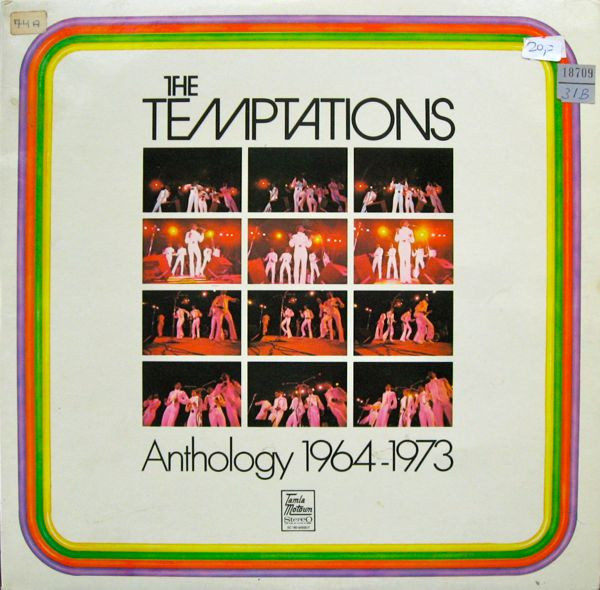
Before the release of the next studio album towards the end of the year, an album entitled “The Temptations, Anthology 1964-1973″ was released on Motown Records on 23rd August 1973. The initial release was a vinyl three-LP, which covered the group’s work up to that point. It peaked at number five on Billboard’s Soul Albums Chart week-ending 10th November 1973 and achieved Gold and then Platinum certification on 12th October 1999.
In the United States, Gordy Records released another Temptations’ single on 27th November 1973, catalogue number G 7133F. It features two songs, “Let Your Hair Down”and “Ain’t No Justice”, which were taken from sessions for the next album, “1990”. Both tracks were recorded entirely on the West Coast and were written and produced by Norman Whitfield and arranged by Paul Riser. The recordings feature the commanding voice of Dennis Edwards on lead vocals. Significantly, however, the instrumental backing was provided not by the Funk Brothers (who were disbanded in 1972) but by musicians associated with the emerging group Rose Royce. Whitfield was now working with a new generation of studio musicians, as his creative relationship with The Temptations approached its conclusion.
Musically, “Let Your Hair Down” represents a noticeable change of direction from the monumental scale of “Masterpiece”. Whereas “Masterpiece” is constructed as an extended psychedelic-soul production, characterised by a lengthy instrumental introduction, expansive orchestration and an almost cinematic musical architecture, “Let Your Hair Down” is considerably more direct. Its compact arrangement places greater emphasis upon rhythmic drive, funk, groove and Dennis Edwards’s forceful vocal personality. The recording possesses a harder, leaner rhythmic character, with interlocking guitar figures, a prominent bass foundation, drums and percussion creating a tightly controlled funk groove beneath Edwards’s performance.
Dennis Edwards is particularly effective because his gritty, gospel-informed baritone-tenor possesses precisely the weight and urgency required by Whitfield’s arrangement. Rather than Edwards entering after the prolonged instrumental development heard on “Masterpiece”, his vocal presence becomes a much more immediate part of the recording. The result is a performance in which lead vocal and rhythm section operate together, producing a more concise and dance-orientated expression of Whitfield’s psychedelic-funk vocabulary.
The supporting musicians are historically significant. Sources identify the instrumental backing with musicians who would become Rose Royce, the group that Whitfield subsequently developed after leaving Motown. The wider “1990” recording sessions also involved leading Los Angeles-based musicians associated with Whitfield’s developing West Coast sound, including guitarists Dennis Coffey and Melvin “Wah Wah” Ragin from the Detroit days, drummers Ed Greene and James Gadson, and percussionist Bobbye Hall. The “1990” album was their first to be made entirely on the West Coast.
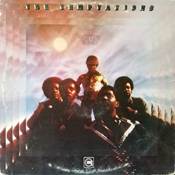
The release of “1990” on 7th December 1973 represents another important turning point in the recording history of the Temptations. It is the final Temptations’ studio album written and produced entirely by Norman Whitfield.
Whereas “Masterpiece” represented Whitfield at his most expansive and orchestral, “1990” generally moved towards a more direct and rhythmically concentrated form of Funk and Soul. The enormous musical architecture of the nearly fourteen-minute “Masterpiece”, with its extended instrumental introduction, sweeping strings, brass, percussion and cinematic development, had frequently placed The Temptations’ voices within a much larger instrumental landscape. On “1990”, Whitfield retained his experimental instincts but allowed the group’s individual vocal personalities more opportunities to emerge within shorter and more conventional song structures.
The album contained seven Norman Whitfield compositions: “Let Your Hair Down”, “I Need You”, “Heavenly”, “You’ve Got My Soul on Fire”, “Ain’t No Justice”, “1990” and “Zoom”. The contrast within those recordings demonstrates that Whitfield had abandoned neither romantic Soul nor social commentary. “I Need You” and “Heavenly” provide a softer counterbalance to the harder Funk and socially conscious material represented by “Ain’t No Justice”, the title track, and “Zoom”.
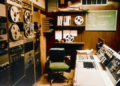
On “1990”, Whitfield brought together a few of the Funk Brothers (some had relocated from Detroit) and musicians associated with the future Rose Royce, with brilliant support from a group of sound engineers led by Russ Terrana. Art Stewart, Larry Miles, Cal Harris and Norman Whitfield were also busy at the recording deck. The emerging emphasis upon bass, drums, percussion and interlocking guitar patterns anticipate aspects of the harder funk language that would become increasingly prominent within his later productions.
Vocally, “1990” also provides a stronger sense of the Temptations operating as a five-man vocal ensemble when compared with “Masterpiece”. Dennis Edwards remains the commanding dramatic voice, but Damon Harris, Richard Street, Melvin Franklin and Otis Williams contribute contrasting vocal colours across the project. Whitfield’s production remains unmistakably dominant, yet the singers often appear more immediately integrated into the musical arrangements.
This makes “1990” particularly interesting. Members of The Temptations had become increasingly concerned that Whitfield’s extended instrumental passages and production concepts were reducing their vocal presence. On “1990” the producer continued to experiment, but several recordings show Whitfield striving to restore a more direct relationship between the singers and the instrumental foundation.
Whitfield did not, however, completely abandon the long-form experimentation that had characterised “Papa Was a Rollin’ Stone” and “Masterpiece”. The clearest example is “Zoom”, which extends beyond thirteen minutes and returns to the large-scale musical architecture associated with his earlier Psychedelic-Soul productions. Through extended instrumental development, atmospheric orchestration and socially conscious expression, “Zoom” demonstrates that Whitfield remained committed to treating the recording studio as a creative instrument in its own right.
There is nevertheless an important distinction. On “Masterpiece”, the extended title composition dominates the identity of the entire album and symbolises Whitfield’s increasingly powerful production philosophy. On “1990”, “Zoom” exists alongside several considerably shorter recordings. The album therefore establishes a broader balance between long-form experimentation, conventional song structure and rhythm-driven funk.
The title track, “1990”, is equally important conceptually. Whitfield continued to use the Temptations as interpreters of contemporary Black American experience, examining social uncertainty and contemplating the direction in which American society appeared to be moving. In this respect, the album continued the socially conscious musical tradition developed through recordings such as “Ball of Confusion (That’s What the World Is Today)”, “Papa Was a Rollin’ Stone”, “Law of the Land” and “Masterpiece”.
Commercially, “1990” was a substantial success, reaching number two on Billboard’s R&B Album Chart week-ending 2nd March 1974 and number 19 on the Billboard 200 Album Chart week-ending 23rd February 1974, spending 33 weeks on the chart. Despite that, the album “1990” and the first single “Let Your Hair Down” did not achieve any certifications in America or Europe.
Taken together, “Masterpiece” and “1990” document the closing stages of one of the most innovative producer/artist partnerships in Motown history. “Masterpiece” represents the monumental, orchestral and experimental culmination of Norman Whitfield’s Psychedelic-Soul vision, whilst “1990” redirects elements of that vision towards a tighter, harder and increasingly Funk-driven sonic expression.
For Norman Whitfield, “1990” stands at a musical crossroads. It brought the Norman Whitfield era with the Temptations to its conclusion whilst simultaneously pointing towards the producer’s next creative chapter. The presence of musicians associated with Rose Royce is particularly significant because the musical language Whitfield had developed through the Temptations was continuing to evolve. Its powerful rhythms, cinematic production techniques and socially conscious foundations would subsequently find new forms of expression beyond Motown. In this respect, “1990” was not simply the conclusion of an extraordinary partnership; it became an important musical bridge between Norman Whitfield’s achievements with the Temptations and the next stage of his creative output during the 1970s.
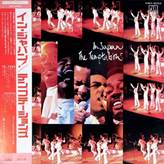
Before the year ended, there was one more performance of note from the Temptations. They performed at the Shibuya Kokaido concert hall in Tokyo in December. The concert was recorded and released in 1974 by Tamla Motown Japan. The “In Japan” album contains a beautiful version of “The First Time Ever (I Saw Your Face)”, which was released as a single in just one country, Venezuela, in 1972.