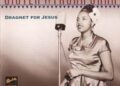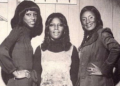

Wynona Carr began the second phase of her music career in 1955. Having moved away from Gospel, she faced the challenge of redirecting her energy into secular, popular music. She had made it clear to Art Rupe that she wanted to stay at Specialty, she wanted to cover a range of genres, and she wanted her songs to have wide appeal, not just aiming at the Black community. Rupe had agreed to support these ambitions. Carr relocated to Los Angeles and set about choosing some songs to record.
The world of R&B in 1955 was an interesting place. Billboard magazine’s chart of the top R&B hits for that year show Johnny Ace as the most popular artist with his song “Pledging My Love”. The majors have only a handful of entries; the independents dominate the chart with a mixture of vocal harmony songs, Blues-based dance tracks, and romantic ballads.
The West Coast labels show up well, with Imperial at number two (Fats Domino’s “Ain’t That A Shame”), Dootone at number four (The Penguins’ “Earth Angel”), Modern at number six (Etta James’ “The Wallflower”), and Aladdin at number thirty-four (Shirley & Lee’s “Feel So Good”). Specialty didn’t make the top thirty-four.
Chuck Berry had his first number one R&B hit on the Chess label with “Maybellene”. Bo Diddley did the same with “Bo Diddley” on the Checker label. Atlantic was beginning to flex its muscles with six entries, including “I’ve Got A Woman” from Ray Charles, “Tweedle Dee” from LaVern Baker, and “Flip, Flop and Fly” from Big Joe Turner.
Significantly, Etta James and LaVern Baker are the only two solo female artists on the list. So, Wynona Carr had to find a way to match those two well-known names. Her problem was what style to choose and which market to aim at.
She began with three studio sessions in 1955, at which she recorded five of her compositions: “It’s Raining Outside”, “Ding Dong Daddy”, “Act Right”, “Heartbreak Melody”, and “If These Walls Could Speak”. The first three of these give a resounding answer to the question of style and market sector. They are full-on dance tracks aimed squarely at the young market. Carr is clearly enjoying herself. But then, she switches to two ballads that show the real quality of her voice, aimed at an older group of listeners.
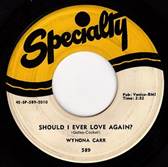
None of them were chosen for release! She went back to work, recording probably around a dozen more tracks at three more sessions in 1956. Nine of the tracks were subsequently released by Art Rupe. Four of the songs were hers, five were written by other mainly local songwriters. Again, there is a mix of dance tracks and ballads. It is hard to pick the best; they are all worth a listen. “’Til The Well Runs Dry”, an infectious up-tempo song written by Carr, and “Should I Ever Love Again?” from the pens of Edward Gates and H. M. Cockel (Mark Hurley), were finally considered good enough for release. The last of these was the most successful so far, making its mark locally, at least.
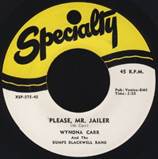
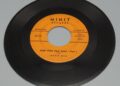
Two more singles followed during that year. First “Please, Mr Jailer” backed by “Nursery Rhyme Rock”, a ballad and a dance track both written by Carr. Then, “Jump Jack Jump”, an M. Taylor dance song, backed by “Hurt Me”, a ballad co-written by Freeman and Greines. Once more, they are hard to fault, but sales were not good. Fortunately she was able to tour to make a living. Her songs were also being covered, which brought in further royalties. Then, suddenly, Carr fell ill. In mid-1956 she contracted tuberculosis. For well over a year, she could not perform. She returned to her parents’ home in Cleveland to convalesce. Her next studio session was in January 1958.
During her absence in 1957, Specialty released “What Do You know About Love”/ “Heartbreak Melody”, taken from the previous sessions, which she had recorded with the Bumps Blackwell Orchestra. The B-side is one of Carr’s best songs! The following year, she was able to sing again and record four more songs. Two further sessions in 1959 produced four more. Specialty was able to issue four singles during these two years, all of which are aimed at a different market. The songs are slow ballads or adult-oriented Pop songs. Carr’s voice is as good as ever, but the fun of the earlier compositions has been replaced by a mature, more thoughtful style.
1959 marked the end of Carr’s time at Specialty, as her contract came to an end. Art Rupe was turning his attention to other business ventures. He kept Specialty open to sell existing stock, but there were no new recordings made after 1960. Carr turned her attention fully to the adult music market and concentrated her performances in clubs. She was soon offered a contract by Reprise Records, owned by Frank Sinatra. There she recorded a mix of spirituals, standards, and new songs, none of which she wrote.
She returned to Cleveland after her short spell at Reprise and went back to performing in supper clubs. She went out on the road from time to time, singing with Steve Gibson’s Red Caps, and was active until 1969. She died in Cleveland in 1976.
She is largely unknown today. She was an innovator, a remarkable, talented musician, who should be mentioned alongside Sister Rosetta Tharpe and LaVern Baker. She was called the female Little Richard, probably by Art Rupe, but that doesn’t do her justice. Wynona Carr was probably unique in writing a series of outstanding songs and performing them beautifully in both the Gospel and secular fields at a time when music of Black origin was beginning to shine more brightly across America.
Thanks to Ace Records in the UK, Winona Carr’s contribution to West Coast R&B is clear for us to see. Their compilation “Hit That Jive Jack”, issued in 1985, is a collection of sixteen of Carr’s Specialty R&B tracks. It is an excellent companion to the Ace compilation of her Gospel songs. The album was also released on the Specialty label in the USA with a new title, “Jump Jack Jump”. Both the UK and the USA compilations were remastered and re-issued in 1993, carrying the “Jump Jack Jump” title.
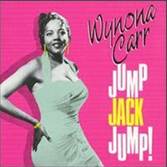
The compilation includes a few songs that had been recorded during the 1956 sessions but never released. The best of them is “Now That I’m Free”, a Blues ballad given a strong R&B backing with an excellent guitar break. It should have been released!
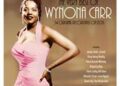
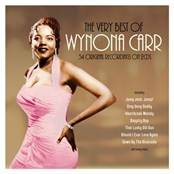
The two Ace/ Specialty albums created more interest in Carr’s songs; several more compilations followed from other companies. One of them, “The Very Best of Wynona Carr”, was issued as a double CD by Not Now Music in the UK in 2019, offering thirty-four tracks, including the Specialty R&B recordings and the Reprise songs.
Was there a better singer on the West Coast during the 1950s?