
The Temptations’ first release of 1971 was the single “Just My Imagination (Running Away with Me)”, which was issued by Gordy Records on 14th January. It is a sonic masterpiece, once again produced by Norman Whitfield and co-written by Whitfield and Barrett Strong. The single became the group’s third number one on the Billboard Hot 100 Singles Chart, week-ending 3rd April 1971 (2 weeks). In addition, it climbed to number one on the Cash Box Top 100 Singles Chart, week-ending 20th March 1971 (1 week). The single also performed extremely well on the Billboard R&B Singles Chart, where it peaked at number one week-ending 6th March 1971 (3 weeks), and on the Cash Box R&B Singles Chart, where it again peaked at number one, week-ending 20th March 1971 (4 weeks). It is an outstanding song, which was dethroned from the top spot on the two R&B Singles Charts by an equally brilliant Motown song, Marvin Gaye’s “What’s Going On”!
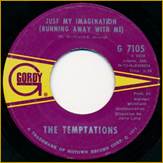
The success of the song is an indication of just how many of the Temptations’ fans were missing the old-style romantic ballads that the group had sung for years before Norman Whitfield began exploring Psychedelic Soul. “Just My Imagination (Running Away with Me)” is a return to an earlier style that was still very popular. It is not a surprise to find that the song was written in 1969 and held back while “Cloud Nine” and other new-style songs held sway. As “Ungena Za Ulimwengu”, the 1970 Gospel-tinged Psychedelic Soul single, only reached number eight on the Billboard R&B Singles Chart and number thirty-three on the Billboard hot 100 Singles Chart, Norman Whitfield saw the need to switch styles for at least one release. He was confident that “Just My Imagination (Running Away with Me)” was good enough to take the Temptations back to number one.
The song tells the story of a man’s love for a woman who doesn’t know him and is obviously unaware of his feelings. He starts to create a dream relationship in his head, using his imagination, and builds a picture of their life together, until, at the end of the song, he is back to reality. The rhythm tracks were laid down in Studio A by a session band that included Eddie Willis and Dennis Coffey on guitars, Andrew Smith on drums, Bob Babbitt on bass, Jack Ashford on marimba, and Jack Brockensha on timpani. Whitfield asked Jerry Long to write the arrangements for strings and horns. He wanted to create a dream-like atmosphere to enhance the lyrics and to provide a backdrop for the Temptations’ beautiful harmonies. Long used his experience of working on film scores and studying in Paris to create exactly the feeling that Whitfield wanted, incorporating French horns and harp into the mix. The lead vocal was given to Eddie Kendricks, whose tender falsetto is perfect for the song, which has become a Temptations’ standard that has stood the test of time. The single achieved platinum status from the RIAA in 1999 for sales of over two million copies, but sadly it was the last to include the voice of Kendricks, who had walked out after a final dispute. After a short gap, during which Ricky Owens was given a trial, he was eventually replaced by Damon Harris.
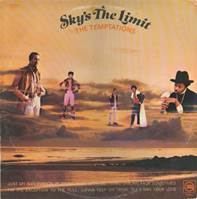
The song was included on the group’s next studio album “Sky’s The Limit”, which was released on 22nd April on the Gordy label. It was the fourteenth studio album by the group, consisting of eight tracks which cover a mix of different music genres: Soul, R&B and Psychedelic Soul. All the tracks were produced by Norman Whitfield and co-written by him, seven with Barrett Strong, his usual partner, and one with Eddie Holland (“Throw A Farewell Kiss”). The variety of styles is striking, with five songs in the group’s original style, two more experimental tracks with elements of Psychedelic Soul (The 1970 single “Ungena Za Ulimwengu” and “Love Can Be Anything (Can’t Nothing Be Love But Love)”), and a twelve and a half minute track with long instrumental passages entitled “Smiling Faces Sometimes”, which takes as its theme the threat of genuine-looking people who are in reality fake back-stabbers who are intent on cheating you:
Beware, beware of the handshake
That hides the snake
The track starts out with a long horn intro, joined by a guitar. Over one minute into the track Eddie Kendrick sings six lines of the lyric, with background vocals by the other members of the group, before the track returns to another long instrumental section, with full orchestration. At approximately four minutes into the track, Eddie Kendrick reappears singing “Let me tell you”, with other members singing the background “Beware” and “Smiling Faces Sometimes” repeatedly in beautiful harmony, which leads into the main vocal part of the song. Later Dennis Edwards interposes his preaching style vocals for a short period, before the track enters another extended instrumental passage. The final minute of the track is a nightmarish cacophony of sounds, as the snake is revealed. It is clearly an ambitious piece of music, an indication of where Norman Whitfield wanted Pop music to go. It seems to take inspiration from Isaac Hayes’ “The Theme From Shaft” (1971), and is a forerunner of Whitfield’s later work with Rose Royce on the “Car Wash” soundtrack. The outstanding arrangement was conducted by David Van DePitte, featuring members of the Detroit Symphony Orchestra strings section, and several members of the Funk Brothers, including Dennis Coffey whose innovative guitar performance is a highlight of the track.
Of the five more typical Motown ballads, three are in fact covers of Whitfield songs previously recorded by other Motown artists. “Gonna Keep on Tryin’ (Till I Win Your Love)” was recorded by Edwin Starr, while “I’m The Exception To The Rule” and “Throw A Farewell Kiss” are both Velvelettes originals. The juxtaposition of old and new is clearly deliberate and it worked pretty well. The album reached number sixteen on the Billboard 200 Albums Chart and number two on the Billboard R&B Albums Chart, later receiving gold certification from the RIAA.
Whitfield’s plan was to release “Smiling Faces Sometimes” as the next single, presumably in a shortened version, but Kendricks’ departure caused a rethink. “Smiling Faces Sometimes” was recorded by the Undisputed Truth for single release, while the four remaining Temptations recorded a new version of “It’s Summer” from 1970’s “Psychedelic Shack” album, which was paired with “I’m The Exception To The Rule” from “Sky’s The Limit” and released on 24th June. The response was disappointing, as the single charted poorly. Paul Williams retired as a singing member of the group soon after the recording was completed, due to his continuing ill-health, although he continued to work with the group as choreographer. He was replaced by Richard Street.
Norman Whitfield decided to make the next album a more up-tempo collection, and work started on songs for inclusion during the summer of 1971. In October, a single was chosen from the new songs and released on 17th October, with “Gonna Keep On Tryin’ Till I Win Your Love” from “Sky’s The Limit” on the B-side. Some critics have suggested that the A-side, “Superstar (Remember How You Got Where You Are)”, is a word of advice to Eddie Kendricks and David Ruffin, who were both highly critical of Whitfield. Perhaps it is a just a general observation to all those whose success goes to their heads, whatever walk of life they may be in:
Bright lights
Don’t let the bright lights blind you
Bridges
Don’t burn ’em behind you
The song has a Bluesy piano intro that sets the beat, supported by a punchy guitar riff. The guitar has hints of Psychedelic Soul, but it is dialled down. The harmonies are as good as ever. The single reached number eighteen on the Billboard Hot 100 Singles Chart and number eight on the Billboard R&B Singles Chart. It also peaked at number thirty-two on the Official UK Pop Singles Chart.
Three good singles and one good album kept the Temptations in Motown’s top team.