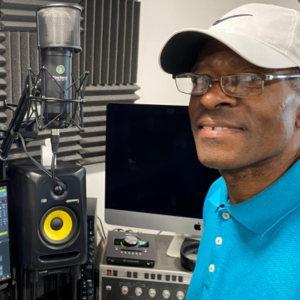

Before Willie Hutch came to Motown, he had recorded two studio albums, “Soul Portrait” (1969) and “Season for Love” (1970) for RCA. However, his first involvement with Motown was as a songwriter. He co-wrote “I’ll Be There” for the Jackson 5 in 1970. The success of that song secured Hutch a place within the Motown organisation as a songwriter, arranger, and producer. Working from the company’s expanding Los Angeles operation, he subsequently contributed to recordings involving Michael Jackson, Smokey Robinson, Marvin Gaye, Junior Walker, the Temptations, and the Undisputed Truth. His ability to combine songwriting, vocal direction, instrumental arranging, and production made him an important creative figure during Motown’s transition from Detroit to the West Coast.
Three years after “I’ll Be There”, Hutch got the chance to record again. 1973 saw him release two albums and four singles.
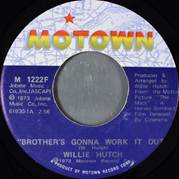
“Brother’s Gonna Work It Out” was the first single of the year, taken from the sessions for the album that Hutch was working on. It was issued in the United States on 14th February 1973, backed with “I Choose You”, and subsequently released in the United Kingdom on Tamla Motown in August 1973. The single charted to number eighteen week-ending 16th June 1973. “Brother’s Gonna Work It Out” is a powerful fusion of cinematic funk, social commentary, and communal optimism, driven by an insistent bass groove, with wah-wah guitar. Hutch’s passionate vocal transforms the song into an enduring anthem of unity, resilience, and collective responsibility.
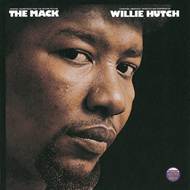
“The Mack” album was then released by Motown on 18th April 1973, and by Tamla Motown in the United Kingdom during August 1973. It is the soundtrack to the blaxploitation film of the same name, directed by Michael Campus and starring Max Julien, Richard Pryor, and Roger E. Mosley. It was Hutch’s first film soundtrack and one of the defining musical works of his career.
Music critic Ron Wynn has explained how Willie Hutch came to write the soundtrack: “When an act called Sisters Love were offered a cameo in the blaxploitation film ‘The Mack’, their manager suggested that Willie Hutch do the soundtrack. It came to be one of the great ’70s film scores, including a pair of classic funk tunes, ‘Brothers Gonna Work It Out’ and the title cut. The results proved to be another soundtrack that far surpassed the quality of its film.” (AllMusic, 26th December 2023).
Its strongest commercial performance occurred in the United States, where the album reached number seventeen on Billboard’s R&B Albums Chart week-ending 23rd June 1973, stayed on the chart for twenty-three weeks. It peaked at number one hundred and fourteen on the Billboard 200 Album Chart week-ending 14th July 1973 with a sixteen week run on that particular chart listing. It failed to register in the UK, but the soundtrack has subsequently developed a following among Soul collectors, Funk enthusiasts, DJs, and later generations of Hip-Hop artists.
“The Mack” brings together Cinematic Soul, Muscular Funk, Romantic balladry, and Jazz-inflected orchestration, creating a musical atmosphere that moves naturally between intimacy, celebration, and dramatic tension. Its distinctive sound is anchored by syncopated bass lines, wah-wah guitar, clavinet, congas, and forceful drumming, while sharply punctuated horn figures and richly harmonised strings give the recording the scale and emotional intensity required of a film score. Hutch frequently develops the arrangements through recurring ostinatos and extended rhythmic vamps, gradually introducing new instrumental textures as each scene or emotional theme unfolds.
All nine tracks on “The Mack” soundtrack were brilliantly written, arranged, and produced by Willie Hutch, with a running time of approximately 37 minutes and 14 seconds across its nine tracks. Unlike a traditional studio album, “The Mack” moves between fully developed vocal performances and shorter instrumental passages composed to support the film’s dramatic action. This structure gives the recording a distinctly cinematic flow, with recurring musical themes defining character, mood, and atmosphere, while Hutch’s lyrics provide a thoughtful commentary on the social realities surrounding the story. Significantly, the music conveys a deeper sense of moral conflict and consequence than the film’s often glamorous portrayal of its central character.
The soundtrack benefits from an accomplished group of top-end Los Angeles studio musicians. Wilton Felder provides the commanding bass foundation, while David T. Walker, Dean Parks, Louie Shelton, and Hutch contribute the interlocking guitar parts. Ed Greene supplies the disciplined drum patterns, Bobbye Hall adds expressive percussion, and Ernie Watts appears among the distinguished woodwind and brass players. Recorded by engineers Calvin Harris and Arthur Stewart, Hutch’s arrangements combine rhythmic precision with orchestral richness, strengthening the album’s position as both an effective dramatic score and a compelling work of early-1970s Soul and Funk. Unfortunately, the original album credits do not assign every musician to an individual track.
Willie Hutch wrote, arranged, produced, and performed the soundtrack, contributing lead vocals and guitar. His presence as composer, producer, arranger, instrumentalist, and singer gives the album a unified artistic identity. He is well-supported by the session band.
Wilton Felder (bass) is best-known as a founding member of the Crusaders. He was one of Los Angeles’ most accomplished session bassists. His playing combines melodic movement with rhythmic precision, providing the heavy but flexible foundation required by Hutch’s cinematic funk arrangements.
Ed Greene played drums, bringing the disciplined timekeeping and controlled backbeat that made him an important figure within the Los Angeles recording community. His approach allowed the percussion, bass, and rhythm guitars to interlock without overcrowding the arrangements.
David T. Walker, Dean Parks, Louie Shelton, and Hutch were credited with guitars. Walker was particularly admired for his warm tone, economical phrasing, and sophisticated rhythmic accompaniment, while Parks and Shelton were versatile Los Angeles session musicians capable of moving easily between Soul, Pop, Jazz, and film music. Their combined work created the mixture of wah-wah textures, clipped chordal patterns and melodic guitar lines heard throughout the soundtrack.
Clarence McDonald contributed piano, organ, and clavinet. He became an important West Coast keyboardist, arranger, and producer whose credits included work with the Jackson 5, the Emotions, Bill Withers and numerous other Soul and Pop artists. On “The Mack”, the clavinet helps reinforce the syncopated funk pulse, while the piano and organ add harmonic weight.
Bobbye Hall played congas, and Gene Estes contributed additional percussion. Hall was already becoming one of America’s most sought-after percussionists, bringing an extensive vocabulary of Afro-Latin rhythmic colours to Rock, Soul, Jazz, and Pop sessions. Her conga patterns add momentum and depth without competing with the principal drum groove.
The horn section included A. D. Brisbois, George Bohanon, Joseph Kelson Jr., Kenneth Shroyer, Paul Hubinon, Plas Johnson, and William Green, with Ernie Watts contributing both woodwind and string-related parts. The strings were performed by a sizeable Los Angeles studio ensemble. Together, these musicians create the album’s mixture of street-level funk and widescreen cinematic power.
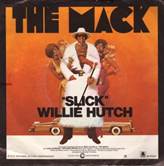
“Slick” followed as the soundtrack’s second principal single. It was released in the United States on 21st June 1973, backed with the reflective instrumental “Mother’s Theme (Mama)”.
The recording is more compact and immediately radio-orientated than “Brother’s Gonna Work It Out”. Its arrangement is driven by a tightly syncopated bass line, clipped rhythm-guitar figures, clavinet, congas, and sharply punctuated horns. Hutch sings with controlled confidence, using short melodic phrases, rhythmic repetition, and conversational ad-libs to create a musical portrait of street sophistication.
The title operates as a description of style, confidence and carefully constructed masculine identity. However, the performance contains an element of ambiguity. The polished groove communicates admiration for the character’s outward confidence, while the darker instrumental colours suggest that this apparent authority is unstable and potentially dangerous. “Slick” therefore works both as a character theme and as a subtle commentary on the performance of power within the film.
Commercially, “Slick” became Hutch’s strongest Pop crossover from the soundtrack. It reached number sixty-five on the Billboard Hot 100 Singles Chart week-ending 8th September 1973, and number eighteen on Billboard’s Hot Soul Singles chart week-ending 8th September 1973. Hutch performed the song alongside “Brother’s Gonna Work It Out” on Soul Train, further connecting the soundtrack with its core Black television and R&B audience.
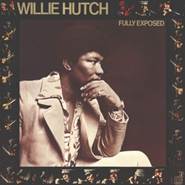
“Fully Exposed” was the second Willie Hutch album issued by Motown, released on 12th September 1973. It was his first conventional studio album for the company and was produced and arranged by Hutch himself. This creative independence distinguished the project from many of Motown’s more centrally-controlled productions and enabled him to establish a recognisable musical identity as a singer, songwriter, guitarist, arranger, and producer.
“Fully Exposed” presents a broader and more personal expression of Hutch’s artistry, moving between romantic balladry, socially observant funk and extended orchestrated grooves.
Musically, “Fully Exposed” combines syncopated bass lines, blues-influenced guitar figures, wah-wah textures, layered percussion, sweeping strings and carefully placed brass accents. Once more, Hutch’s arrangements frequently develop through recurring ostinatos and sustained rhythmic vamps, allowing the instrumental textures to expand gradually around his expressive baritone-tenor voice. His conversational phrasing, melismatic turns and emotionally charged ad-libs give the album a sense of intimacy, whilst maintaining the cinematic quality associated with his soundtrack work.
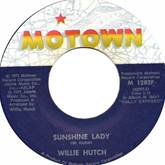
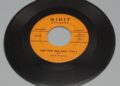
The first single released from “Fully Exposed” was “Sunshine Lady”, backed with “I Just Wanted to Make Her Happy”. Motown issued the single in the United States in November 1973. “Sunshine Lady” reached number seventy-two on Billboard’s Hot Soul Singles chart during the week ending 15th December 1973, following a six-week run on the chart.
The single did not enter the Billboard Hot 100 Singles Chart, indicating that its commercial support remained concentrated within the American R&B market rather than developing into a national Pop crossover. Nevertheless, its chart appearance demonstrated that Hutch was beginning to establish an audience under his own name, beyond his recognised work as a songwriter, arranger, and producer for other Motown performers.
The song possesses a brighter tonal character than much of “Fully Exposed”, combining an attractive melodic refrain with a concise soul-funk arrangement. A buoyant rhythm section establishes the groove, while crisp guitar accents, layered percussion and orchestral counter-melodies maintain movement throughout the performance.
Hutch’s vocal delivery is affectionate, relaxed and rhythmically assured, moving naturally between the principal melody and brief ad-libbed responses. The interaction between his lead vocal and the supporting instrumentation gives the recording warmth and immediacy, while the polished orchestration connects its accessible surface to the album’s wider musical sophistication. Although “Sunshine Lady” achieved only moderate chart success, it remains an important example of Hutch’s ability to balance romantic expression, rhythmic vitality and carefully constructed West Coast Soul production.
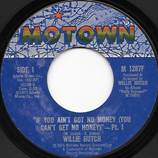
Hutch’s fourth single release of the year, “If You Ain’t Got No Money (You Can’t Get No Honey”), was issued in late December, drawn from the “Fully Exposed” album. Musically, the recording is an assertive funky dance track, constructed around a recurring rhythmic vamp, syncopated bass ostinato, and forcefully accented backbeat. Its tightly interlocking rhythm section, clipped guitar figures and layered percussion generate powerful dance-orientated momentum. The recurring groove anticipates elements of the emerging disco sound without abandoning the track’s harder soul-funk foundation.
Hutch delivers the lyric in his expressive baritone-tenor voice, adopting a conversational and occasionally humorous tone. His phrasing moves freely around the beat, shifting between melodic singing, rhythmic declamation, and emphatic ad-libs. This vocal flexibility strengthens the song’s direct message and gives the performance the character of an animated exchange rather than a restrained studio interpretation.
Although the original credits do not identify the personnel separately for each track, this accomplished studio collective shaped the album’s distinctive combination of muscular Funk, orchestral Soul, and West Coast rhythmic sophistication.
Within “If You Ain’t Got No Money (You Can’t Get No Honey)”, the bass and drums establish the central dance groove, while rhythm guitar and percussion create a dense network of syncopation. The repeated vocal hook, progressive instrumental layering and controlled dynamic development make the recording one of “Fully Exposed”’s most immediate dance tracks, demonstrating Hutch’s ability to combine humour, social observation, and disciplined funk production.
1973 was an exceptionally productive and creatively significant year for Willie Hutch, marked by the release of two important Motown albums: the outstanding soundtrack to “The Mack” and the studio recording “Fully Exposed”. Together, these projects demonstrated his remarkable versatility as a singer, songwriter, guitarist, arranger, and producer, while establishing him as one of Motown’s most distinctive creative voices during the company’s developing West Coast period.
“The Mack” was particularly important because its combination of dramatic instrumental scoring, cinematic orchestration and socially conscious funk aligned with Berry Gordy’s broader vision of transforming Motown from a successful record company into a diversified multimedia organisation. As the company expanded its interests into feature films, television programmes, documentaries and other forms of visual entertainment, Hutch’s soundtrack demonstrated how Motown’s musical expertise could support powerful screen narratives while producing commercially viable recordings with an identity of their own.
By contrast, “Fully Exposed” presented a more personal and wide-ranging portrait of Hutch as an independent musical auteur. Its mixture of Romantic Soul, Muscular Funk, extended rhythmic vamps and emerging disco influences confirmed his ability to move confidently between cinematic storytelling and conventional studio recording. Collectively, the two albums made 1973 a defining year in Willie Hutch’s career and strengthened Motown’s evolving position within the wider American music, film, and entertainment industries.