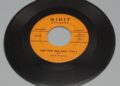

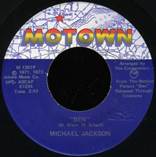
Motown released the single “Ben” (co-written by Don Block and Walter Scharf) on 12th July 1972, which went on to chart at number one on the Billboard Hot 100 singles Chart week-ending 14th October 1972 (1 week), the Billboard Adult Contemporary Singles Chart week-ending 21stOctober 1972 at number three, and the Billboard Soul and R&B Singles Chart, peaking at number five week-ending 21stOctober 1972. The single also charted at number two on the Cash Box Top 100 Singles Chart week-ending 21st October 1972.
“Ben” is one of Michael Jackson’s earliest and most moving solo performances, distinguished by its tender vocal delivery, its cinematic orchestration and the polished production typical of Motown’s early 1970s Los Angeles period. The track was produced by Hal Davis, whose sensitivity to Michael’s youthful voice was crucial to the song’s emotional success. Davis approached the ballad with restraint and clarity, allowing the orchestral arrangement to support rather than overshadow the vocal.
The instrumental foundation of “Ben” was provided by some of Los Angeles’s most accomplished session musicians. The rhythm section was deliberately understated, designed to give Michael’s vocal the fullest possible space. Wilton Felder, one of Motown’s go-to LA bassists, contributed a soft, melodic bass line that gently anchors the track without intruding on its delicate mood. The drums, played with quiet subtlety by either Ed Greene or Gene Pello (both active on Hal Davis productions from this period), provide a light rhythmic framework that keeps the tempo steady while remaining almost imperceptible.
The guitar work, likely performed by David T. Walker, adds warmth and harmonic elegance. His lightly picked chords and soft embellishments help shape the song’s intimate atmosphere. The keyboard and piano contributions, probably from Joe Sample, bring additional refinement, with carefully voiced chords that complement the orchestral writing.
The arrangement itself, crafted by Don Costa for the film “Ben” and adapted for Motown’s recording, is central to the song’s identity. The use of a full Hollywood-style string section gives the single its cinematic emotional sweep. The strings rise and fall around Michael’s vocal lines, intensifying moments of poignancy and building to a gentle, uplifting climax. This orchestral approach distinguishes “Ben” from most of Jackson’s early solo recordings, anchoring it firmly in the world of film balladry rather than Pop-Soul.
The success of the single gives an early indication of Michael Jackson’s popularity. It was his first solo number one. Motown clearly wanted the single to whet fans’ appetites for the album which followed later that summer.
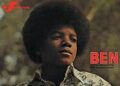
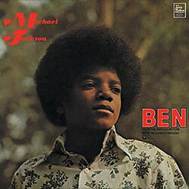
The album “Ben” was released on 4th August 1972 was produced primarily by Hal Davis, one of Motown’s leading Los Angeles-based producers, and the team of producers and song writers known as The Corporation, consisting of Berry Gordy, Freddie Perren, Deke Richards, and Fonce Mizell. Mel Larson and Jerry Marcellino also contributed to the production.
The album reflects a carefully crafted musical and emotional identity that aligns with both Michael Jackson’s age and Motown’s commercial strategy at the time. The overall mood of the album is gentle, melodic and emotionally reassuring, with an emphasis on themes of friendship, innocence, loyalty and youthful introspection. This tone mirrors Michael’s own image as a fourteen-year-old emerging solo artist, and the songs were clearly selected to showcase his expressive, boy-soprano vocal quality.
Musically, the album embraces a hybrid style that blends light Pop-Soul, soft balladry, orchestral arrangements and mild contemporary R&B, avoiding the heavier Funk and Psychedelic elements that characterised much of Motown’s adult output in the same period. Songs such as “Ben”, “Greatest Show on Earth” and “Everybody’s Somebody’s Fool” lean heavily into lush string arrangements, conducted by Gene Page, and tender melodic lines, giving the album a cinematic and, at times, almost sentimental character. Even the more rhythmic tracks, such as “We’ve Got a Good Thing Going”, maintain a gentle Pop-Soul sensibility that feels welcoming and accessible.
Given this musical approach, “Ben” is aimed at a younger audience, particularly pre-teens and teenagers, who identified with Michael’s youthful sincerity. The album’s themes of trust, companionship, belonging, and emotional honesty speak directly to the concerns of adolescence, while the softness of the arrangements ensures the record remains approachable for family listening as well. At the same time, Michael’s vocal maturity and interpretive skills probably attracted older listeners too, giving the album a broad but still youth-centred appeal.
The album bridges the gap between children’s Pop, teen-oriented Soul, and Adult contemporary balladry, establishing Michael Jackson as a compelling solo artist who still retained the innocence that had made him a cultural phenomenon with The Jackson 5.
The recording and mixing were handled at Motown Recording Studios in Los Angeles, where a team of engineers, most notably Cal Harris and Art Stewart, ensured that the tracks maintained clarity, warmth and dynamic balance. Their work is evident in the clean separation of the instruments, the smooth string textures and the intimate placement of Michael’s vocal in the centre of the mix. The engineering choices emphasise purity of tone and emotional transparency, aligning perfectly with the theme and mood of the song. Together, the musicians, producer and engineers created an album that is both understated and emotionally resonant. “Ben” succeeds not because of musical complexity, but because of its careful craftsmanship: a gently supportive instrumental backdrop, beautifully judged orchestral arrangements and a sensitive, expertly engineered recording that allows Michael Jackson’s voice to communicate vulnerability and innocence with striking immediacy. Overall, the “Ben” album stands as a thoughtfully constructed collection of songs whose mood and style serve both the narrative of Michael’s early solo identity and the emotional expectations of a predominantly youthful audience.
However, the album was not as successful as the single. It reached number four on the Billboard R&B Albums Chart, and number five on the Billboard 200 Albums Chart. The album became successful in the UK, receiving a silver disc on 1st January 1974 after selling over 60,000 copies. In the USA, the album and single failed to achieve any certifications according to RIAA. Perhaps that is not a surprise, given the age of the fans who bought the single.