
The departure of Smokey Robinson from the Miracles in 1972 represented a defining moment in the extraordinary history of Motown Records. As the group’s principal lead vocalist, songwriter and creative architect, Robinson had helped establish one of the most influential vocal groups in American popular music. His decision to concentrate upon his executive responsibilities as Vice President of the Motown Record Corporation created a significant challenge for a group whose distinctive musical identity had become closely associated with his exceptional artistry.
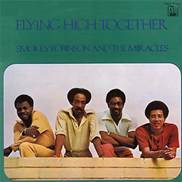
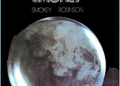
The Miracles’ final studio album featuring Robinson as lead vocalist, “Flying High Together”, was released on 27th July 1972 through Tamla Records, catalogue number T-318L. His farewell performances with the group had taken place between 14th and 16th July 1972 at the Carter Barron Amphitheatre in Washington, D.C., with the recordings subsequently released in December 1972 as “Smokey Robinson & The Miracles: 1957–1972”. Following his departure, fellow founding member Claudette Rogers Robinson withdrew from the group to concentrate on raising their children, Berry and Tamla, whilst guitarist and longstanding musical collaborator Marvin Tarplin continued his professional association with Robinson.
The remaining members, Bobby Rogers, Warren “Pete” Moore and Ronnie White, faced the considerable responsibility of preserving the Miracles’ established musical heritage whilst developing a new creative direction. Following a nationwide search involving approximately sixty prospective vocalists, they selected Baltimore-born Billy Griffin, whose expressive singing abilities and developing songwriting talent offered the group a distinctive artistic perspective. Introduced to audiences during the group’s transitional period in 1972, Griffin brought an expressive high-tenor voice, melodic sensitivity and rhythmic flexibility that complemented the established harmonies of Rogers, Moore and White. His arrival represented considerably more than a change of lead vocalist; it introduced a new musical identity whilst maintaining the vocal sophistication that had characterised the Miracles’ earlier recordings.
Released on 18th April 1973 through Motown Records’ Tamla label, catalogue number T-325L, “Renaissance” was the group’s first studio album without Smokey Robinson as principal lead vocalist. Its title symbolised artistic renewal and creative transformation during a period of significant change within Motown’s recording operations. Importantly, Robinson maintained his association with the Miracles as executive producer, providing continuity between the group’s celebrated past and its emerging musical future. Commercially, the album reached number one hundred and seventy-four on Billboard’s Top LPs & Tape Chart and number thirty-three on Billboard’s Soul Albums Chart during 1973.
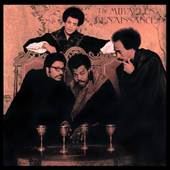
The recording project brought together an exceptional collection of Motown songwriters, arrangers and producers, including Willie Hutch, Marvin Gaye, Leon Ware, Hal Davis, Freddie Perren, Fonce Mizell, Frank Wilson, Leonard Caston and Clay McMurray. Their collective contributions integrated traditional Motown Soul with contemporary Funk influences, romantic balladry, orchestral rhythm and blues and increasingly sophisticated vocal arrangements. Distinguished arrangers James Anthony Carmichael, Paul Riser, Dave Blumberg, Freddie Perren, Fonce Mizell, H. B. Barnum and Jerry Long provided contrasting instrumental textures, incorporating expressive strings, carefully structured brass passages, syncopated bass patterns, rhythmic guitar accompaniment and richly layered vocal harmonies.
Of particular significance was Willie Hutch’s involvement in two compositions. “I Wanna Be With You”, written, produced, and co-arranged by Hutch, with additional arrangements by Paul Riser, demonstrates his command of melodic structure, rhythmic sophistication and expressive orchestration. Hutch also produced “I Didn’t Realize the Show Was Over”, co-written with Richard Hutch and arranged in collaboration with Dave Blumberg. Marvin Gaye contributed another important dimension through his production of “I Love You Secretly”, co-written with Anna Gordy Gaye and Elgie Stover, with arrangements by Blumberg. Meanwhile, Leon Ware and Pam Sawyer’s “I Don’t Need No Reason”, produced by Frank Wilson and Leonard Caston, introduced further harmonic refinement and contemporary songwriting craftsmanship.
The album also demonstrates the continuing importance of collective vocal interaction within The Miracles. Whilst Griffin assumed principal lead-vocal responsibilities, Ronnie White shared lead passages on “Wigs and Lashes” and “Don’t Let It End (’Til You Let It Begin)”, the latter incorporating a spoken-word contribution from Bobby Rogers. “Nowhere to Go” features lead-vocal contributions from Griffin, Pete Moore, Ronnie White and Bobby Rogers, preserving the group’s established tradition of contrasting vocal textures and expressive harmonic interaction. Marvin Tarplin is credited with guitar contributions, alongside Los Angeles studio musicians whose individual instrumental identities are not fully documented in the available album credits.
The album’s originally intended single, “What Is a Heart Good For”, written by Leon Ware and Arthur ‘T-Boy’ Ross, produced by Hal Davis and arranged by James Anthony Carmichael, introduced an energetic contemporary Soul arrangement that complemented Griffin’s developing vocal identity. However, following initial promotional activity and radio exposure, the recording was withdrawn as the chosen single and replaced by the romantic ballad “Don’t Let It End (’Til You Let It Begin)”, written by Freddie Perren and Christine Yarian.
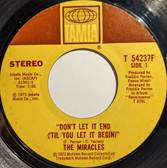
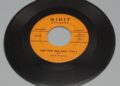
Released in the United States on 7th June 1973 through Tamla Records, catalogue number T 54237F, “Don’t Let It End (’Til You Let It Begin)” was produced by Freddie Perren and Fonce Mizell, with arrangements by Perren. The recording presents a sophisticated mid-tempo Soul arrangement characterised by a steady bass groove, measured percussion, rhythmic guitar accompaniment and polished instrumental textures. Griffin’s expressive high-tenor vocals intertwine with Ronnie White’s contrasting vocal passages, supported by the Miracles’ richly blended harmonies and Bobby Rogers’ spoken-word contribution. Its carefully controlled production combines romantic sensitivity, rhythmic precision and the refined sonic craftsmanship associated with Motown’s Los Angeles recording operations.
The single entered the Cash Box Top 100 Pop Singles Chart at number ninety-nine for the week-ending 11th August 1973, subsequently reaching number fifty-six on the Billboard Hot 100 Singles Chart for the week-ending 15th September 1973 and number twenty-six on Billboard’s Hot Soul Singles Chart for the week-ending 22nd September 1973. These achievements demonstrate Griffin’s growing recognition amongst American Soul and mainstream Pop audiences, establishing an important commercial milestone in the Miracles’ renewed recording career.
The group’s national television appearances strengthened this developing public identity. On 23rd June 1973, the Miracles performed “What Is a Heart Good For” on Soul Train, followed by an appearance on NBC’s The Midnight Special on 13th July 1973, hosted by Smokey Robinson. The latter performance was particularly significant, symbolising Robinson’s continuing support for his former colleagues whilst introducing Griffin’s distinctive vocal artistry to a wider American television audience.
From a musicological perspective, “Renaissance” illustrates Motown’s continuing evolution towards sophisticated contemporary Soul. The interaction between Griffin’s expressive vocal delivery, the group’s established harmonic traditions, and the instrumental craftsmanship of Motown’s distinguished creative personnel balanced artistic continuity with innovation. The album’s combination of orchestral refinement, rhythmic sophistication and emotionally expressive songwriting reflect the changing sonic landscape of American Rhythm and Blues during the early 1970s.