
By the early 1980s, the legendary Sound of Philadelphia, which had dominated the international Soul and R&B landscape throughout much of the 1970s, was no longer the industry’s commanding musical force. Nevertheless, its extraordinary creative legacy continued to flourish through a succession of outstanding recordings distinguished by sophisticated arrangements, exceptional musicianship and enduring artistic excellence. As the decade progressed, the emergence of the Minneapolis Sound, pioneered by Prince and further developed by the formidable songwriting and production partnership of Jimmy Jam and Terry Lewis, introduced a new sonic identity that would transform contemporary R&B, particularly through their groundbreaking productions for Janet Jackson and other internationally successful recording artists.

Yet Philadelphia’s musical architects were far from finished. In 1982, the legendary Thom Bell, one of the principal architects of the Philadelphia Soul Sound, produced Deniece Williams’s magnificent interpretation of “It’s Gonna Take a Miracle”, which reached number one on Billboard’s Hot Soul Singles Chart for two consecutive weeks, beginning with the week ending 15th May 1982.
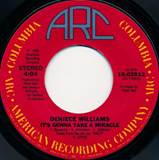
Taken from her acclaimed album “Niecy”, also produced by Bell, the recording demonstrated the enduring brilliance of Philadelphia’s orchestral Soul tradition. Supported by accomplished musicians associated with the city’s celebrated recording industry and the golden era of Sigma Sound Studios, Bell’s production combined elegant instrumentation, sophisticated harmonic structures and Williams’s exceptional vocal artistry.
Philadelphia International Records continued this remarkable tradition through one of its most distinguished female recording artists, Patti LaBelle.

Her extraordinary ballad “If Only You Knew”, produced by Dexter Wansel and co-written with Cynthia Biggs and Kenny Gamble, became a defining recording of her solo career.

The single reached number one on Billboard’s Hot Black Singles Chart for four consecutive weeks, beginning with the week ending 28th January 1984. Extracted from her acclaimed 1983 album “I’m in Love Again”, the recording helped establish LaBelle’s first RIAA-certified gold album and represented a significant commercial achievement for Philadelphia International Records. The album also became the label’s final Top 40 entry on the Billboard 200 during its original CBS-distributed era, reinforcing LaBelle’s position among the outstanding female interpreters of American Soul music.
August 1986 witnessed another extraordinary chapter in the continuing history of Philadelphia Soul, when two exceptionally gifted female vocalists achieved consecutive number-one successes on Billboard’s Hot Black Singles Chart.

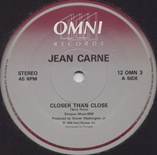
Jean Carn, also professionally known as Jean Carne, reached the summit with her magnificent recording “Closer Than Close”, occupying the number-one position for the weeks ending 2nd and 9th August 1986.
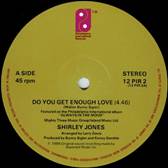
She was immediately succeeded by Shirley Jones, of the legendary Jones Girls, whose outstanding solo recording “Do You Get Enough Love” commanded the number-one position for the weeks ending 16th and 23th August 1986.

These consecutive chart triumphs represent far more than commercial success. They demonstrate the remarkable resilience, artistic sophistication and continuing cultural significance of Philadelphia’s musical heritage during a decade of profound technological and stylistic transformation. From Thom Bell’s orchestral mastery and Dexter Wansel’s sophisticated production techniques to the expressive vocal brilliance of Deniece Williams, Patti LaBelle, Jean Carn and Shirley Jones, the Philadelphia Soul Sound continued to produce recordings of exceptional quality, emotional depth and lasting international influence.
Although its commercial dominance had diminished, its creative authority remained unmistakable. The Sound of Philadelphia was not simply a defining musical movement of the 1970s; it was an enduring sonic institution whose artistic excellence continued to resonate throughout the 1980s and beyond.