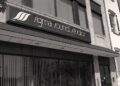

SAR was founded by Sam Cooke and J.W. Alexander in 1959, based at 3710, West 27th Street in Los Angeles. In 1961, the label’s office moved to 6425, Hollywood Boulevard, with just one employee, White songwriter Zelda Samuels, looking after the business administration. It was a very small operation! Samuels had worked at Decca and brought her administrative skills to SAR.
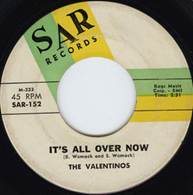
The letters SAR have been interpreted in two ways by different writers. Some believe that the letters represent initials for Sam Cooke and J.W. Alexander, with the R standing for Records. Other writers have suggested that the R could come from Silas Roy Crain, a founder member of the Soul Stirrers, who became Sam Cooke’s road manager. Alexander was a Gospel singer, songwriter, arranger, A&R man, and artist manager, who had often collaborated with Sam Cooke before 1959.
It is possible that Sam Cooke set up the label so that he could record whatever he wished. If that was part of his plan, it was soon overtaken by events, as he signed a very lucrative contract with RCA Victor in 1960 and began recording in New York. Instead, SAR became a label where Sam Cooke could write songs, produce emerging Black artists, and develop Gospel acts. He was keen to do all three alongside developing his own career. He also wanted to control the ownership of the songs that he and some of his friends were writing, To this end, he had set up two publishing houses KAGS Music Co. (BMI) and Malloy Music Co. (ASCAP) in 1959. By 1964, when he died, there were one hundred and fifty-two songs written by Cooke registered with KAGS.
SAR issued eighteen Gospel singles, one EP (extended play, around five minutes per side), and five LPs (long-playing albums). Just over fifty secular singles were released by the label between 1959 and 1965. No secular albums were issued until much later.
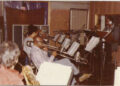
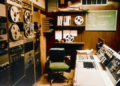
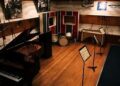
The recordings were usually made at various independent studios in Los Angeles, in particular at United Recording Studios on Sunset Boulevard (with Bill Putnam and later Bones Howe) and at the Wally Heider Recording Studio. The sessions were organised by René Hall, a session guitar player and talented arranger, who had worked with Sam Cooke at Specialty and Keen. Hall had his own office around the corner from SAR. It is thanks largely to him and his friends, including Plas Johnson and Earl Palmer, that the quality of SAR’s output is so good. Some of SAR’s later releases were arranged by Harold Battiste, who came to Los Angeles from New Orleans during the early sixties.
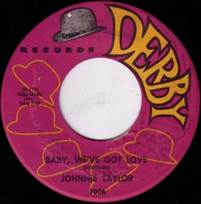
In 1963, Cooke and Alexander decided to establish a second label to cater for the Pop market, although there was little difference between the output from the two labels, with Johnny Taylor recording for both. They named the sister label Derby Records and issued twelve singles and two albums during the months before Cooke’s death.
Selected Artists on SAR and Derby Records
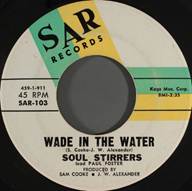
One of the first acts signed to SAR were the Soul Stirrers, who switched from Specialty. Three of the first four releases on SAR were singles by the Soul Stirrers, sung in a “Soul music” style. The first, “Stand By Me Father” (1959), has Johnnie Taylor singing lead vocal. “Nearer To Thee” (1960, on a 7” EP) features Sam Cooke on lead vocal. Both are very good, but the best of the three is “Wade In The Water” (1960), which has a dance beat with Paul Foster taking lead vocal. Cooke and Alexander were in charge of production. Sadly, the “Nearer To Thee” live recording was made while Sam Cooke was with the Soul Stirrers at Specialty. His former company took up a legal challenge to its release by SAR, and the EP was withdrawn.
There were several more Gospel releases on the label, including nine more singles by the Soul Stirrers, two singles by the Womack Brothers, one single by the Meditation Singers, and three singles by R. H. Harris.
The Womack Brothers consisted of the five Womack brothers, Friendly (born 1941), Curtis (1942), Bobby (1944), Harry (1945), and Cecil (1947). They sang together in their home town of Cleveland, Ohio, at their father’s church from around 1952. They recorded “Buffalo Bill” on the Pennant label in 1954 and two years later sang on the same bill as the Soul Searchers. Sam Cooke was impressed enough to offer them his support. He made good on that offer when he signed the group to the SAR label in 1960.
The group’s two SAR singles, “Yield Not To Temptation” (1961) and “Couldn’t Hear Nobody Pray” (1962), are both simple tunes with a dramatic lead vocal. The Meditation Singers’ “There Must Be Rest” is a more traditional Gospel song, performed beautifully by the all-female group.
Rebert H. Harris was another founder member of the Soul Stirrers, whose place Sam Cooke had taken in 1950. Harris had subsequently formed a new group called R.H. Harris and His Gospel Paraders, who came to SAR to record three singles. The best of the three is the up-tempo “Sometimes”, which is a perfect example of the style Harris had developed while a member of the Soul Stirrers, viz a soaring lead vocal call and clever, punchy harmonies providing a response from the other group members.
The remaining names on the roster often have links with the Gospel tradition but, like Sam Cooke, they now wished to explore secular music.
When the Womack Brothers’ Gospel releases failed to make an impression in the market, Sam Cooke suggested that they record some secular songs. They decided to record their secular material under a new credit, calling themselves The Valentinos.
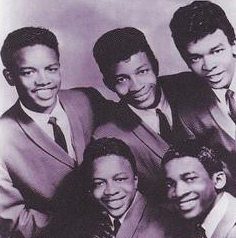
For their first Pop single, they re-recorded their second Gospel release, re-written as a secular song now called “Lookin’ for a Love”. The administrator/ songwriter Zelda Smith had sketched out some new lyrics for the Gospel song, which she took to J.W. Alexander and Sam Cooke. The owner/ producers added a few touches of their own and delivered a hit song to the group. The single climbed to number eight on the Billboard R&B Singles Chart and number seventy-two on the Billboard Hot 100 Singles Chart in 1962, eventually selling two million copies.
Four more singles followed, with the lead vocals shared between Bobby and Curtis Womack. They are mainly R&B Pop ballads, with one Bluesy dance song standing out. “It’s All Over Now” became their second hit in 1964, co-written by Bobby Womack with his sister-in-law Shirley Womack. The single reached number twenty-one on the Billboard R&B Singles Chart and number ninety-four on the Billboard Hot 100 Singles Chart. Even before its release, however, the song had come to the attention of UK band The Rolling Stones, who wanted to cover it. The Stones had had a few hits in the UK but hadn’t made the same impact in the USA. Bobby Womack wasn’t keen on letting them have the song even before the Valentinos’ original version was on sale. Nevertheless, he relented and watched the Stones’ cover sail to number one on the Official UK Pop Singles Chart and number twenty-six on the Billboard Hot 100 Singles Chart. It was a hit in seven other countries too, including number one in the Netherlands. Bobby wasn’t happy! Then the royalties started to arrive.
Kylo Turner, who had sung with Gospel groups the Magnolia Five and the Pilgrim Travelers during the forties and fifties, also came to SAR to record a secular single, “I’ll Keep Thinking Of You”, co-written and produced by Sam Cooke and J.W. Alexander.
The Simms Twins were the second most prolific of the SAR artists with six singles released between 1961 and 1964. Bobbie and Kenny were twins from a family of Gospel singers in Elba, Louisiana. The family relocated to Los Angeles in 1948, when the twins were eleven years old. The two boys decided to sing some secular songs and were signed by Sam Cooke in 1961.
The most successful of their singles was “Soothe Me”, a song written by Sam Cooke, which has all the hallmarks of his best secular songs. The twins deliver the song with verve, combining their two voices with striking harmonies and creating a new style of duet that merged the smooth, complex harmonies of the Everley Brothers with the passion of Gospel Soul. It quickly became very popular. “Soothe Me” peaked at numbers thirty-eight and forty-two on the Billboard R&B Singles Chart and the Billboard Hot 100 Singles Chart in 1961.
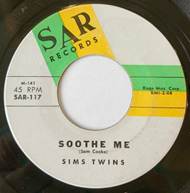
The follow-up was another excellent example of the Simms’ talents. The single “The Smile”/ “Right To Love” has a good pedigree. It was written by Sam Cooke and James Brown! Then, René Hall arranged and conducted the recording. The B-side was co-written by the twins.
“That’s Where It’s At”, another Cooke/ Alexander composition, continues in the same vein, with a good dance track on the B-side. “Movin’ And A’Grovin’” is a co-composition from Sam Cooke and Lou Rawls.
The twins later moved to Omen Records, supported by J.W. Alexander, where some recordings made at SAR were issued.
Johnnie Morisette was born in Brazil in 1935. His first recordings were made in Los Angeles at Dootone Records in 1955. SAR released seven Morisette singles between 1961 and 1964, that cover a range of styles. The best of the set is “Don’t Cry Baby”/ “Damper” from 1961, followed by “Sho’ Miss You Baby”/ “Wildest Girl In Town”.
“Don’t Cry Baby” was written by James P. Johnson, with lyrics by Saul Bernie and Stella Unger. It was recorded in 1929 by Bessie Smith, with Johnson on piano. Morisette’s cover turns the original jaunty piano Blues into a powerful slow Blues with moody guitar and organ fills. The B-side “Damper” is Chicago-style Blues, unlike anything else that emerged from SAR.
“Sho’ Miss You Baby”/ “Wildest Girl In Town”, arranged by René Hall, takes Morisette into solid R&B territory. Later singles cover songs from Fats Domino (“Blue Monday”), Blues guitarist Albert King (“Don’t Throw Your Love On Me So Strong”), West Coast Blues pianist Charles Brown (“Black Night”), and also include several tracks written by Sam Cooke and J.W. Alexander. Morisette is a good Blues singer and does justice to them all.
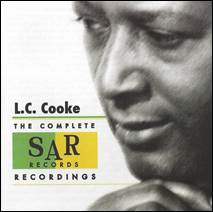
L. C. Cooke was Sam Cooke’s younger brother, who was listed as songwriter for the odd Sam Cooke song, when Sam was still preserving his reputation in the Soul Stirrers. L.C. was also a singer. He joined Johnny Keyes’ group The Magnificents, to record some Doo-Wop songs at Vee-Jay Records in Chicago and also cut three singles for Checker Records in 1958-9. L.C. came to SAR in 1961, where he made five singles. The tracks are mostly Sam Cooke compositions, but L.C. also features a couple of his own songs. They are all in the Soul/ Pop style that Sam Cooke was developing, with “Let Me Down Easy” the best of them.
ABKCO released an album of all L. C. Cooke’s SAR recordings in 2014.
Johnnie Taylor had replaced Sam Cooke as lead singer with the Soul Stirrers. Now he followed the same path into secular Soul music. He recorded four singles on SAR and another four on the subsidiary label Derby Records. The best of them is “Dance What You Wanna”/ “Shine, Shine, Shine” (1963) on Derby.
Another familiar name to record at SAR was Jackie Ross. She cut her first single at SAR in 1962, before moving to Chicago and building her career at Chess Records. The SAR recording is “Hold Me”, co-written by Cooke and Alexander, backed by “Hard Times” written by Ross. The A-side is worth a listen.
There were two more female solo singers at SAR, Patience Valentine and Linda Carr. Linda Carr made one Pop single that is very untypical of SAR. Patience Valentine made three singles, all good R&B dance tracks.
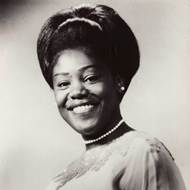
Patience Valentine
On “If You Don’t Come (You’d Better Call)” Valentine delivers a strong vocal and does justice to the J.W. Alexander/ Zelda Samuels composition. She also enjoys herself singing the Sam Cooke song “Ernestine”.
SAR released just two instrumentals. The first was “Dance What You Wanna” (1962) by Clifton White, the guitarist in Sam Cooke’s band. The second was “Don’t Get Sassy” (1964) by Gus Jenkins, a piano player and bandleader, who had recorded at Combo in 1955 and then at Flash and Specialty.
Another seven acts were assigned to the Derby label. Mel Carter cut three singles, including a Sam Cooke song “When A Boy Falls In Love”, which charted at number thirty on the Billboard R&B Singles Chart and number forty-four on the Billboard Hot 100 Singles Chart in 1963.
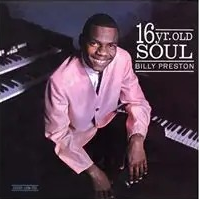
Billy Preston
Billy Preston made one single at Derby, an organ instrumental in the style of “Green Onions”. The track was taken from the album “16 Yr. Old Soul”, one of only two issued by Derby, which demonstrates Preston’s musical skills as a teenager. He was born in 1946 and made the album in 1963, still only sixteen!
Milt Jackson had no doubt met Sam Cooke at Keen Records, where the former had recorded four singles. He cut just one at Derby, “Your Old Stand-By”, in 1963. It is not a strong vocal delivery.
Finally, two acts whose short careers featured just the one Derby single.
Jeannie Robertson’s “Memories” from 1963 is dynamic up-tempo R&B performance.
Curtis and the Boys’ only-ever single pairs two Sam Cooke songs, “Shakin’ This Way and That” and “Somewhere There’s A Girl” from 1964. The songs are typical of Cooke’s Soul ballads and are well performed, but, together with Jeannie Robertson, they recorded no more. Perhaps Sam Cooke’s tragic death explains that.
Sam Cooke was killed on December 11th, 1964. His wife Barbara closed SAR and Derby down in 1965. Ownership of the company’s masters passed to ABKCO, who released a compilation of fifty-six tracks recorded on the SAR and Derby labels in 1994.
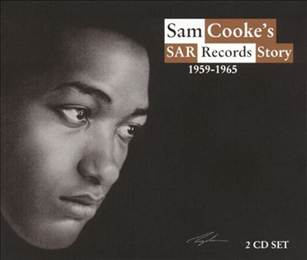
Five of the tracks are surprisingly by Sam Cooke, a demo of “You Send Me”, a solo of “That’s Heaven To Me”, “Just For you”, “Somewhere There’s A Girl” (recorded by Curtis and the Boys), and “You Were Made For Me”. A nice bonus for Sam Cooke’s many fans.