

To make a fair comparison of how Whitney Houston and Taylor Swift became the “number one artist in the world”, it is first necessary to establish a comparable definition of what that status means. For Taylor Swift, the benchmark is the IFPI Global Recording Artist of the Year title, which provides a formal and explicit designation of the world’s top recording artist based on global sales and streaming data. This award did not exist during Whitney Houston’s peak years in the mid-1980s, as it was first introduced using 2013 data and awarded in early 2014. Consequently, a different but broadly equivalent measure is required for Whitney Houston’s era.
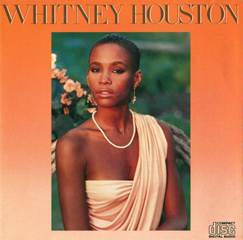
The closest widely recognised equivalent from the 1980s is Billboard’s “Top Pop Artist of the Year” designation. At that time, Billboard’s year-end honours carried enormous international significance and effectively signalled global chart dominance, reflecting the central role of the United States market in shaping worldwide music trends. In 1986, Billboard named Whitney Houston as its Top Pop Artist of the Year. This recognition was driven by the extraordinary success of her debut solo album, Whitney Houston, which topped the Billboard 200 Albums Chart in 1985, finished as the number one album of the year in the United States, and reached number one or the top two position in many other countries. Together, these achievements confirmed her global commercial impact and marked one of the most rapid ascents to worldwide dominance in popular music history.

Using these two comparable accolades clarifies the contrast between the two careers. Taylor Swift released her first studio album, Taylor Swift, in 2006, and eight years later she was officially crowned the world’s top recording artist when she was named IFPI Global Recording Artist of the Year for 2014, with the award announced in early 2015 but based on her performance during 2014. This indicates that it took Taylor Swift approximately eight years from her debut to achieve formal recognition as the number one recording artist in the world using a modern global sales and streaming metric. Whitney Houston’s rise, by contrast, was considerably faster. Her debut album was released on 14 February 1985, and by the end of 1986 she had been named Billboard’s Top Pop Artist of the Year. In practical terms, this means she reached a comparable “number one artist” status in roughly one year, or about a year and a half in real calendar time from debut to year-end recognition.
Beyond the speed of ascent, the comparison becomes even more compelling when sales and long-term market impact are considered. One of the most striking points of connection between the two artists is that their debut albums each sold approximately 14 million copies in the United States. This shared milestone provides a rare and meaningful point of comparison between two women who emerged in very different industry environments yet achieved an identical foundational level of domestic success.
Whitney Houston’s debut album, released in 1985, arrived at a moment when the global music industry was dominated by physical formats, radio airplay, and television exposure. Its success was not instantaneous but steadily accelerating, driven by a succession of hit singles including “Saving All My Love for You”, “How Will I Know” and “Greatest Love of All”. Over time, the album became the best-selling debut album by a female artist in US history. Its 14 million American sales were achieved through individual consumer purchases of vinyl, cassette, and later CD, at a time when such figures required sustained demand over several years. Internationally, the album performed equally strongly, topping charts or reaching the top five across Europe, Asia, and Oceania. More importantly, it established a new global benchmark for vocal performance, positioning Houston as a universal artist whose appeal crossed genre, racial and national boundaries. Her debut reshaped expectations of what a female pop vocalist could achieve commercially and artistically on a worldwide scale.
Taylor Swift’s debut album, released in 2006, reached the same US sales figure under significantly different conditions. While physical sales still played a role early on, the album’s longevity was increasingly fuelled by digital downloads and, later, streaming. Rather than exploding immediately on a global scale, it grew steadily as Swift built a loyal fanbase through extensive touring, radio exposure, and a strong songwriter-led identity. In the United States, the album remained on the charts for years, gradually accumulating sales rather than peaking sharply. Globally, it laid the groundwork for Swift’s later dominance by introducing a distinctly personal, narrative-driven approach to Pop and Country songwriting that resonated strongly with younger audiences, particularly women. Its success helped redefine how new artists could build international careers in the digital age, with long-term engagement replacing the rapid-hit model that characterised earlier decades.
When viewed across a forty-year comparative time frame, Whitney Houston’s sales stand out for their density and velocity. Across her career, she is widely credited with over 220 million records sold worldwide, including albums, singles, and soundtrack contributions, with much of this success concentrated between the mid-1980s and mid-1990s. Taylor Swift’s sales, by contrast, are distinguished by scale and durability. She has sold over 200 million records globally, with album sales alone exceeding 115 million units worldwide, and her totals continue to grow as her catalogue expands across physical, digital, and streaming formats. While individual albums may not always match the raw physical volumes of Houston’s era, Swift’s ability to accumulate large sales year after year across multiple platforms has allowed her to rival, and in some cases surpass, legacy totals when measured in equivalent units.
In summary, both artists are legitimately recognised as “number one” figures of their respective eras by the industry bodies that define global success. The shared achievement of 14 million US sales for their debut albums is more than a coincidence; it represents two different entry points into global superstardom. Whitney Houston’s debut announced a once-in-a-generation vocal phenomenon to the world almost immediately, while Taylor Swift’s debut introduced an artist who would grow into global dominance over time. Together, these albums altered the trajectory of the global music market and laid the foundations for two of the most influential and commercially successful careers in modern music history.