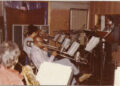

The conclusion of Smokey Robinson’s extraordinary recording partnership with The Miracles in 1972 marked a defining transition in Motown’s musical history. Their farewell live performances, recorded between 14th and 16th July 1972 at the Carter Barron Amphitheatre in Washington, D.C., celebrated fifteen years of remarkable musical achievements. The performances featured the return of Claudette Rogers Robinson to the concert stage and introduced Billy Griffin as Robinson’s successor, with orchestral direction by Thomas “Beans” Bowles.
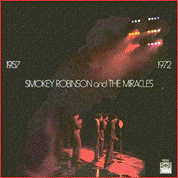
Released in December 1972 as “Smokey Robinson & The Miracles: 1957–1972” on Tamla Records (TS-320), the live album reached number seventy-five on the Billboard 200 Albums Chart and number fourteen on Billboard’s Soul Albums Chart, providing a fitting conclusion to one of Motown’s most influential vocal partnerships.
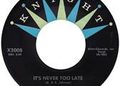
Although Robinson initially intended to concentrate on his executive responsibilities at Motown, his composition “Sweet Harmony”, written as a heartfelt tribute to former colleagues Bobby Rogers, Pete Moore and Ronnie White, became the catalyst for an unexpected return to recording. Encouraged by Motown executive Suzanne de Passe, Robinson embarked upon an independent creative journey, releasing “Sweet Harmony” as his first solo single in May 1973 on Tamla Records, catalogue number T 54233F, with “Wanna Know My Mind” appearing on the B-side.
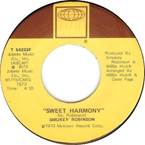
Produced by Robinson and Willie Hutch, with musical arrangements credited to Hutch and Gene Page, the recording combined expressive vocal harmonies, restrained rhythmic accompaniment and sophisticated orchestral textures. Its emotional sincerity and melodic craftsmanship established an intimate sonic identity that reflected both Robinson’s gratitude towards The Miracles and his emergence as an independent recording artist.
“Sweet Harmony” subsequently reached number forty-eight on the Billboard Hot 100 Singles Chart and number thirty-one on the Billboard Soul Singles Chart, with both peak positions reported for the week-ending 22 September 1973.
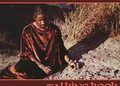
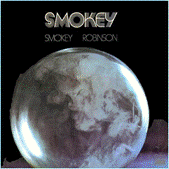
On 19th June 1973, Robinson released his debut solo studio album “Smokey” through Tamla Records, catalogue number T-328L. Produced by Robinson and Willie Hutch, with musical arrangements credited to Hutch, Gene Page and Dave Blumberg, the album demonstrates Motown’s evolving production philosophy following the transition from Detroit to Los Angeles. Recorded during 1972–1973, with Motown Recording Studios in Hollywood shown in the album documentation, the project involved recording engineers Art Stewart, Bill MacMeekin, Bruce Ellison, Cal Harris, Larry Miles and Eirik W. Wangberg. Their collective contributions supported an increasingly refined musical architecture characterised by sophisticated harmonic movement, carefully balanced instrumental arrangements, expressive vocal interpretation and orchestral elegance.
The album offers eleven tracks, with track two a medley of “Never My Love” and “Never Can Say Goodbye”. Four of the songs have a stripped-back backing that highlights the vocals (“Sweet Harmony”, “Holly” and the medley at track two), while three are funkier, with a strong percussion input that is typical of Motown’s best songs (“Wanna Know My Mind”, “The Family Song”, and “Just My Soul Responding”). The two most popular tracks on the album are the two most romantic songs! There is an interesting cover of Goffin/King’s “Will You Love Me Tomorrow” and a slow, beautifully arranged ballad “Baby Come Close”, which closes the album with a touch of class.
Commercially, “Smokey” reached number seventy on Billboard’s Top LPs & Tape chart and number ten on its Soul Albums chart.
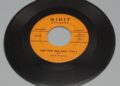
“Baby Come Close” became Robinson’s second solo single, released on 2nd October 1973 on Tamla Records, catalogue number T 54239F, with “A Silent Partner in a Three-Way Love Affair” appearing on the reverse side. Co-written by Robinson, Marvin Tarplin and Pamela Moffett, and produced by Robinson and Willie Hutch, the recording features a sophisticated musical arrangement credited to Dave Blumberg. Its gentle rhythmic foundation, expressive harmonic progressions, warm instrumental textures and carefully controlled orchestration provided an elegant framework for Robinson’s distinctive high-tenor voice, delicate falsetto inflections and emotionally compelling vocal phrasing.
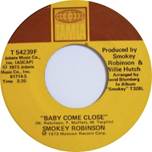
The recording achieved greater American commercial success than its predecessor, reaching number seven on Billboard’s Hot Soul Singles Chart for the week-ending 12th January 1974, followed by number twenty-seven on the Billboard Hot 100 Singles Chart for the week-ending 16th February 1974. It also reached number thirty-six on Billboard’s Adult Contemporary Chart. These achievements demonstrate Robinson’s continuing commercial influence across the American Soul, mainstream Pop and Adult contemporary markets, confirming his ability to develop an independent artistic identity whilst maintaining the melodic sophistication associated with his earlier Motown recordings.
The international development of “Baby Come Close” continued into 1974, with a British Tamla Motown single issued on 10th May 1974 under catalogue number TMG 898. Notably, this UK release presented “A Silent Partner in a Three-Way Love Affair” as the A-side and “Baby Come Close” on the reverse, illustrating the different marketing approaches adopted across Motown’s international territories. A Spanish pressing also appeared during 1974.
From a musicological and semiotic perspective, the chronological development from “Sweet Harmony” through “Smokey” to “Baby Come Close” represents an important transformation in Robinson’s musical identity. His distinctive approach to romantic storytelling, combined with the refined orchestral craftsmanship of Willie Hutch, Gene Page and Dave Blumberg, established a sophisticated sonic language in which melodic elegance, emotional vulnerability and instrumental restraint became central expressive characteristics. These recordings provided an important foundation for the atmospheric Romantic Soul aesthetic that Robinson would develop more extensively on later recordings. They represent the beginning of Robinson’s independent recording career and mark the emergence of a new creative chapter for one of Motown’s greatest musical architects, whose extraordinary command of song writing, vocal interpretation, production and sophisticated Soul arrangements helped shape the evolution of Contemporary Rhythm and Blues.