
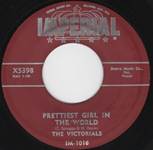
Hal Davis was born in Cincinnati, Ohio, in 1933, but is well-known to fans of Motown’s West Coast music, thanks to his work with Michael Jackson and the Jackson 5 in the early seventies in Los Angeles. His career started well before that, however, when he set out as a singer in a group called the Victorials in 1955. The five young men from Cincinnati made their first recordings in that city at the WCIN radio station with their manager Charles “Bugs” Scruggs. Mr. Scruggs sent the demos to Imperial Records in Los Angeles, where two of their songs were issued in1956. The single earned Davis his first songwriting credit.
By 1959, Davis was probably on the West Coast, as three singles appeared during that year on the Alden Records label, based in Los Angeles. Davis was now performing as a solo artist, singing sweet ballads in a high tenor voice. The second single features “Tell Me You Care”, written by Marc Gordon, with whom Davis co-wrote “King Of Lovers”, the B-side of the third single.
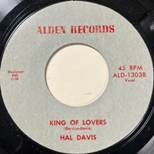
The songs didn’t make much impression, but the Davis-Gordon partnership was to develop into something special. Berry Gordon chose them to run Motown’s office in Los Angeles in the mid-sixties, after meeting them in 1962.
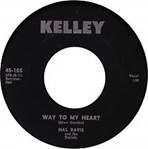
Later in 1959, another Davis single was issued on the Kelley label. The A-side is a cover of the show tune “The Way You Look Tonight”, an unusual choice, but the B-side is another Marc Gordon song “Way To My Heart”.
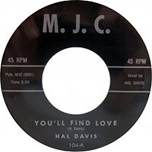
Davis’ next two singles were his best so far. He recorded two Pop-style Doo-Wop ballads, “You’ll Find Love” on the M.J.C. label and “You’re Playing With Me” on Del-Fi, both in 1960.
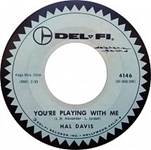
Between November 1960 and 1965, Davis recorded fifteen more singles on thirteen different labels. Some were not West Coast companies, so those tracks may have been licensed (Vee-Jay and Marie). The majority of the fifteen are, however, from Californian companies: Edsel (a subsidiary of Del-Fi), Wizard, Dynamite, Gardena, Kent, Swingin’, G.S.P., Minasa, and V.I.P. One track was issued by Federal, a subsidiary of King Records in Cincinnati; it was probably recorded in Los Angeles.
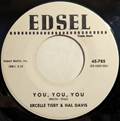
All the tracks are Pop-style R&B, with a nod to Doo-Wop. Of particular interest are three singles on which Davis is partnered by a female vocalist. The first was “You, You, You”/ “I’ll Never Stop Dreaming” on the Edsel label in 1960, sung by Davis and Ercelle Tisby.
The second was “Once Upon A Time”/ Accept My Love” on the Swingin’ label in 1963 sung by Hal and Bobbie, and the third was “It’s You”/ “Unless I Have You” on the Minasa label, also in 1963, sung by Hal and Brenda. This last single also appeared on the Snap label in 1963, with the same serial number as the Minasa release.
So, who are these ladies? Ercelle Tisby may be Hal Davis’ sister, according to one commentator. Bobbie and Brenda are both Brenda Hollway. She made her first recordings at Donna Records with Bob Keane in 1961/2 and one at Catch records in 1964, before signing with Motown, where Hal Davis and Marc Gordon were heading up the West Coast office. Marvin Gaye’s first duet with Mary Wells was in 1964, so maybe Hal Davis and Brenda Holloway were the inspiration for that!
In 2003, Wizard issued a thirty-four track compilation of Davis’ solos and duets. It is a good exploration of the interface between Pop, R&B, and Doo-Wop from the late fifties and early sixties.
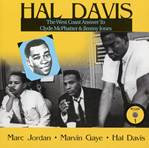
So what about the tiny independent labels that helped build Hal Davis’ career and brought him to the attention of Berry Gordy?
Alden Records was owned by Allyn Roenberg and Denis Molloy (see the musicbythepound website). Only six singles were issued, the three Hal Davis discs in 1959 and three more between 1964 and 1965.
Kelley Records issued just two singles, both in 1959, one by Hal Davis and one by Ty Terrell, whose career had started in 1949, when he joined the Robins.
M.J.C. was set up by Lloyd McGraw, Will “Dub” Jones, and Aaron Collins, who had all been members of the Cadets vocal group at Modern Records. The label’s name comes from their last initials. The trio were also songwriters. Some of their songs are amongst those appearing on the label’s five releases between 1958 and 1960.
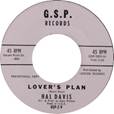
G.S.P. was founded by Gary Paxton in Hollywood in 1962. Around eight singles were issued by the end of 1963.
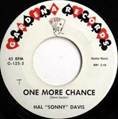
Gardena was formed in 1959. The label’s best-known act was Paul Revere And The Raiders. Davis’ single, “Show Me”/ “One More Chance”, was one of the label’s last releases. Both tracks are squarely aimed at the young Pop market.
Edsel Records’ first release also came in 1959. Clyde Battin and Gary Paxton owned the label (see Marv Goldberg’s The Arthur Crier Story), calling themselves Skip and Flip. The Ercelle Tisby and Hal Davis tracks are, like most of the label’s output, R&B-style Pop songs.
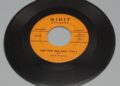
Minasa released just four singles, two in 1963 and two in 1965. All fall under the R&B umbrella, with some Soul and some R&B Rock & Roll. No owner is listed, but the single was distributed by Circa, the name in the small rosette on the right-hand side of the label, which was founded in 1962 by Mike Elliot.
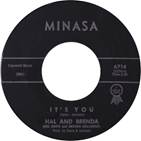
Hal and Brenda’s single was the second release, adding a flavour of Doo-Wop to the small collection. Other names on the label are Michael & the Jesters, Jewel Akens, and Fred Hughes. Akens enjoyed success with Era Records, and Fred Hughes made his name on Vee-Jay, Cadet, and Brunswick in Chicago.
Wizard, Del-Fi, Dynamite, and Swingin’ are covered elsewhere in this book.
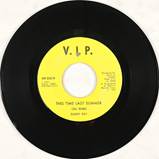
What was probably Hal Davis’ final recording came in 1965. He was working for Motown by then, in charge of the West Coast office. He cut two songs written by an up-and-coming songwriter called Jimmy Webb, who was still at college in Los Angeles when Motown signed him to their publishing company Jobete. Webb went on to write some excellent songs for Glen Campbell (“Wichita Lineman” and “Galveston” stand out).
His two tracks for Hal Davis are “This Time Last Summer” and “Please Don’t Turn The Lights Out”. Both are sweeping ballads with hints of what was to follow, but Hal Davis doesn’t really do them justice. It was probably just as well that he decided to put the single out on the VIP label under the pseudonym of Danny Day!