
The Jackson 5had swiftly risen to the top of the rankings at Motown in 1970, so 1971 raised a simple question. Could they sustain their meteoric level of success?

The first test came with the release of “Mama’s Pearl” on 7th January, another song written by The Corporation. It peaked at number one week-ending 6th March 1971 (1 week) on the Cash Box Top 100 Singles Chart; however it went to number two on the Billboard Hot 100 Singles Chart, week-ending 27th February 1971 (2 weeks), held from the top position by the Osmonds’ single “One Bad Apple”.

The follow-up single was released by Motown on 16th March, entitled “Never Can Say Goodbye”. The song was written by Clifton Davis, who later became a successful actor. He had written it with the Supremes in mind, but Motown staff decided that it would suit the Jackson 5, who recorded it during June 1970, with Hal Davis producing and arrangements by Gene Page. The decision proved to be a good one, with the single going to number one on the Cash Box R&B Singles Chart week-ending 24th April 1971 (2 weeks), displacing “What’s Going On” from the top position. It then reached number one on the Billboard R&B Singles Chart week-ending 1st May 1971 (3 weeks), again taking the number one position from Marvin Gaye’s “What’s Going On” single. Finally, it also reached the top of the Cash Box Top 100 Singles Chart, week-ending 29th May 1971 (1 week), a spot previously held by Three Dog Night with their single “Joy To The World”. The success of Three Dog Night’s “Joy To The World” broke the Jackson 5’s sequence of number ones on the Billboard Hot 100 Singles Chart; it only made it to number two week-ending 8th May 1971! Strangely, it peaked at just number thirty-three on the Official UK Pop Singles Chart. The B-side is a Corporation song “She’s Good”.

Both songs were included on the group’s next studio album, “Maybe Tomorrow”, which was issued by Motown in April. As usual, the Corporation made the most significant contribution, providing six of the eleven songs. Their songs are the most up-tempo, fun-enthused tracks. Songwriters Jerry Marcellino and Mel Larson teamed up with Pam Sawyer to write “The Wall”, a striking ballad that suits Michael Jackson’s delivery more than some of the other tracks. The album topped the Billboard R&B Albums Chart but only reached number eleven on the Billboard 200 Albums Chart. Their first three albums had all made the top five, so there was a slight dip in chart performance.

The album’s title song was released as a single in June, and that confirmed the dip. It peaked at number three on the Billboard R&B Singles Chart but only reached number twenty on the main Billboard Hot 100 Singles Chart. It is certainly not as strong as the earlier singles.

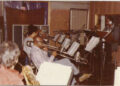
Filming the Goin’ Back to Indiana TV Special 4th September 1971
Photo: Billboard Magazine (Wikimedia Commons)
Nevertheless, the group were a big attraction on their 1971 USA tour and also on television. They appeared on several popular shows, including a Diana Ross TV Special and The Flip Wilson Show, which was a key part of Berry Gordy’s plan to build up Motown’s exposure via Hollywood. On 16th September, the boys had their own show on ABC Television entitled Goin’ Back to Indiana, which included some footage from the concert that the group had performed on 29th May in the Coliseum in Indianapolis.

The album “Goin’ Back to Indiana”, which was released on 29th September, combines seven live songs from the TV show with four from the Indianapolis concert. It peaked at number five on the Billboard R&B Albums Chart and number sixteen on the Billboard 200 Albums Chart.
Plans were underway for a “Greatest Hits” album, which would be released after Christmas on 27th December. That timing seems odd, but perhaps it was intended to stimulate record sales during the post-Christmas period, when sales tended to be relatively low. A new song was also recorded for release in November as a single, which would also be included on the greatest hits album. “Sugar Daddy” is another song from the Corporation, with an arrangement by Gene Page.

It is a return to the earlier sound of the Jackson 5, big and bouncy, which took it to number three on the Billboard R&B Singles Chart and number ten on the Billboard Hot 100 Singles Chart in early 1972. The “Greatest Hits” album also charted in the new year, reaching number twelve on the Billboard 200 Albums Chart and number twenty-three on the Official UK Pop Albums Chart, earning the group a silver disc from the BPI.

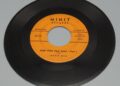
For Jackson 5 fans, there were two bonus singles in 1971. The first was the release of “Feelin’ Alright” sung by Diana Ross and the Jackson 5 from Ross’ TV Special. The second was the release on Dynamo Records of a single offering two songs recorded by the boys at Steel-Town in the early days of their career, probably around 1967. “You Don’t Have To Be Over Twenty One (To Fall In Love)” is an over-long title for a driving dance Northern Soul dance tune that is unlike anything they did at Motown.

The planned compilation of eleven hit songs was released, as planned, in December. They couldn’t quite match their meteoric first year, but they came close!
Header Photo: The Jackson 5’s 1971 TV Special (ABC Television Promo Photo, Wikimedia Commons)